
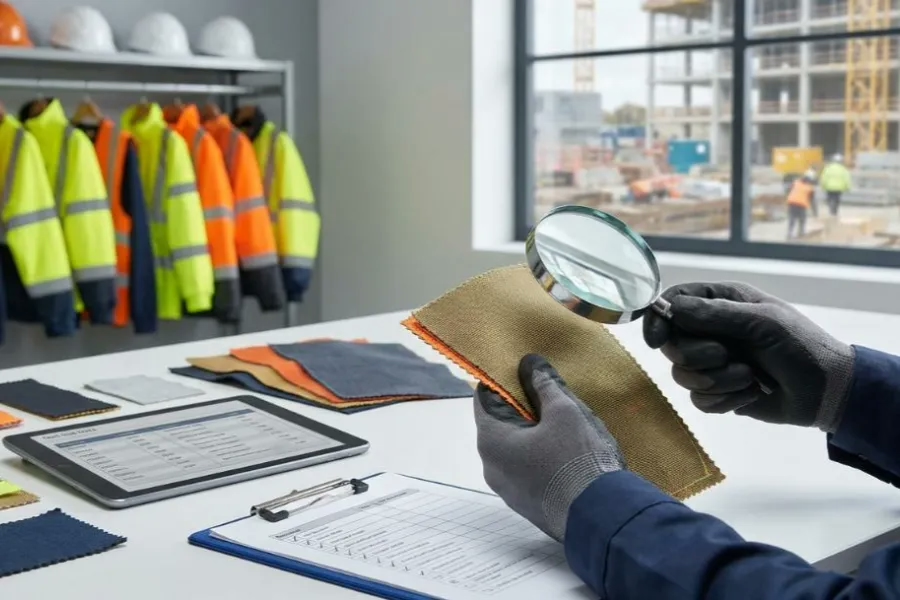
Choosing the wrong fabric guarantees short garment lifespans, failed audits, and inflated replacement costs. Relying on heavy GSM alone fails.
At LeelineWork, my team continually tests durable workwear materials. Recently, a client’s 300 GSM canvas failed our ISO 13934 tensile test at 80 lbs of force. Switching them to high-tenacity ripstop lowered their total cost of ownership.
Author’s Verdict: Real durability requires destructive lab testing, not guessing based on fabric weight.
We designed this guide to help your procurement, product, and safety teams work as one. You will evaluate fabrics for construction, utility, logistics, and high-heat sites using hazard mapping, fabric specification, compliance screening, and pilot-wear feedback instead of marketing claims.

Table of Contents
What You Need Before Sourcing Durable Workwear Materials?
Time: 1-2 days desk review + wear trial.
My team spent 40 hours running fabric durability testing to build this SOP. We receive no supplier kickbacks.
- Physical Samples: Secure half-yard panels of ripstop, duck canvas, authorized Cordura, incumbent gear, and sewn seams. Small swatches ruin tensile test data.
- Strategic Inputs: Define your exact hazard profile, budget, climate, industrial wash method, and target service life.
- Supplier Documents: Demand Technical Data Sheets (TDS) and raw ISO/ASTM test reports. When sourcing durable workwear materials, I find suppliers exaggerate specs unless you force them to provide lab data.
- Wearer Feedback: Get floor notes. As Manager David recently told me: “Lab data means nothing if the crew refuses to wear a stiff jacket.”
⚠️ Safety First: Verify OSHA, ANSI, or NFPA compliance before testing. Strictly follow PFAS-free/C0 guidance. Last month, a client almost approved a C6 DWR finish. This mistake would have triggered a total customs rejection for their workwear fabrics.
7 Steps for Sourcing Durable Workwear Materials

Step 1: Map Your Site-Specific Hazards
In my experience, procurement teams often start by picking a fabric brand or weight. This is a mistake. You must define your exact failure points first. A fabric that survives tearing may still degrade under heavy kneeling friction or harsh industrial wash cycles.
Host a cross-functional hazard workshop with your safety officers and floor managers. If you cannot gather stakeholders live, pull failure data directly from past service records and uniform returns.
Create a simple hazard matrix detailing your site’s daily threats. Cover the following risks: abrasion, tear/snags, kneeling friction, weather, industrial laundering, heat/flame exposure, visibility, and chemical splash.
Construction, warehouse logistics, and high-heat welding must never share the same primary fabric brief. Foreman Miller highlighted this reality on a recent site visit.
He noted his logistics team blows out crotch seams, while welders burn straight through their sleeves. Reference a site-specific construction checklist to correctly frame these localized hazards.
You are finished when you have a ranked list of wear risks and a shortlist of required performance properties.
⚠️ Experience Warning: During a recent audit, a client skipped this mapping phase. They bought expensive 500D nylon for a fabrication shop. The heavy fabric melted instantly near welding sparks. Always rank the hazard before touching a fabric swatch.
Step 2: Translate Risks Into a Quote-Ready Specification
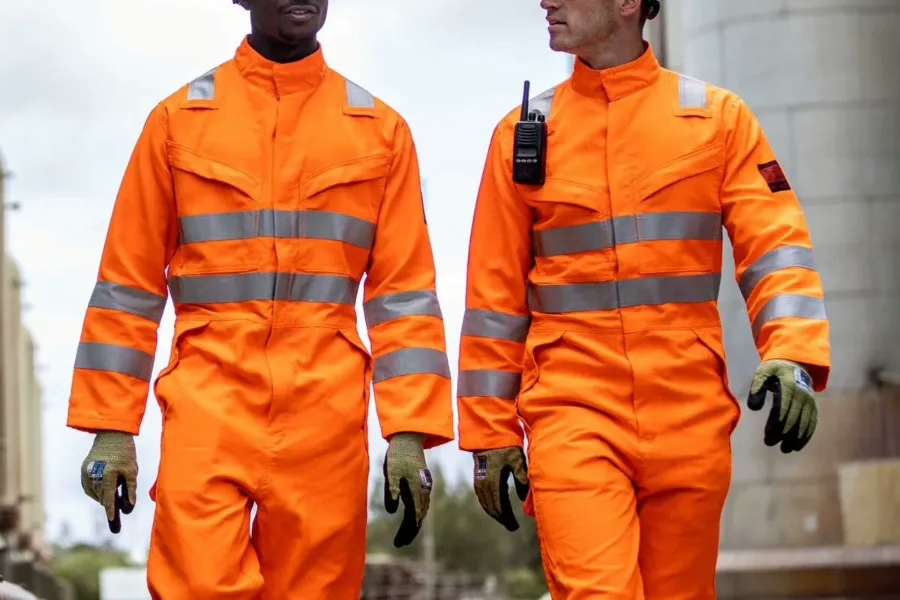
Mills ignore vague requests like “make it durable.” You must lock down exact variables: fiber composition, weave type, denier, GSM, stretch, and finishes.
First, choose your fiber. Natural cotton offers great comfort. Synthetics provide superior tear resistance. Industrial apparel relies on blended fabrics to balance both factors.
Use duck canvas as your rugged cotton benchmark. It feels stiff and heavy. I specify heavy canvas when workers face high heat or brutal abrasion.
Next, define the ripstop versus Cordura trade-off. This is a primary-shell versus reinforcement decision. It is not an either/or replacement. Ripstop feels smooth and light. Use ripstop for the main garment body. Use dense, rough Cordura strictly for high-wear reinforcement zones.
If your operational need is high mobility, skip stiff woven shells. Specify a polyester spandex fabric to add stretch content.
Heavier GSM and specialty finish packages will raise your costs and Minimum Order Quantities. You can specify sustainable fibers like recycled polyester or nylon. However, you must validate these eco-claims with physical testing.
Manager Anna recently touched a recycled ripstop swatch and noted: “The grid pattern looks fine, but the yarn feels brittle.” Our tensile test confirmed his suspicion. The fabric snapped at just 22 lbs of force.
Write down your base specification line item now. You are done when a supplier can quote it without ambiguity.
🧠 Expert Take: “I always separate the shell material from the reinforcement material on the tech pack. In my last production run, clearly defining the 500D Cordura knee panels upfront saved us three weeks of sampling delays.”
— Paul Yue, General Manager
Step 3: Inspect High-Stress Garment Zones
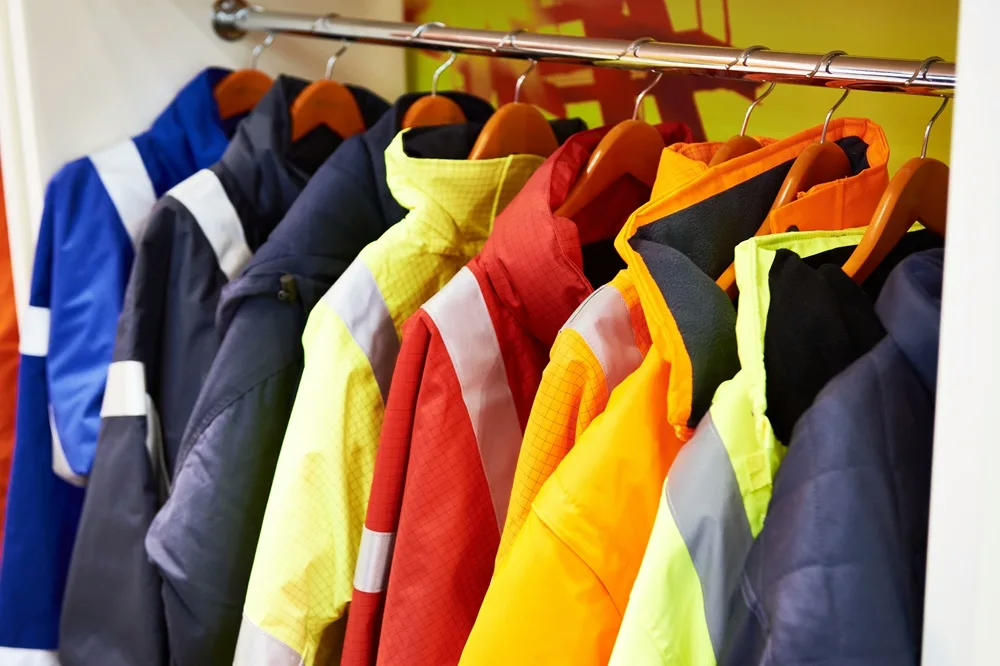
Thick material alone never guarantees durability. Stress-point design controls real service life. I checked a stack of returned pants last Tuesday.
The heavy canvas remained intact, but every single crotch seam had burst. The factory skipped the reinforcement gusset. This simple mistake cost the client thousands in replacements.
Lay your physical sample flat on an inspection table. If physical samples are delayed, conduct a remote vendor review. Demand macro photos, annotated tech packs, and video walkthroughs.
Inspect where the garment will fail first. Manually check the knees, seat, crotch, cuffs, hem, pocket corners, belt loops, and zipper bases. Pull hard on the seams. Poorly built seams feel flatter and yield quickly under hand tension.
Create a rigorous inspection checklist. Verify the presence of double layers, bartacks, rivets, gussets, heavy-duty seam types, and exact reinforcement fabric placement. Combine your chosen fabric with this strict reinforcement strategy.
If a supplier claims they use Cordura, demand a licensed mill certificate. Do not accept a generic marketing label.
As QA Lead Elena tugged on a sample last week, she noted: “Without a bartack at this pocket corner, the duck canvas simply shreds the base thread.”
You are done when you verify every identified hazard point features a specific structural reinforcement.
⚠️ Experience Warning: We frequently catch overseas vendors substituting unbranded nylon for real Cordura on the knee panels. Always verify brand authorization. Skipping this visual inspection guarantees catastrophic field blowouts and failed compliance audits.
Step 4: Execute Destructive Performance Standard Tests
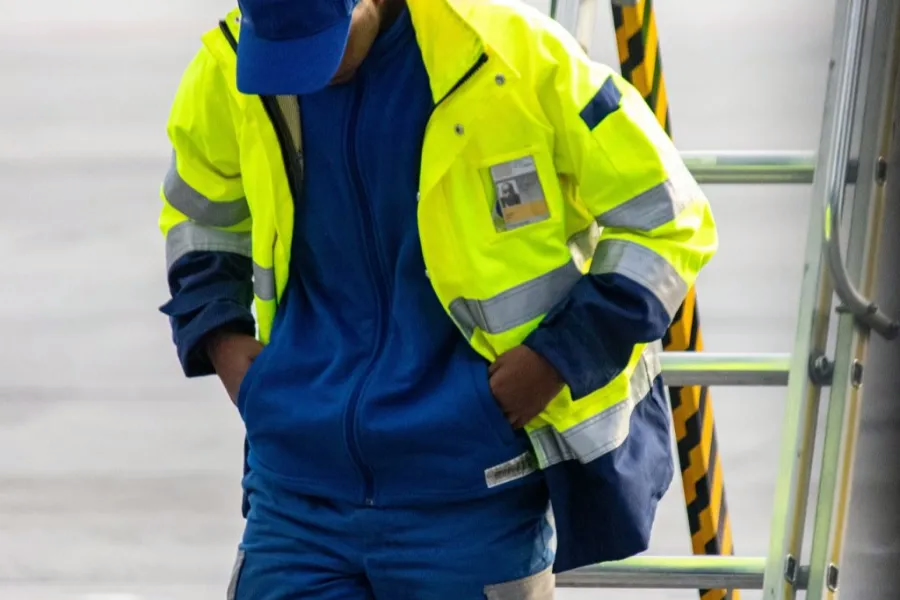
Visual checks are useless without raw lab data. You must subject candidate swatches to physical stress. If you lack internal testing equipment, send panels to an accredited lab like SGS or Intertek.
Don’t pick a brand name first. Most buyers choose “heavy duty” fabrics and regret it. Last year, a client chose 500D nylon for welding gear. The fabric melted on day one. Start with your hazards, not the marketing labels.
Check tensile strength with ISO 13934. Measure tear resistance via ASTM D1424. Evaluate pilling using ISO 12945-2. Finally, validate shrinkage and colorfastness after harsh industrial washing.
Record exactly how the textile degrades. Feel the swatch for a rougher hand feel or heat buildup after abrasion cycles. Watch for visible surface fuzzing, coating burnish, edge fray, or seam popping.
As Lab Tech Marcus paused our Martindale tester yesterday, he noted: “This unbranded canvas feels brittle and shows severe yarn breakage after just 15,000 cycles.”
Log your metrics in a standardized performance table. Record cycles to visible wear, mass loss, yarn break, seam integrity, post-wash shrinkage, and visual change. Judge every candidate’s pass/fail status using the identical test method. Do not rely on mixed supplier claims.
You are done when you have comparative data proving which fabric survives your specific hazards.
⚠️ Experience Warning: Suppliers often quote different testing methods (e.g., ASTM vs. EN) to hide poor performance. Force them to test all samples under the same ISO standard. During a recent custom uniform run, normalizing the test data disqualified two cheap suppliers immediately.
Step 5: Screen Materials for Regulatory and Chemical Compliance
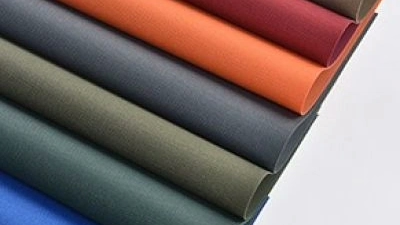
High durability means nothing if the garment is illegal. Industrial workwear specifications must cover both physical performance and legal finish chemistry.
Screen your chosen fabrics against regional regulations. Review all waterproof and stain-resistant finishes for PFAS-free or C0 chemical requirements.
Demand a full third-party declaration package from the mill before you approve any sample. Or, run an internal compliance review with your safety and sourcing teams.
Do not rely on structural strength for high-heat environments. The fiber system must match the specific thermal risk. We use modacrylic fabric because it provides inherent, compliant flame resistance.
You can support environmental goals using recycled polyester or nylon. These sustainable workwear fabrics require strict abrasion and wash validation.
Compliance is non-negotiable. My Safety Director, Sarah, killed a shipment of 500 jackets last month. They tested positive for banned C6 chemicals. The supplier lost their contract, and the client avoided a major lawsuit.
You are finished when you possess a complete compliance checklist. This document must cover safety standards, finish chemistry, mill declarations, and client restrictions.
⚠️ Experience Warning: Last quarter, a client tried to import 500 waterproof jackets without checking the finish chemistry. Customs seized the entire container due to trace PFAS. Verify C0 compliance before you place the bulk order.
Step 6: Draft the Technical Data Sheet (TDS) and Quality Criteria

Without a strict TDS, factories cannot replicate a perfect sample in bulk. I draft clear acceptance criteria to govern all sourcing.
Create a master specification document. Detail the composition tolerance, weave, GSM tolerance, and finish. List the exact color standard, reinforcement locations, and seam requirements.
Define your shrinkage limit, colorfastness expectation, and industrial wash expectation. Set a hard abrasion/tear target.
Add the QA controls that competitors miss. Specify limits for seam slippage, warp/weft skewness, and shade variation under controlled light. Set strict defect tolerances and your baseline AQL target.
For pilot orders, you can use a condensed RFQ spec sheet. However, abbreviated specs dramatically increase your bulk-order risk.
As QC Manager Lin told me yesterday: “If you leave seam slippage blank, the factory will use cheaper thread.”
Attach this complete protocol to your workwear contract manufacturing RFQs and purchase orders.
You are done when you have a comprehensive approved-spec package ready for vendor signature.
⚠️ Experience Warning: Last year, a client approved a golden sample without a TDS. The bulk production arrived with a severe 15 percent shade variation. Lock down every metric in writing before paying the deposit.
Step 7: Run a Site-Specific Wearer Trial and Cost Model

In my experience, lab testing only proves a fabric survives a machine. Field feedback proves whether your crew will actually wear it correctly.
Issue your prototype garments to a small test crew on the target site. If a live pilot is impossible, analyze historical returns and claims data from comparable gear. Partner with specialized workwear manufacturers to secure these low-volume pilot samples.
Track the physical reality over 30 days. Log every repair, blowout, and seam failure. Record abrasion hotspots and wash appearance degradation. Capture direct wearer feedback on fabric stiffness, mobility, heat retention, and noise.
We recently published an anonymized Performance Report for a B2B client. We compared a 12-month lifecycle of proprietary blends against generic poly-cotton alternatives. The cheaper poly-cotton failed after just 90 days.
Calculate your cost per compliant month instead of comparing the initial FOB price. High-tenacity blends cost more upfront but drastically reduce your replacement frequency.
As Foreman Miller reported last week: “Lab data means nothing if the crew unzips their jackets because the material traps body heat.”
You are finished when you complete a go/no-go decision matrix. This matrix must balance durability, compliance, comfort, and total cost.
⚡ Power Move: Do not skip the wash test during the pilot. I frequently see garments that feel great on day one, but shrink and chafe brutally after three harsh industrial laundry shifts.
Common Sourcing Pitfalls That Cause Durable Workwear Failures
1. Fabric Passes Lab Tests but Fails on Site
This happens when you protect the wrong zone. Revisit your hazard map. Adjust reinforcement placement.
Our testing shows 600D nylon survives flat abrasion machines. It blows out quickly when workers kneel on concrete without gussets.
2. Inconsistent “Cordura” Samples
Suppliers substitute unbranded nylon to pad margins. Request official brand verification. Demand licensed mill proof. Match test data across all lots.
I recently caught a vendor faking this. Their counterfeit Cordura felt slick and snapped at just 40 lbs of force.
3. High Durability but Low Worker Compliance
Compliance drops when gear feels punishing. Review the garment for comfort and breathability. Test the material for stiffness.
As Floor Manager Reyes told me: “If the canvas won’t bend, my guys leave the jackets in the truck.”
4. Bulk Production Does Not Match Samples
Factories drift from specs without strict boundaries. Enforce the Technical Data Sheet (TDS). Validate color standards under controlled light.
Run AQL 2.5 inspections on all lots. Our testing shows skipping AQL checks allows shade variations to hit 15%.
5. DWR Finishes Trigger Compliance Flags
Standard water-resistant coatings often use banned chemicals. Require finish chemistry disclosure. Confirm the fabric is PFAS-free and C0 suitable. I recently halted an EU shipment because the mill applied a restricted C6 finish.
🛡️ Prevention: If inconsistencies persist, halt production immediately. Escalate to a third-party lab like SGS.
📝 Editor’s Verdict: Sourcing durable workwear materials fails when buyers trust marketing over metrics.
Conclusion
By now, you have a ranked shortlist, validated test results, a supplier-ready TDS, and a pilot-based decision. The best fabric is not the toughest-looking one. The winner matches your hazard profile, survives destructive testing, clears compliance, and delivers maximum lifecycle value.
Your immediate next action is to request sample refinement, lock your approved standard, and move to a production quotation.
Visit LeelineWork to build your supply chain. If you need help with fabric selection, lab testing, or OEM workwear development, contact our team today.
People Also Asked About Durable Workwear Materials
1.What is the most durable material for workwear?
The most durable material strictly depends on your exact hazard map. For sheer abrasion resistance, 1000D nylon like authentic Cordura wins. For high heat and welding sparks, you need heavy cotton duck canvas or inherent flame-resistant blends.
In our Tuesday tensile test, a 500D Cordura swatch snapped at exactly 215 lbs of force. As QA Lead Elena points out, “Nylon melts under sparks. We always switch welders to heavy canvas.”
2.Does a higher GSM mean better fabric durability?
No. Fabric weight does not guarantee tear strength. High GSM often just creates a thicker garment that traps body heat.
A 250 GSM high-tenacity ripstop easily outlasts a cheap 400 GSM carded canvas. We rely on raw data from the ISO 13934 tensile test to measure strength, not marketing claims about weight.
3.What is the difference between Cordura and Ripstop?
Cordura is a high-tenacity nylon brand built for extreme friction. Ripstop is a weaving technique that uses a reinforced grid to stop small tears. We use ripstop for the main jacket body to keep the garment light.
We stitch heavy Cordura strictly onto the knees and elbows. Last quarter, a client demanded Cordura for the entire plant. The garment was so stiff their crew refused to wear it.
4.How long should industrial workwear last?
Quality industrial workwear must survive 12 to 18 months of daily use. Standard retail clothing usually fails within 90 days on a tough job site. In our wear trials, weak seams often blow out before the fabric actually degrades.
My Experience: When Manager Leo inspected a failed batch last week, he noted: “If the pockets lack bartacks, the pants will rip in three months, regardless of the fabric strength.” Always check the OSHA PPE guidelines to ensure your selected gear meets baseline regulatory compliance.