

Treating industrial uniforms like fashion is a financial liability. You must select workwear fabrics that withstand hazards and industrial laundering to prevent early failure. This buyer’s guide evaluates materials against strict safety standards like NFPA 2112 and ANSI/ISEA 107. We break down the specific types of workwear suited for your site conditions. If you are buying workwear in bulk, use these technical specifications to lower your total cost of ownership.
As workwear manufacturers we’ll also show how our fabric expertise can make a big difference in delivering high-quality, custom workwear that meets your company’s needs. Ready to get started? Let’s go!
Table of Contents
Best 7 Workwear Fabrics
Compare options fast and choose smarter materials for your team.
1. Poly-Cotton Blends (65/35, 50/50): The Procurement Standard
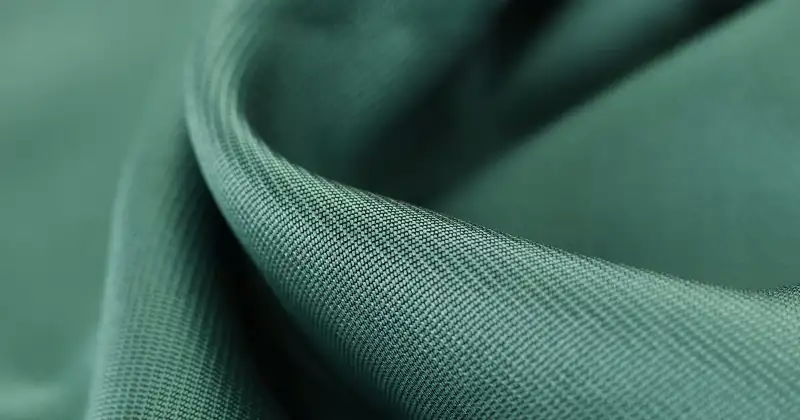
Poly-cotton is the industry backbone, but the specific blend ratio defines performance. 65/35 (65% Polyester / 35% Cotton) is the gold standard for work shirt manufacturers. The high synthetic content locks in color and resists wrinkles. 50/50 blends offer better airflow for hot climates but pill faster and lack tensile strength.
Structure matters as much as chemistry. Spec twill weaves (diagonal ribs) for work pants; the texture hides stains and stops tears from spreading. Use poplin for shirts to ensure breathability.
Where It Wins
This material dominates logistics and manufacturing because of ROI. It survives the aggressive chemical pH of industrial laundering. While pure cotton shrinks, polyester holds its dimensions and appearance after 50+ wash cycles.
Where It Fails
Never use poly-cotton near electrical hazards. Polyester is plastic. It melts at roughly 482°F (250°C). In an arc flash event, the fabric fuses to the wearer’s skin, drastically increasing injury severity. In high humidity, the blend also traps body oils and odors.
Spec It Like a Contract
Lazy specs lead to thin, transparent garments. Force industrial uniform manufacturers to meet these specific metrics:
- Weight: 240 GSM for trousers, 160 GSM for shirts.
- Stability: Demand <3% shrinkage limits based on the ISO 6330 washing standard.
- Durability: Require Grade 4 colorfastness against light and washing.
- Proof: Reject generic “mill certificates.” Demand third-party SGS lab reports to verify the data.
🚀 Actionable Insight: For cleaning crews, prioritize 65/35 twill. The higher polyester count resists bleach splashes better than cotton rich blends, and the tight weave hides grime between shifts.
2. Cotton Duck / Canvas: The Abrasion Leader

Run 12 oz cotton duck against retail denim through 50 industrial wash cycles. The denim fails—knees thin, indigo fades, and hems fray. The canvas softens in hand feel, but its structural integrity stays exactly the same.
This durability comes from the “duck” construction. Denim uses a twill weave that exposes yarn surfaces to wear. Cotton duck uses a dense plain weave where threads lock in a tight 90-degree grid. This prevents snags from sharp tools, rebar, or rough concrete. It is the best choice for mechanics’ trousers and heavy jackets/outerwear.
The Weight Trap
“Canvas” is not a specification. A 7 oz canvas is fashion-grade and will rip on a job site. You must specify 10–12 oz (340–400 gsm) for real industrial performance.
The Trade-offs
Canvas is stiff until broken in. It also absorbs moisture and dries slower than synthetics, which increases heat stress. Shrinkage is the biggest financial risk. Without “sanforized” or pre-shrunk specifications, pants will lose a full size after one hot wash.
Spec Checklist
Stop factories from swapping in lighter materials to cut costs. Verify these metrics:
- Weight: Minimum 10 oz/yd² (340 gsm).
- Seams: Triple-needle stitching on inseams to match fabric strength.
- Shrinkage: Cap at 3% after 5 washes (reference ISO 6330 standards).
- Abrasion: Specify double-layer knees for floor work.
🚀 Actionable Insight: Don’t mix fabrics for knee reinforcements. Specify a double layer of the base canvas (self-fabric). It washes evenly with the pant, whereas mixing synthetics like Cordura onto cotton causes puckering due to different shrinkage rates.
3. Ripstop (Nylon/Poly Ripstop): Tear-Containment for Mobile Crews
Procurement teams often confuse abrasion resistance with tear strength. These are distinct mechanical properties that dictate different fabric choices.
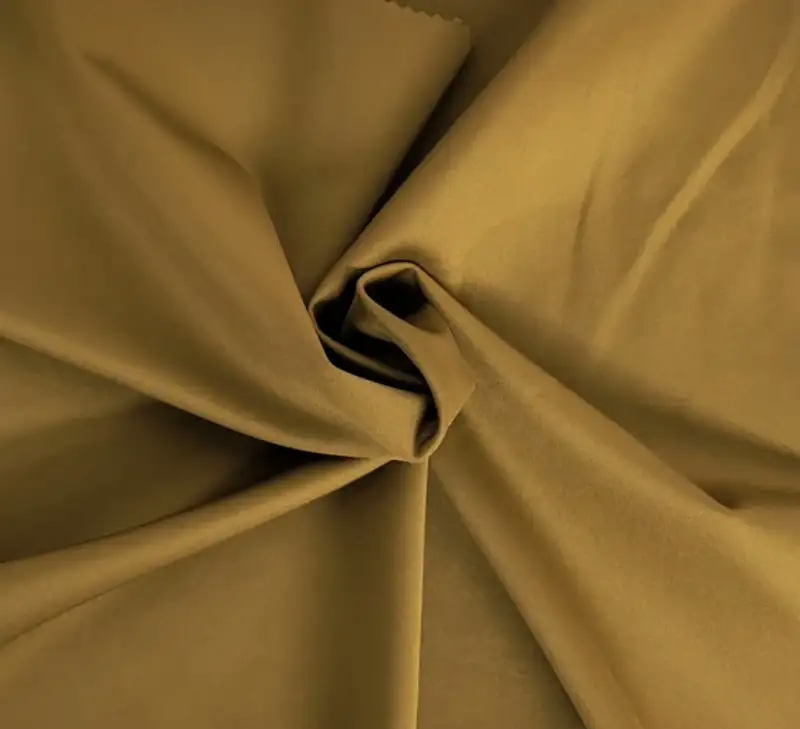
What It Is: Ripstop weaves thick reinforcement threads into a crosshatch grid pattern at regular intervals. This grid acts as a structural firewall. When a sharp object starts a cut, the reinforced threads trap the rip to prevent catastrophic garment failure.
The Decision Rule: Match the fabric construction to the dominant site hazard:
- Choose Canvas for static friction (masons, flooring installers, welders).
- Choose Ripstop for dynamic hazards (landscapers, climbing technicians, logistics).
Where It Wins: This is the standard for security/tactical-type uniforms where agility is critical. Ripstop offers a superior strength-to-weight ratio. A lighter 220 GSM ripstop pant often exceeds the tear resistance of a heavier 300 GSM cotton twill pant.
Failure Modes to Watch: Ripstop is not armor. It resists tear propagation, not puncture. A nail will still penetrate the fabric. Furthermore, coated poly-ripstop can suffer from delamination, where the water-resistant backing peels off after repeated industrial laundering.
Spec It Like a Buyer: Vague requests lead to generic polyester. Demand these specifics:
- Tear Strength: Require a lab report confirming >25N tear force under ISO 13937-2.
- Material Blend: Specify NYCO (50% Nylon / 50% Cotton). Nylon provides the tensile strength associated with Cordura-style fabrics, while cotton prevents melting during high-friction slides.
- Grid Size: Define the grid (e.g., 5mm). Larger grids generally offer higher tear thresholds.
4. Moisture-Wicking Performance Knits: Heat-Stress Control

Treat performance knits as PPE, not “athleisure.” In hot warehouses, switching from cotton to engineered polyester is the most effective way to lower worker body temperature.
Basic polyester traps heat. Performance fabrics use shaped fibers to mechanically pull sweat from the skin for rapid evaporation. Cotton simply absorbs sweat, becoming heavy and wet.
Best-For Roles
- Logistics: High-output picking in unconditioned plants.
- Outdoor Labor: Summer maintenance and landscaping.
- Healthcare: Scrubs requiring fluid resistance and airflow.
The Safety Caveat Never issue synthetics to welders or electricians. Performance poly melts into the skin during arc flashes or fires. If sparks are present, you must use FR-rated gear.
Procurement Specs & Verification You cannot spec these like woven shirts.
- Snag Resistance: Knits catch on racking and cardboard. Demand a minimum Grade 3.5 on the ASTM D3939 Mace Snag Test.
- Odor Control: Bacteria thrive on synthetic fibers. Mandate antimicrobial treatments (like silver ion) to prevent permanent odors.
- Branding: Heavy embroidery causes puckering on light knits. Specify heat-transfer logos for a clean look.
Operational Reality Knits have a shorter lifecycle than heavy canvas. You will replace them more frequently. Accept this trade-off to reduce occupational heat stress. When planning general manufacturing uniform programs, prioritize cooling over longevity for summer shifts.
5. Flame-Resistant (FR) Workwear Fabrics: Inherent vs Treated + What ‘NFPA 2112-Compliant’ Should Mean in a PO

Flame resistance isn’t a luxury upgrade. It is a mandatory control for life-threatening hazards. You must treat it as a strict technical specification, not a marketing term.
Start with the safety standards. For flash fire protection, the non-negotiable benchmark is NFPA 2112. Your internal Job Hazard Analysis determines if this level of protection is required. Once established, you must choose between two fabric technologies:
- Inherent FR: The protection is part of the fiber’s chemical DNA (e.g., Aramids). It is permanent and cannot wash out or wear away.
- Treated FR: This is usually a cotton blend with a chemical coating. It costs less, but it carries high risk. If your laundry team uses bleach or softeners, they strip the coating. This leaves the worker wearing standard cotton that burns.
The Verification Checklist
Never trust a simple “FR” label. A compliant Purchase Order must demand proof:
- Third-Party Lab Reports: Require current certificates from UL Solutions or SEI that prove the specific fabric lot passed vertical flame tests.
- Wash-Life Guarantee: Specify the number of industrial wash cycles the rating is valid for (e.g., “Guaranteed compliant for 100 industrial washes”).
- Traceability: Ensure the label includes a tracking number linking the garment back to the fabric production batch.
⚠️ Critical Design Warning: A garment is a safety system. If the fabric is FR but the thread is standard polyester, the seams will melt and burst open in a fire. You must verify that every component—zippers, reflective tape, and thread—meets the same OSHA-compliant standards as the body fabric.
6. High-Visibility (Hi-Vis) Systems: Buying to ANSI/ISEA 107 Standards

A “neon yellow” vest creates legal liability if it lacks certification. You must buy a safety system verified to ANSI/ISEA 107-2020. This standard mandates specific background material surface areas and retroreflective tape performance. Without it, you are simply buying colored clothing, not Personal Protective Equipment (PPE).
The polyester base fabric rarely fails; the tape is the weak link. Low-quality glass bead tape peels at the edges or cracks under industrial dryer heat. On active sites, contaminants like cement dust and oil coat these beads. According to OSHA guidelines, once reflectivity is compromised, the garment must be removed from service immediately.
Stop buying generic stock. Spec your order for survival:
- Match Class to Speed: Use Class 2 for traffic under 50 mph. Require Class 3 (more reflective area) for high-speed roadways and night work.
- Define Wash Cycles: Standard tapes fade after 25 washes. Require tape tested to ISO 6330 protocols to ensure it survives 50+ industrial cycles.
- Control the Wash: High-pH bleach and fabric softeners destroy retroreflectivity. Specify pH-neutral laundering.
This protection is vital for road crews, rail yards, and airside logistics. When building safety vests and hi-vis programs, prioritize certified durability over the lowest unit pric
7. Industrial-Laundry-Safe Weaves: Twill, Denim, and Water Resistance

Buyers often confuse weave with fiber. To prevent premature failure, you must specify all three components: Weave (structure), Fiber (material), and Finish (chemical coating). “Twill” is a weave, not a material. If the fiber is cheap cotton, the structure won’t save it.
Twill and Denim: The Shop Floor Standard
Denim is essentially a cotton twill. Its diagonal weave hides soil and resists abrasion, making it the standard for manufacturing environments. The downside: heavy twills trap heat. In hot facilities, denim increases worker fatigue and sweat retention.
The “Waterproof” Reality
“Water-resistant” often implies a temporary DWR (Durable Water Repellent) spray. Industrial detergents strip this quickly.
- Treated: Good for light rain. Requires re-treatment sprays.
- Laminated: Truly waterproof. Prone to delamination (peeling) in high-heat dryers.
Always demand AATCC 22 Water Repellency test results. Without data, the waterproofing will fail.
Industrial Laundry Survival Checklist
Verify these survival metrics before issuing a PO:
- Shrinkage: Limit to <3% (ISO 5077). High heat destroys cheap fabric.
- Colorfastness: Grade 4 minimum (ISO 105-C06). Fading damages brand image.
- Seams: Triple-stitched to prevent bursting during agitation.
- Labels: Must remain readable after 50 washes.
🚀 Actionable Insight: Audit the laundry cycle. Don’t trust a fresh sample. Buy 10 units and run them through 10 cycles with your specific laundry provider. Measure shrinkage and check for seam failure. If the fit changes, consult a sizing consistency guide to adjust specs before scaling.
The Fabric Selection Matrix: Match the Hazard to the Material
Stop guessing safety requirements. Use this matrix to define your exact Request for Quote (RFQ) specifications. Match your site hazards to the correct fabric family. Demand the specific proof listed below.
| Hazard Profile | Best Fabric Family | NEVER Use | Standards/Docs to Request | Laundry Notes |
|---|---|---|---|---|
| Flash Fire / Heat | Inherent FR (Aramid/Nomex) or FR Treated Cotton (88/12) | Polyester, Nylon, Rayon (Melts) | NFPA 2112 (UL Certificate) | Do not use chlorine bleach. |
| Arc Flash | FR Blends (Modacrylic/Cotton) | Synthetics without FR rating | ASTM F1959 (Ask for ATPV rating) | Inspect for holes before every shift. |
| Welding Spatter | Heavy FR Canvas or Leather | Fleece, Mesh, or Thin Synthetics | ISO 11611 Class 1 or 2 | Remove grease to prevent flammability. |
| Sharp Edges / Tear | Ripstop (Nylon/Cotton blend) | Loose Knits or thin Poplin | ISO 13937-2 (Tear Force) | Check grid integrity after wash. |
| High Abrasion | Cordura or Heavy Duck (>10oz) | 100% Cotton Jersey | ISO 12947 (Martindale >50k) | Wash inside out to protect face. |
| Chemical Splash | Treated Polyester or Barrier Laminates | Absorbent Cotton | EN 13034 Type 6 | Re-apply DWR finish regularly. |
| Rain / Wet | PU Coated or Membrane (Gore-Tex type) | DWR-only sprays | EN 343 (Waterproof/Breathable) | Tumble dry low to reactivate finish. |
| Low-light / Traffic | ANSI 107 Polyester | Black, Navy, or Dark Grey | ANSI/ISEA 107 (Class 2 or 3) | pH < 11 to protect reflective tape. |
| Clinical / Infection | Poly-Cotton with Antimicrobial finish | 100% Cotton (holds fluids) | AATCC 147 (Bacterial inhibition) | High-temp wash (160°F+) required. |
| Cold Storage | Quilted Insulated Liner (Thinsulate type) | Unlined Denim or Canvas | EN 342 (Thermal Insulation) | Check loft (fluffiness) often. |
Set Your Quantitative Performance Targets
Vague terms like “durable” fail in contracts. Set specific numerical targets for your factory.
- Abrasion Resistance: Require ISO 12947 (Martindale) results.
- Baseline: 20,000 cycles.
- High-Wear (Knees/Elbows): 50,000+ cycles.
- Tear Strength: Request ISO 13937 test data.
- Shirts: Target > 15 Newtons.
- Heavy Trousers: Target > 40 Newtons.
- Shrinkage: Cap acceptable shrinkage at 3% maximum after 5 washes at 140°F (60°C).
- Colorfastness: Demand a Grade 4 on the ISO 105 Grey Scale for washing and light exposure. This prevents brand colors from fading.
Build Your Compliance Documentation Packet
Refuse any bulk order without this packet. It protects you from liability and import seizures.
- Valid Certificates: Test reports must be dated within the last 12 months. Reject expired documents.
- Safety Data Sheets (SDS): Required for any chemical finishes, such as FR treatments or water repellents.
- Traceability: The packing list must track fabric rolls by lot number.
- Chemical Safety: For EU imports, demand a REACH compliance statement. This confirms the fabric contains no banned substances like azo dyes.
Understand the Unit Cost Drivers
Identify what increases your price to budget accurately.
- Weight (GSM): Heavier fabrics consume more raw cotton. A 12oz pant costs more than an 8oz pant.
- Fiber Choice: Inherent FR fibers (like Aramids) cost 3x more than treated cotton but offer permanent protection.
- Special Finishes: Anti-static or anti-microbial coatings add cost and increase Minimum Order Quantities (MOQ).
- Certification: Legitimate third-party testing (via UL or SGS) costs money. A factory including this in the price is a safer partner than one offering a cheap, untested rate.
Next Steps: Sourcing Your Supply Chain
Once you define your specs, find a partner capable of executing them.
- For high-volume, cost-effective scaling, check workwear manufacturers in China.
- If you require strict local European standards and distribution, research workwear companies in the UK or workwear companies in Germany.
Ready to Build Your Program?
Stop settling for generic gear that fails. Send us your technical specs today. We will build a uniform program that meets your safety standards and your budget. Contact LeelineWork for a Quote. Construction, petrochemicals or hospitality, we can help you design and supply uniforms that will improve safety, comfort and brand visibility.
People Also Ask About Workwear Fabrics
1. What’s the difference between ‘FR-rated’ and ‘NFPA 2112-compliant’?
“FR-rated” is a general marketing term. It simply means the fabric resists ignition. NFPA 2112 is a rigorous technical standard. It certifies that the garment limits body burn percentages to 50% or less during a three-second flash fire. Never rely on a generic label. Demand the official UL Certification to ensure the gear meets legal safety requirements.
2. Do FR treatments wash out?
It depends on the fiber. Inherent FR (like Aramid) is permanent. The protection is part of the fiber’s chemical structure. Treated FR (like 88/12 cotton) relies on a chemical coating that degrades over time. Industrial laundering speeds this up. You must write a “guaranteed wash life” (e.g., 50 or 100 cycles) into your Purchase Order to ensure long-term compliance.
3. Ripstop vs canvas for work pants—what should we choose?
Base this decision on the primary failure mode. Choose Canvas (Duck) for static friction jobs like masonry or flooring. It resists abrasion against rough surfaces. Choose Ripstop for mobile roles like climbing or landscaping. The reinforced grid stops tears from spreading if the fabric catches on a sharp object. Ripstop is also lighter, which reduces heat stress.
4. What fabric is best for industrial laundry programs?
Heavyweight Poly-Cotton Twill (65/35) is the most resilient option. It withstands high-pH detergents and tunnel dryer heat better than pure cotton. Monitor your samples for the “Big Four” failure modes: shrinkage exceeding 3%, color fading, peeling reflective tape, and the loss of water-resistant coatings. Always pilot-test a small batch before buying in bulk.
5. What should we request from suppliers before placing a bulk order?
Never approve an order without a full Technical Data Sheet. This packet must include the specific fabric weight (GSM/oz), valid third-party test reports (SGS/Intertek), detailed wash care instructions, and a strict size tolerance plan. Verify that the OSHA-compliant standards on the certificates match the specific fabric lot you are purchasing.
Need help matching workwear fabrics specs to hazards and budgets? Contact LeelineWork for a consultation or read our guide on buying workwear in bulk to learn more.