When selecting safety helmet types, remember: your brain is your best asset, and its helmet shouldn’t be an afterthought. It’s the most critical piece of personal protection, ensuring every worker gets home safely—a commitment far more important than just a checked box.
The biggest risk is the “all helmets are the same” assumption. Let’s be honest, that’s a mindset better suited for choosing a baseball cap, not lifesaving equipment. This complacency leads directly to inadequate protection and compliance issues.
This guide cuts through the confusion. We’ll help you match the helmet to the hazard, ensuring your choice is a smart investment. As a custom uniform manufacturer, we see helmets as the cornerstone of a cohesive and head-smart safety program.
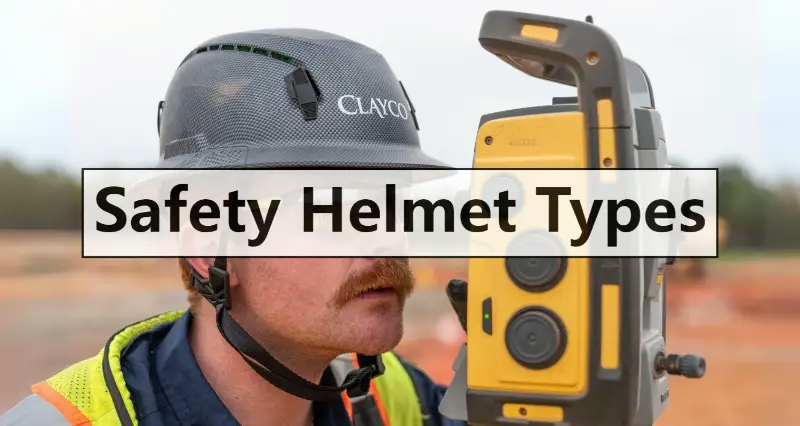
Table of Contents
Main Safety Helmet Types
| Type/Class | Key Protection | Typical Use Cases | Voltage Rating |
|---|---|---|---|
| Type I | Top impact only | Construction, warehouses | Depends on electrical class |
| Type II | Top & side impact | Mining, oil & gas, complex environments | Depends on electrical class |
| Class G | Impact + low voltage | General electrical work, utilities | Up to 2,200V |
| Class E | Impact + high voltage | Electrical utilities, high-risk areas | Up to 20,000V |
| Class C | Impact only (ventilated) | No electrical hazard areas | None |
1) Type 1 Safety Helmet

Type 1 safety helmets protect you from impacts coming from above. They work best when falling objects are your main worry. For construction, manufacturing, or inspection sites. These sites have overhead hazards but few side impacts.
Key Features and Identification
These safety helmet types protect the top of your head. Most models are traditional hard hats with a full brim. The brim deflects rain and debris. They weigh less and have a simple internal structure. You’ll find them comfortable for long shifts.
Check inside the helmet for critical markings. Look for the manufacturer, ANSI standard, type, class, manufacturing date, and head size range. Clear labeling is essential. Intact labels keep you compliant and accountable.
Performance and Certification
ANSI Z89.1 standard tests Type 1 helmets. Falling objects cannot transfer more than 1,000 pounds of force to your head. The average maximum is 850 pounds. The helmet must resist penetration. Nothing should pierce the shell and contact the head form. Flammability tests check that no flames linger five seconds after exposure to a test flame.
Key Usage Scenarios
- Construction workers face tools or materials falling from overhead.
- Inspectors work on sites with structures or machinery above.
- Wastewater engineers work around tanks where debris can fall from the top.
Compliance and Replacement
- Inspect internal helmet markings every time. Missing or unreadable safety labels mean you need a new helmet right away. This keeps you compliant and protects your crew.
- Most Type 1 safety helmets work in a standard temperature range: -18°C (0°F) to 49°C (120°F). For extreme job sites, look for an “LT” marking. This works down to -30°C. Look for “HT” for sites up to 60°C.
2) Type 2 Safety Helmet

Type 2 safety helmets protect more than just the top of your head. They shield the front, back, and sides. They defend against impacts from all directions. This coverage helps reduce injuries from falls, flying objects, or side-swipe accidents.
ANSI/ISEA Z89.1-2014 CERTIFIED
These safety helmet types meet strict ANSI/ISEA Z89.1-2014 standards. Each helmet must pass tests for side and top impact resistance. It must resist off-center penetration. If it includes a chinstrap, that must pass testing too.
IMPACT ENERGY ABSORPTION
Advanced liners absorb and spread out impact energy. Most use EPS foam or similar materials. When a helmet passes these energy standards, your team faces much lower risk of serious injury. This holds true even from unexpected angles.
STRONGER SHELL AND EXTRA PADDING
The shell is tougher. Extra cushioning inside absorbs force instead of transferring it. This design cuts down injury risk from sharp objects. It also protects against blunt impacts.
VENTILATION AND COMFORT
Many Type 2 helmets feature 360-degree venting. Your crew can stay cooler. Some models—like the V-Gard C1™—keep the interior up to 20°F cooler. This supports longer wear with less fatigue.
Advanced Features and Real-World Models
- Ceros® XT400/XT400E (HexArmor): This model features the Mips® safety system. It defends against rotational impacts common in active work environments.
- Defender Safety H2 Series: You can choose from 7 colors and two classes. Class E is electrical rated to 20,000 Volts. Class C is ventilated.
- MSA V-Gard H2™ & Super V®: These come with built-in foam liners. They have upgraded suspension and Mips® integration. They work with face shields, visors, or earmuffs you already use.
- Modern Type 2 helmets come ready with slots for visors, hearing protection, and eye shields. Your PPE lineup stays seamless and efficient.
3) Class G Safety Helmet

Class G safety helmets protect against impact. They also guard against low-voltage electrical hazards. Does your team face falling objects or exposed wiring up to 2,200 volts? These helmets give you reliable everyday defense.
STRICT LABELING REQUIREMENTS
Every helmet must show permanent markings inside. You’ll see the manufacturer’s name. You’ll see the date of manufacture. You’ll see ANSI/ISEA Z89.1 standard, helmet Type, Class G, and head size range. Is the label missing or hard to read? Replace the helmet right away—no exceptions.
DURABLE CONSTRUCTION MATTERS
The hard outer shell spreads impact energy. A shock-absorbing lining sits inside. The suspension system holds the shell 1 to 1¼ inches above your head. This cushions blows. It protects against falling tools. It guards against accidental contact with wires.
TEMPERATURE VERSATILITY
Use standard safety helmet types between -18°C (0°F) and 49°C (120°F). Work in frozen conditions? Check for “LT” marking (good down to -30°C). Work in hot environments? Look for “HT” marking (up to 60°C). The right markings confirm your safety helmet types fit your jobsite climate.
SCHEDULED REPLACEMENT:
- Replace the suspension system every year. Do this even if it looks fine.
- Replace the helmet every five years. This keeps you in compliance. It maintains effective protection.
SAFE DECORATION PRACTICES: Use paints, stickers, or labels that your helmet manufacturer approves. DIY changes can hide cracks. They can reduce the helmet’s electrical safety.
Expert Advice: To easily track replacement schedules, use a permanent marker to write the date of issue right next to the manufacturer’s date inside the helmet. This simple habit eliminates guesswork and guarantees timely renewals.
4) Class E Safety Helmet

Class E safety helmets protect you from high-voltage electrical conductors. They’re tested and certified up to 20,000 volts (phase to ground).
STANDARDS COMPLIANCE
Every Class E helmet must meet ANSI/ISEA Z89.1-2014 (R2019) guidelines. Each helmet gets tested for electrical insulation, force transmission resistance, apex penetration, and flame resistance. This ensures your equipment meets current safety regulations.
KEY FEATURES
- Non-Conductive Materials: Each Class E helmet uses non-conductive shells and components. These materials reduce your exposure to electrical shock. They block current flow.
- Impact Protection: You’re also covered against falling tools, debris, and bumps.
- Dielectric Strength: Helmets undergo strict dielectric strength testing. This proves their electrical discharge resistance in real-world conditions.
- PRODUCT SPOTLIGHT: It gives excellent impact and electrical protection. Its 6-point suspension system boosts wearer comfort and stability. This matters during long shifts near high-voltage sources.
Related Reading:
Top 10 Types Of Safety Footwear: Step Up Your Safety Game
Different Types of Safety Gloves: How to Pick the Best for Your Industry
5) Class C Safety Helmet

Class C safety helmets protect you from falling or flying objects. But they offer zero electrical insulation. Never use these helmets near electrical conductors.
HIGH IMPACT & PENETRATION PROTECTION
These safety helmet types protect your head. They reduce the force from falling tools, parts, or debris. Sharp objects cannot pierce through to the wearer. Does your worksite have electrical hazards? If not, this focused protection is what you need. You avoid paying for features you won’t use.
SUPERIOR VENTILATION & COMFORT
Vented designs improve airflow. They prevent heat buildup on hot, active job sites. The STUDSON SHK-1 Full Brim Vented Industrial Safety Helmet is a great example. Comfort and safety work together here. Your team experiences less fatigue during long shifts. Focus improves too.
OPERATING TEMPERATURE RANGE
Standard Class C helmets work well in temperatures between -18°C (0°F) and 49°C (120°F). Your site falls outside this range? Look for “LT” (Low Temperature) or “HT” (High Temperature) labels. Checking this before ordering. Your team stays protected and productive, even in harsh weather.
MARKINGS AND COMPLIANCE
Every Class C helmet must meet ANSI Z89.1 industry standards. You’ll find required markings inside the helmet. These include: manufacturer, production date, helmet type, and class.
Conclusion
Understanding the various safety helmet types and standards is a fundamental first step. However, achieving true safety excellence requires solutions that are tailored to your unique operational challenges and brand identity.
This is where LeelineWork provides distinct value. We specialize in moving beyond standard equipment by offering integrated, customized uniform and safety gear solutions designed specifically for your enterprise’s needs.
Reach out to our team. Discover how our custom safety setups keep you compliant and offer solid protection for your most valuable asset.
FAQs About Safety Helmet Types
1. Are there different helmet types for supervisors or visitors on site?
Yes. You can use color coding. For example, white helmets for visitors, yellow for general workers, and blue for supervisors. This helps with quick identification and improves site safety management.
2. What if a helmet is dropped from a height? Should it be replaced?
Yes, it’s best to replace it. Even if there’s no visible crack, the impact may have created small, weak points inside the shell that you can’t see. Safety first.
3. Can we attach accessories like headlamps or face shields to any helmet?
Not all helmets have the slots for attachments. Look for helmet types that are designed with accessory slots, so you can easily clip on a headlamp for night work or a face shield for grinding.