
Buyers treat fabric names like fashion labels. In my experience auditing tech packs, picking standard 150 GSM cotton over a certified poly-blend causes a 20% spike in uniform returns. The garments fail industrial washing standards.
This is not a fashion glossary. It is a practical shortlist to help you select the right type of fabrics for mass production.
My Experience: Always compare natural versus synthetic fibers, woven versus knit structures, GSM weights, and strict sourcing checkpoints before placing bulk orders.

Table of Contents
20+ Types of Fabrics Every Fashion Entrepreneur Should Know
Choose textiles that delight customers and boost repeat sales.
1. Cotton: The Benchmark Fabric for Tees, Shirting, and Everyday Uniforms

Cotton remains the default natural fiber because it is highly breathable and easy to dye. But this comfortable material wrinkles easily. Fabric quality also changes drastically based on the staple length and finish.
For these garments, always verify the exact GSM when buying workwear in bulk. Test colorfastness immediately to prevent fading. If you source sustainable workwear fabrics, demand GOTS certifications to prove organic claims.
🛡️ Our Verdict: Raw cotton shrinks up to 8% during ISO 6330 commercial wash tests. We strictly require factories to pre-shrink materials and guarantee a shrinkage tolerance under 3% before starting production.
2. Polyester: The Cost-Efficient Workhorse for Durable Apparel

If your staff complains about wrinkled uniforms, polyester solves the problem. In our production runs, this synthetic fiber proves strong, quick-drying, and colorfast. It dominates outer layers, easy-care basics, and the best waterproof work clothes.
The primary downside is breathability. Pure polyester traps heat and feels unforgiving in hot climates. When we vet work clothes brands, we immediately check their technical specs. You must verify moisture-wicking finishes and require standard pilling tests like ASTM D3512.
🛡️ Our Verdict: Polyester holds its shape perfectly but locks in body odor. We mandate AATCC-certified anti-microbial treatments and recommend a 65/35 poly-cotton blend to balance extreme durability with daily comfort.
3. Jersey Knit: The Go-To Fabric for T-Shirts and Soft Everyday Basics

To fix stiff uniforms, change the fabric structure. When comparing any type of fabrics, remember that jersey is a knit construction, not a raw fiber. This looped yarn creates natural stretch.
Fiber choice dictates performance. Pure cotton jersey drapes softly but easily loses shape. Polyester jersey offers sharp logo printability and excellent bounce-back. We rely on poly-cotton blended jersey for T-shirts, lounge sets, and soft uniforms to combine comfort with durability.
🛡️ Our Verdict: Jersey naturally curls at cut edges. We mandate stretch recovery and ISO 5077 shrinkage tests after three commercial washes before approving bulk orders. Always check your chosen GSM for opacity to prevent sheer shirts.
4. Nylon: The Rugged Upgrade Over Polyester

If gear shreds on rough surfaces, standard polyester fails you. Nylon delivers superior toughness, extreme abrasion resistance, and a smooth feel. This premium strength adds cost and traps more heat.
Nylon dominates utility garments, shells, and technical trims. When sourcing custom work jackets from private label manufacturers, request this type of fabrics for high-friction end-uses.
🛡️ Our Verdict: We watch cheap workwear rip on job sites while nylon survives. Always verify weather coatings and demand an ISO 13937 tear strength test before you approve production.
5. Linen: Premium Breathability for Summer Uniforms

Treat linen as a deliberate premium upgrade, not a basic cotton substitute. This natural fiber delivers unmatched breathability and high absorbency. The tradeoff is severe wrinkling. It rarely holds a sharp silhouette. We recommend it strictly for resortwear, summer shirting, and breathable hospitality uniforms.
🛡️ Our Verdict: When I approve linen swatches, I inspect the yarn slub consistency. You must mandate enzyme washes to ensure softness after finishing. Define acceptable wrinkle tolerances before starting bulk production.
6. Rayon / Viscose: Drape-First Fabric for Dresses, Blouses, and Soft Wovens

Our hospitality clients choose rayon for its soft hand, fluid drape, and silk-like appearance at lower costs. I avoid it for hard-wearing uniforms. Viscose loses significant tensile strength when wet, making it vulnerable to commercial washing. Quality varies wildly between mills. Reserve this strictly for upscale front-of-house blouses.
🛡️ Our Verdict: Shrinkage destroys cheap rayon. In our lab, we mandate strict shrink tests and seam slippage checks. Verify fabric opacity and enforce gentle wash instructions before approving bulk runs.
7. Spandex / Elastane: The Stretch Fiber

When evaluating any type of fabrics for mobility, we treat spandex as a supporting ingredient. Elastane adds stretch and fit recovery to denim, underwear, and uniforms, but its performance depends strictly on the blend ratio and base fiber.
In our tests, cheap elastane degrades during high-temperature commercial washes. This causes pants to bag at the knees. Always demand ASTM D3107 testing to verify stretch recovery.
🛡️ Our Verdict: Never ask factories for vaguely “flexible” material. Specify your exact stretch percentage and verify heat sensitivity before buying.
8. Denim: Heavy Cotton Twill

Stop accepting fashion denim for rugged jobs. Industrial denim is a tightly woven cotton twill built for extreme abrasion. For types of workwear like jeans and aprons, ignore vintage trends and focus on fabric weight. In our tests, 14oz ring-spun denim beats open-end yarn in ASTM D1424 tear resistance. When sourcing custom work pants, we mandate 2% stretch content for worker mobility.
🛡️ Our Verdict: Denim shrinks unpredictably during ISO 15797 industrial laundering. I always require pre-washed fabric and double-knee reinforcements before approving bulk orders.
9. Canvas: Built for Structure

Factories often pitch thin materials when you need real structure. Canvas is a heavy, plain-woven fabric that prioritizes toughness over drape.
We use 12oz cotton blends for aprons, bags, and utility overshirts. Wax finishes upgrade these blends into water-resistant gear. Do not overbuild garments, as heavier weights drastically increase freight costs.
🛡️ Our Verdict: Unwashed canvas feels stiff against the skin. I always test abrasion tolerance, mandate a pre-wash to soften the hand feel, and verify shrinkage before cutting bulk patterns.
10. Twill & Gabardine: Durable Structured Wovens

Plain weaves rip under stress. Twill’s diagonal-rib logic solves this, delivering extreme durability, opacity, and shape retention. Gabardine weaves yarns tighter for a clean, weather-resistant finish.
These business-friendly fabrics bridge the gap between basic cotton and technical synthetics. We use them for corporate chinos and types of coveralls.
🛡️ Our Verdict: Factories often stitch heavy gabardine with weak threads. When sourcing custom work pants, I mandate tensile strength tests.
⚡ Power Move: Verify crease resistance and match fabric weight to your facility.
11. Ripstop: Lightweight Tear-Resistant Weave for Tough Outdoor and Utility Garments
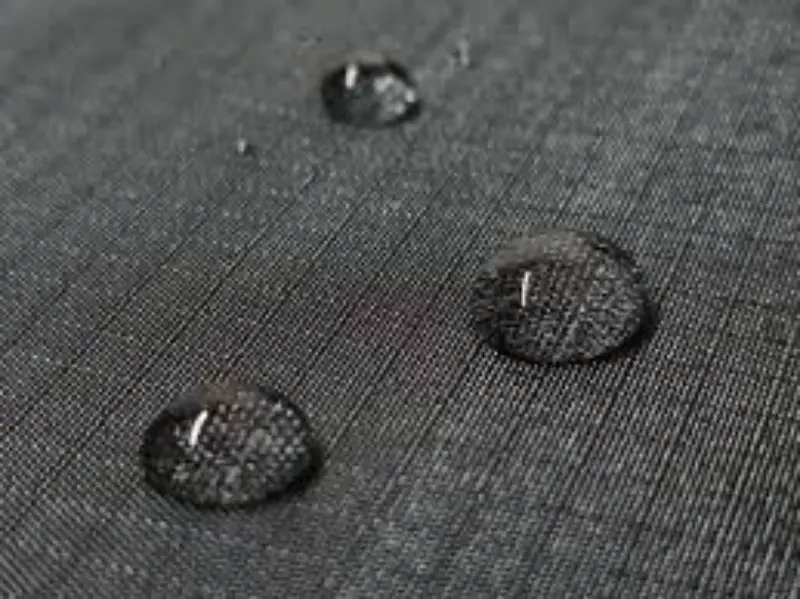
When gear snags, standard uniforms fail. Ripstop uses a woven grid to stop punctures from spreading. This makes it the ideal type of fabric to bridge fashion with technical workwear.
The visual grid guarantees nothing. In our lab tests, base fiber, coating, and weight determine actual performance. We specify it for tactical uniforms, field jackets, and cargo pants.
🛡️ Our Verdict: When comparing ripstop vs canvas workwear, check reinforcement visibility and coating consistency first. Always require physical ISO tear tests to verify workwear safety standards before approving bulk orders.
12. Mesh: Ventilation Fabric for Sportswear, Linings, and High-Visibility Layers

Cheap mesh will not cool your team. You need functional airflow, not a decorative patch. Industrial mesh improves ventilation and lightness. Performance depends on hole size, fiber strength, and stretch recovery.
We use it for athletic panels, breathable linings, and safety garments. When sourcing from safety jackets manufacturers in China, balance maximum airflow with strict UPF rating clothing standards.
🛡️ Our Verdict: Low-grade mesh snags on equipment. I always test snag resistance, opacity, and trim compatibility before approving bulk production.
13. French Terry: Loop-Back Knit for Cozy Sweatshirts, Joggers, and Year-Round Loungewear

If your crew overheats in heavy fleece but freezes in basic jersey, French terry is your commercial sweet spot. Its interior loop-back construction breathes better than brushed fleece while absorbing moisture. We use this midweight knit heavily for premium hoodies, shorts, and joggers.
🛡️ Our Verdict: Cheap loops snag easily. When auditing factories, I physically pull the fabric to test loop stability and weight consistency. Always enforce strict AATCC shrinkage limits and verify the hand feel matches your premium price point before approving bulk orders.
14. Fleece: Cold-Weather Insulation
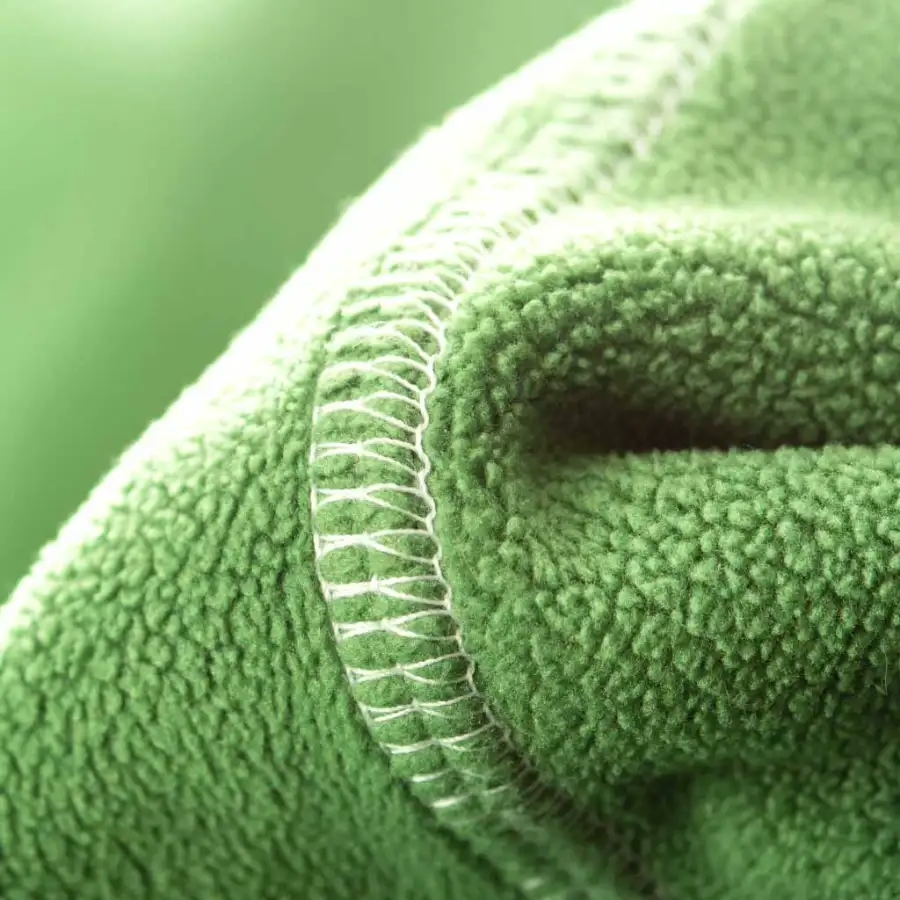
If your crew freezes in stiff jackets, soft fleece solves the problem. It traps heat, dries fast, and requires zero ironing. We use this fabric constantly for zip-up liners and winter programs.
Fleece looks less professional than woven outerwear. It also adds bulk and pills easily during industrial laundering. To ensure layering compatibility under safety shells, always check the inner brushing quality.
🛡️ Our Verdict: Cheap fleece sheds and restricts movement. I demand ASTM D3512 pilling tests before approving bulk orders.
15. Rib Knit: The Detail Controlling Cuff Recovery

Trim failures make expensive workwear look cheap. A quality rib knit prevents this. Its looped structure creates natural stretch to control recovery at collars, cuffs, and waistbands.
Pure cotton ribbing bags out completely during industrial laundering. In our factory tests, close-fit basics need at least 3% elastane for proper bounce-back.
🛡️ Our Verdict: We mandate a strict stretch-return test after three washes. Always verify color matching manually, because ribbing and your primary type of fabrics absorb dye differently.
16. Modal: Soft Premium Fabric for Underwear, Sleepwear, and Elevated Basics

Modal provides a massive comfort upgrade for brands competing on softness. It delivers a fluid drape that beats basic rayon. We source this type of fabrics for luxury underwear and sleepwear.
Supreme softness sacrifices strength. During ISO 15797 industrial washing tests, pure modal degrades quickly. You must mandate a synthetic blend to ensure durability.
🛡️ Our Verdict: Modal loses its hand feel after heavy washing. Always verify ASTM D4970 pilling resistance, stretch recovery, and opacity before approving production.
17. Lyocell: The Sustainable Viscose Alternative

Standard viscose offers a soft drape but fails modern eco-compliance audits. Lyocell is the premium cellulose alternative. Its closed-loop production process recycles solvents, giving your brand a verified sustainability story.
This type of fabric blends perfectly with cotton or elastane for upscale corporate shirts and dresses. Pure lyocell wrinkles easily and stresses garment seams.
🛡️ Our Verdict: In our tests, lyocell changes texture after heavy commercial laundering. I always test for seam slippage (ISO 13936) and mandate an anti-wrinkle finish before approving bulk orders.
18. Wool & Merino Wool: Temperature-Regulating Fabrics for Premium and Technical Layers

Traditional wool delivers unmatched insulation, breathability, and odor resistance for cold-weather capsules. Standard wool easily irritates the skin. We specify Merino wool for base layers and knitwear. Its finer fibers provide resilience without the itch.
Untreated wool shrinks during commercial laundering. In our testing, we mandate superwash treatments to prevent felting.
🛡️ Our Verdict: Expect higher costs when choosing this type of fabrics. Always verify fiber thickness under 20 microns for skin-contact garments.
19. Silk: Luxury Fabric for Premium Capsules, Linings, and Occasionwear

Silk in corporate uniforms sounds like a maintenance nightmare. Yet, its sheen and softness send a powerful premium signal for upscale hospitality and executive scarves. Because commercial washing destroys this delicate fiber, reserve it strictly for high-end blouses or jacket linings.
🛡️ Our Verdict: Ask if your buyers will actually pay for dry cleaning. Before approving these types of fabrics for production, we always test snag risk, mandate strict seam slippage checks, and verify dye lot consistency.
20. Satin: Finish-Led Fabric for Luster, Drape, and Dressier Product Lines

Many buyers treat satin as a raw fiber. It is actually a weave structure. The underlying yarn dictates the performance of these type of fabrics.
Polyester satin provides durable linings for hospitality uniforms. Silk satin creates premium sleepwear but cuts margins.
🛡️ Our Verdict: Satin snags easily on industrial machines. We verify snag resistance against ASTM D3939 standards before cutting.
⚡ Power Move: Never approve samples on appearance alone. Test fabric slip, shine, and target margin support.
21. Chiffon & Georgette: Sheer Fabrics for Lightweight Layers and Occasionwear

When sourcing this type of fabrics, expect unmatched lightness and drape. Chiffon offers airy transparency. Georgette brings a sturdier, grainy feel. We use both for premium scarves and occasionwear overlays.
These materials slide easily, which ruins marker efficiency and wastes yardage. Always evaluate snag risks, opacity, and seam puckering.
🛡️ Our Verdict: Sheer textiles slip on cutting tables. I mandate paper interleaving during bulk cutting to secure them.
I use this exact framework when buying workwear in bulk. Follow these steps to verify every type of fabrics before you order.
How to Choose Reliable Workwear Fabrics and Manufacturers?

Step 1: Build Your Base Requirements
Define the garment’s end use first. Next, pick between woven and knit types of workwear. Then, select natural or synthetic fiber families. Finally, set your GSM. Higher GSM adds weight and structure. It does not automatically guarantee better workwear fabrics.
Step 2: Run Factory-Level Quality Checks
In our tests, factories often send perfect samples that fail during bulk production. Run touch tests for softness, surface texture, and elasticity recovery. Use a controlled burn test to compare ash, melting, and odor patterns. Confirm these screening results with official supplier lab reports.
Demand Global Organic Textile Standard (GOTS) certificates to prove organic claims. Require OEKO-TEX Standard 100 screening for harmful substances. Enforce strict AQL standards for shrinkage, colorfastness, and pilling. This secures your workwear safety standards before workwear manufacturers or private label manufacturers cut the fabric.
Step 3: Protect Garments During Ocean Freight
Ocean freight destroys unprotected uniforms. Cotton, linen, and wool absorb moisture and develop severe compression wrinkles. Polyester and nylon recover their shape faster. Bulky knits flatten unevenly in cheap cartons. Require desiccants, sealed polybags, and compression-aware packing. Perform post-arrival recovery checks immediately.
Work directly with reliable industrial uniform manufacturers, China uniform manufacturers, or uniform manufacturers USA. Go to our contacts page to start your custom tech pack.
People Also Ask About Type of Fabrics
1. Are natural or synthetic fibers better for workwear?
Neither is universally better. Your choice depends entirely on the job environment. Natural fibers like cotton offer excellent breathability for indoor hospitality uniforms. Synthetic fibers like polyester resist harsh chemicals and repel water.
2. How do woven and knit fabrics affect uniform production?
Woven fabrics hold their shape rigidly, while knits stretch. Woven construction gives custom work pants and heavy types of coveralls strict structural integrity. Knits drape softly and fit closer to the body. In our factory, knits carry higher production risks because they shrink unpredictably during commercial washing. When clients ask us to compare ripstop vs canvas workwear, we always specify woven structures to prevent snagging on heavy industrial machinery.
3. Does a higher GSM mean better fabric quality?
No, a higher Grams per Square Meter (GSM) simply means the fabric is heavier. It does not guarantee better durability or softness. A heavy 300 GSM cotton tears much faster than a light 150 GSM nylon ripstop. We often see new work clothes brands demand ultra-heavy textiles to feel premium. They usually face severe worker heatstroke complaints soon after. We use ASTM D3776 standards to measure mass and match fabric weight strictly to the working climate.
4. How do you verify fabric composition before ordering in bulk?
The fastest method is a physical burn test. Synthetic fibers melt into hard beads and smell like plastic. Natural fibers turn to ash and smell like burning leaves. However, you cannot rely on basic burn tests for legal safety compliance.
We strictly require official lab reports from third party testing facilities. We verify AATCC testing standards before we cut any bulk yardage. If you need help vetting factory materials, contact LeelineWork to manage your custom sourcing safely.