




01
Front Desk & Concierge
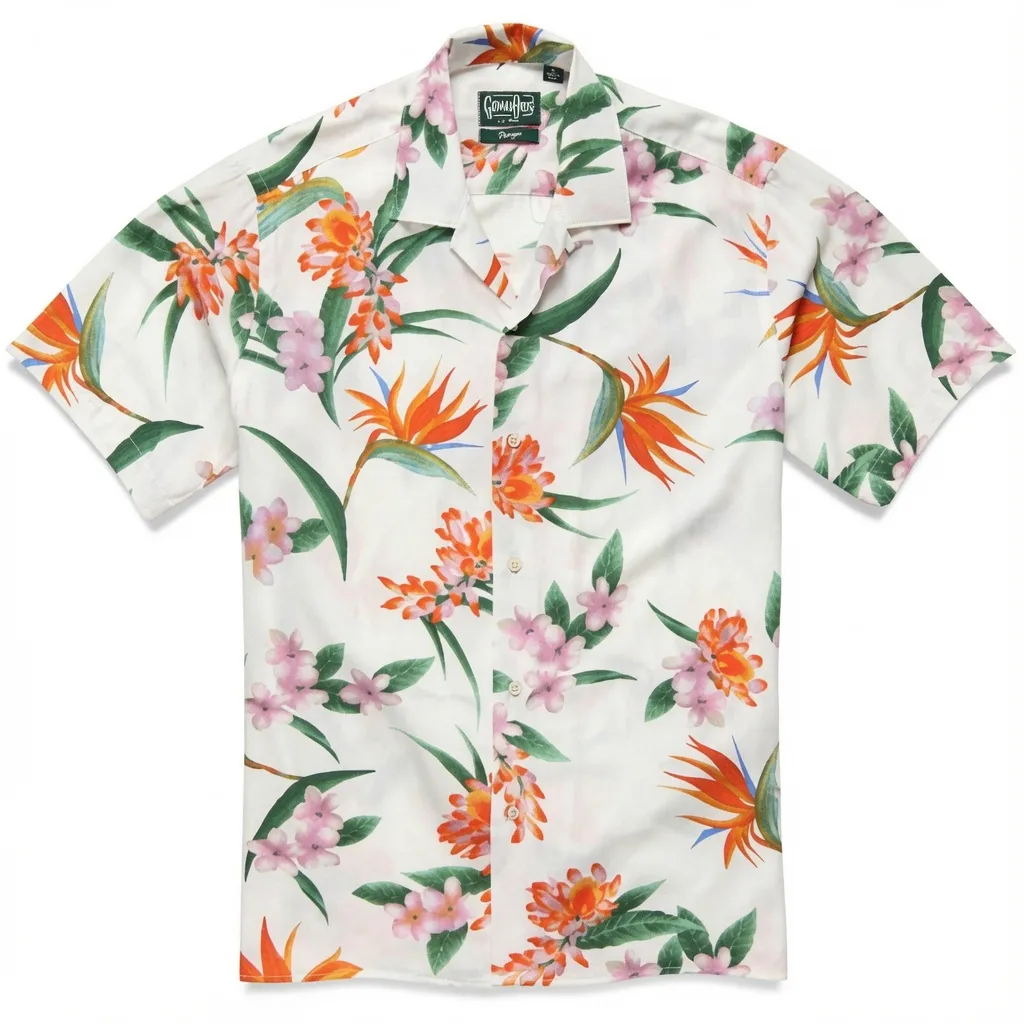
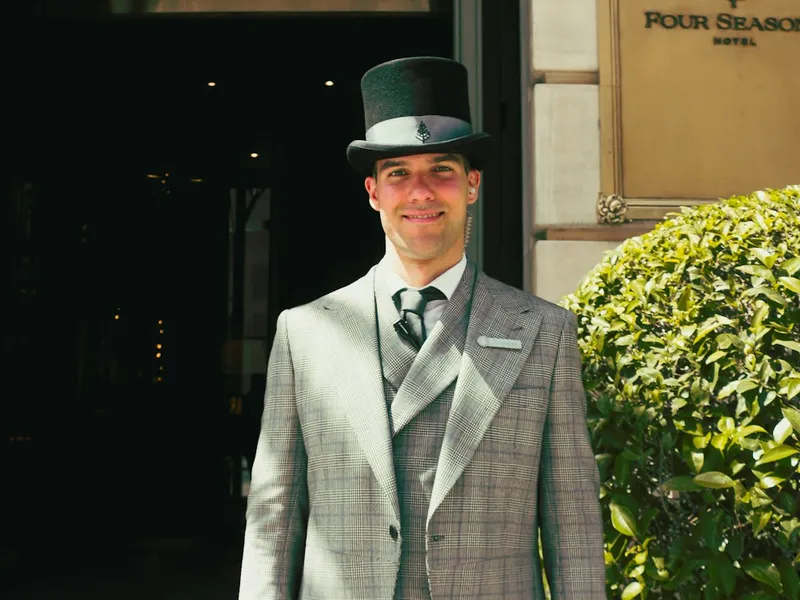
The first impression a guest receives. Crisp drape, a wrinkle-resistant finish, and a colour that survives the commercial laundry your property already runs.
WearsBlazers, dress shirts, waistcoats, neckwear
A group program that keeps front-of-house, kitchen, housekeeping, and banquet wearing one coordinated palette — colour-locked at the dye house, tested through the commercial laundry, and sealed to a sample so a hotel opened next year still matches the first.
A hospitality program rarely fails all at once. It fails in small, familiar ways — each one visible to guests before it is visible in the numbers.
The new hotel opens a shade off the first. Guests feel it and the brand standard slips.
What it costsOne off-shade run = a full re-cut, 15–20 days to redo.
Coats grey out, collars curl, buttons crack in the steam tunnel by week six. Kitchens run the heaviest cycle on the property.
What it costsReplacing a brigade mid-season is a full re-order, not a patch.
A "Medium" that fits the sample and not the reorder. New starters cycle through constantly and fit complaints pile up at every outlet.
What it costsA fit re-grade means new patterns before any property is re-supplied.
Front of house, kitchen, and housekeeping buy separately — no shared identity and no group view of spend.
What it costsNo single record means every property re-negotiates its own spec.
A procurement audit lands unannounced and the wash-test reports trace to nothing.
What it costsOne untraceable certificate risks the listing it covers.
Cutting, sewing, embroidery, and packing under our own roof — colour cannot drift down a supply chain.
Fabric is tested to your property’s wash cycle — ISO 15797 / ISO 6330, 50+ cycles — before bulk cut.
Your approved sample is the standard, and Pantone readings are archived per SKU. A property added later still matches.
A hospitality program is not one garment. It is a role map — each department wearing the right family of garment in the right brand colour, cut to one palette and one size grade.
The first impression a guest receives. Crisp drape, a wrinkle-resistant finish, and a colour that survives the commercial laundry your property already runs.
WearsBlazers, dress shirts, waistcoats, neckwear
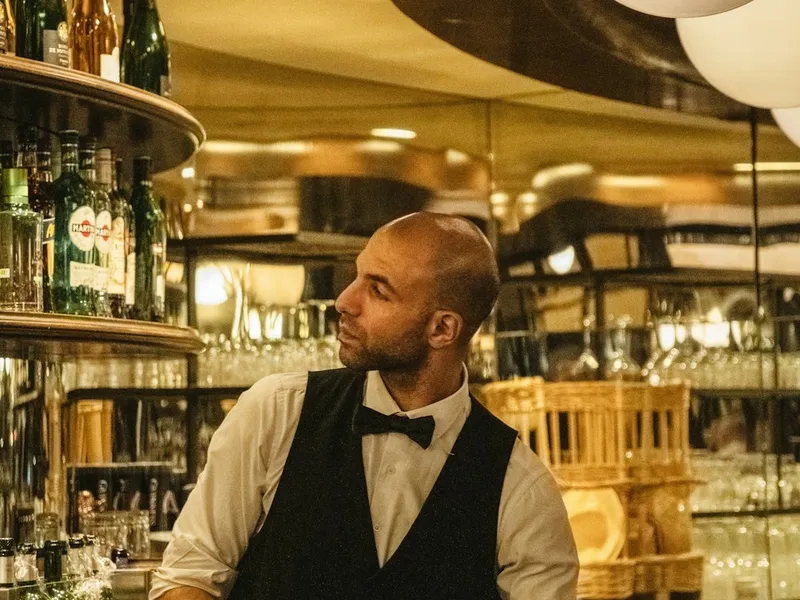
Subtle texture hides the creases of a double shift, and a breathable blend keeps the floor looking sharp at hour eight — not just at first cover.
WearsServer shirts, blouses, aprons, waistcoats
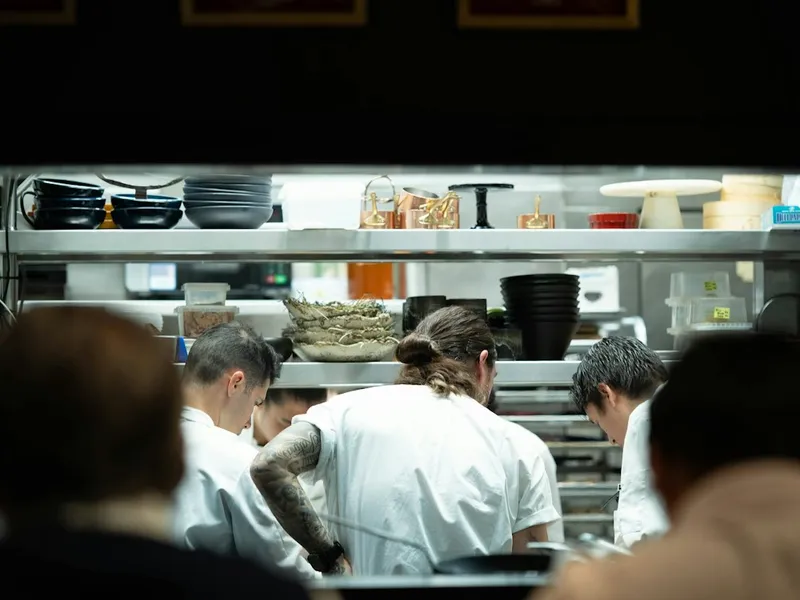
Double-breasted construction lets a chef reverse a stained panel mid-service, in stain-release fabric that lifts tomato, oil, and wine in the steam tunnel.
WearsChef jackets, kitchen trousers, aprons, caps

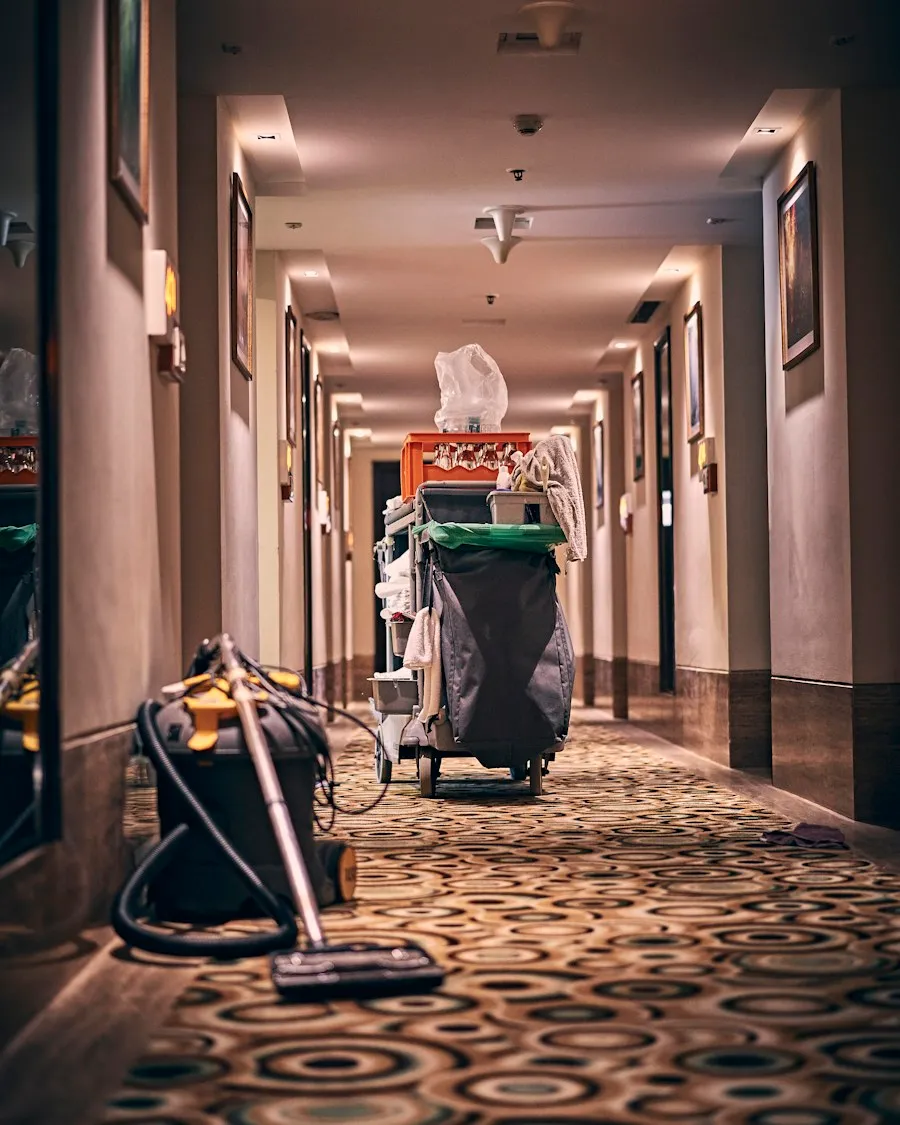
Built for eight hours of bending, reaching, and kneeling — reinforced stress points, a twill that hides the day, and moisture-wicking comfort between turns.
WearsTunics, trousers, tabards
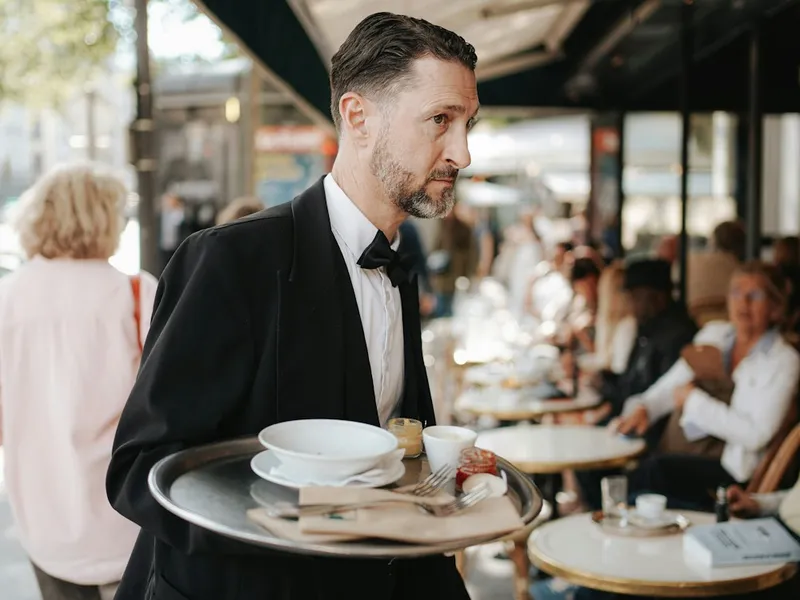
Formal service wear that packs and travels flat for events off-site, and still reads crisply across a banquet floor after a hundred covers.
WearsBanquet shirts, vests, ties, service aprons
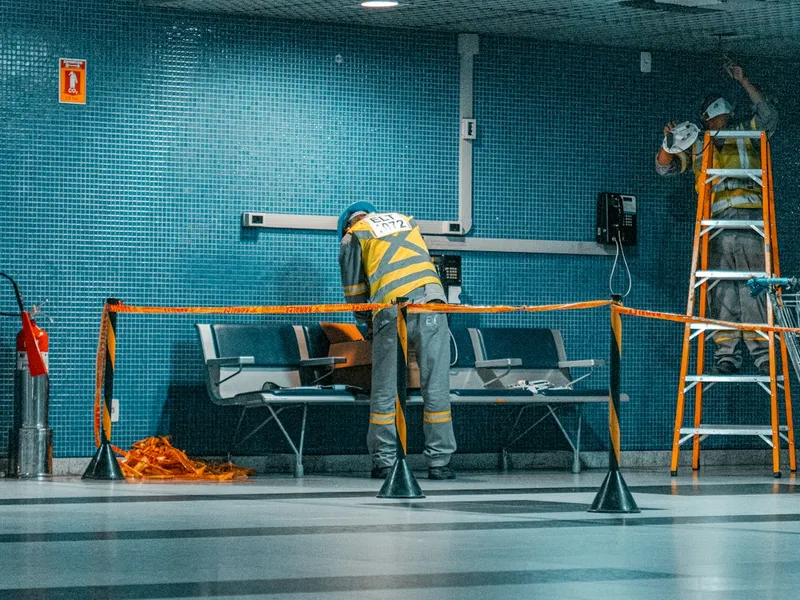
Heavy-duty wear for the team that keeps the property running — bar-tacked stress points, hi-vis options for night shifts, and hardware rated for the plant.
WearsWork wear, utility shirts, coveralls, hi-vis
Every family — blazers, shirts, tunics, chef jackets, aprons, work wear — is cut to the same palette and the same graded size chart, so a role that moves between properties keeps the same fit and the same colour.
Every reorder is checked against the same numbers — not catalogue averages.
Every figure is filed per batch and available to your procurement team — not a marketing claim.
Here is what changes when one factory owns every department, every property, and the whole run.
| What matters | LeelineWork (factory-direct) | Trading company | Local multi-suppliers |
|---|---|---|---|
| Colour control | Locked at the dye house, ΔE ≤ 1.5, archived per SKU | Matched by eye at the cutting table | Each shop matches its own way |
| Per-property pricing | Mill-direct, one price schedule for every property | A middleman margin on each order | A different price per city |
| Sampling | One sealed sample in 5 business days, used everywhere | Pulled from a stock style | A new sample per shop to re-approve |
| Compliance file | Batch pack filed by PO — mill certs, OEKO-TEX, wash tests, AQL | A certificate that traces to nothing | Files scattered, none complete |
| Spec ownership | Your spec archived per program | The spec sits with the middleman | No single record |
| Opening a new property | Reorder against the sealed sample | Re-quote and re-sample every time | Re-pieced from whatever is in stock |
| Lead time | 15–20 days from approval, one schedule | A sourcing leg between you and the line | Varies property by property |
| Documentation | Same file format, per PO, everywhere | Whatever the sub-supplier sends | A different pack per vendor |
Not every program needs a single supplier — but for a group that must read as one brand across properties, consolidating the run is what stops the drift.
A procurement audit or a brand review can arrive with no warning. Your program ships a documentation pack filed per purchase order — not a photocopied certificate that traces to nothing.
Fibre composition, blend, and weight for the roll the batch was cut from.
Colourfastness (AATCC 61) and shrinkage (AATCC 135) on the finished garment, tested to your property’s wash cycle.
Harmful-substance screening on skin-contact fabric — the proof hospitality procurement asks for first.
ISO 15797 / ISO 6330 results — colour, shrinkage, and hardware tracked over 50+ cycles.
ISO 2859-1 sampling results from the pre-shipment audit, per lot.
Cartons labelled and packed by property, so your team unloads straight to the floor.
Reorders ship the same pack against the archived spec — no re-testing for the sake of it, and no gap in the file if the wash cycle or fabric is unchanged.
No re-explaining your brand at each property, no separate supplier per outlet. One spec is locked once and drawn from for every property you open.
Send your properties, departments, brand colour map, and quantities — or just a brief. A named engineer builds the role-to-garment list and replies with a spec within 24 hours.
Brand colours are read at the dye house, the size grade is set, and a pre-production sample is cut on the production line and couriered in 5 business days. Approve it and it is sealed as the golden standard.
Bulk runs 15–20 days from sample approval, with AQL 2.5 checks at every stage. Colour and sizing are measured against the sealed sample — not eyeballed per property.
Each shipment is packed and labelled per property with its own packing list, and the batch compliance pack ships filed by PO. Distribution unloads straight to the floor.
Any property reorders on a one-line PO against the archived spec — no new sampling. A property added later still matches your first rollout.
A brand-new property needs its spec, sample, production, and freight — so order 6–8 weeks before opening day. Adding a property to an existing program is faster: it draws on the sealed sample and archived spec, so there is no fresh sampling round. A restock of an existing property ships in 10–14 days.
Sampling fees are credited against your first production order above the MOQ. Opening a new property later draws on the same archived spec — no new sampling unless the fabric or wash cycle changes.
If your teams wear the same coordinated look across more than one property — and you need the colour, the fit, and the paperwork to hold — this is the program.
5 to 50+ properties on one coordinated look, one colour map, and one supplier instead of a vendor per hotel.
Multi-outlet brands where front of house, bar, and kitchen stay visually distinct yet part of one identity.
Brand-conscious hotels and clubs matching wear to a logo palette, the same at every location.
Catering and event operators balancing presentation, wash durability, and a reliable colour code.
Resellers who need a factory to run a private-label hospitality line to a locked spec.
Consistency is not cosmetic. Across a multi-property group it reads as fewer replacements, fewer complaints, and hours back on the procurement desk.
Every property reads as one collection — no shade gap between the first hotel and the last one added.
Fabric proven through the commercial cycle your property runs, so chef coats and server wear last more than a season.
Your spec is on file, so a property restocks on a one-line PO instead of a fresh sample round.
Each property orders against the archived program — no local re-quoting, no coordinator chasing prices.
A non-disclosure, non-use, non-circumvention agreement enforceable under Chinese law is signed before your first spec sheet changes hands.
Your colour formula, size chart, and trims are held per program in an access-logged library. Only your assigned engineer has the keys.
The sample you approve is sealed as the standard and every bulk lot is measured against it — so it cannot quietly change between reorders.
Your patterns, tech packs, and colours are never shown to another buyer or reused for another brand.
Procurement leads and F&B directors who moved a whole group onto one coordinated spec — and what changed once it held.
Fourteen properties, and I could not get the same navy delivered twice. My F&B managers were messaging me photos: two server shirts, same SKU, one navy, one I don't know what colour — and the vendor kept telling me it was "within tolerance".
LeelineWork didn't just adjust the cutting table. They went to the dye house, read our navy by spectrophotometer, and locked the formula. Every lot is checked against that reading before a yard is cut. Fourteen properties on one colour map, and eighteen months later: zero colour complaints across the group.
What I did not expect was the reorder. My coordinator used to lose an afternoon chasing quotes per property. Now it is a one-line PO against the archived spec.
 Sofia MarchettiGroup Director of Food & Beverage — Hospitality Group
We run twelve restaurants and hotels under one brand, and the old supplier sent a one-page certificate that traced to nothing. A brand compliance review can arrive with no warning, so I treated every reorder as a gamble.
With LeelineWork the batch pack ships filed by PO — OEKO-TEX 100, ISO 15797 wash-cycle records, AQL 2.5 inspection records — and each piece ties to the cartons it covers. First review after the switch, I forwarded one email and it closed clean.
Cartons arrive labelled per property with the packing list inside, so our distribution team unloads straight to the floor instead of re-sorting by hand.
 Daniel OkaforGroup Procurement Manager — Meridian Resorts
If your question is not here, our RFQ desk replies within 24 hours — specs, not a sales pitch.
Production MOQ is 50 units per SKU. Pre-production samples are available from a single unit, and your sampling fee is credited against your first production order above the MOQ. Reorders carry no minimum once your spec is on file.
No — they are three separate windows, and we quote them separately. Sampling is 5 business days with up to 3 revision rounds. Bulk production runs 15–20 days from final sample approval. Enquiry to delivery is 14–21 days end to end, plus 18–30 days in freight once the factory ships. Reorders ship in 10–14 days because the spec is already locked.
We agree the criteria before cutting. Dimensions must sit inside your tech-pack tolerance (±0.5" / 1.3 cm unless you specify tighter). Colour is spectrophotometer-checked to ΔE ≤ 1.5 against your approved Pantone, on the finished garment. Construction and reflectivity are re-checked after the wash cycle your program requires. The sample ships with the fabric mill cert, per-batch lab report, and 4-point inspection record.
That is the core of what we do. Your spec — fabric, colour formula, sizing chart, logo placement — is archived per program, and every property order draws from that same record. A property added eighteen months later is produced against the sealed sample and the stored Pantone reading, so it lands matching the first rollout. Each property is labelled and packed per site so distribution unloads straight to the floor.
Colour is locked at the dye house, not eyeballed at the cutting table. Your brand swatch or existing garment is read by spectrophotometer and every new dye lot is verified against that reading within ΔE ≤ 1.5 — tighter than most people can reliably see — before a yard is cut. The reading is archived by style, so a reorder a year later still matches your original batch at every outlet.
That is the first thing a kitchen or housekeeping program is judged on. We test fabric to the wash cycle your property actually runs — ISO 15797 and ISO 6330, typically 50+ industrial cycles — and re-check colourfastness, shrinkage, and hardware after washing before bulk cut. Chef coats, server wear, and housekeeping tunics are all built and tested to the same standard, so a brigade’s wear lasts more than a season.
We build one role-to-colour map for the whole group and hold it on file. Front of house, F&B, kitchen, housekeeping, banquet, and maintenance each get a defined colour from the locked palette, and that map applies at every property. A role that moves between locations keeps the same colour and the same graded fit, so the code keeps working as the group grows.
Every shipment ships filed by PO with the fabric mill certificate, per-batch lab reports (AATCC 61 colourfastness and AATCC 135 shrinkage), the OEKO-TEX 100 certificate, the ISO 15797 wash-cycle record, and the AQL 2.5 pre-shipment inspection record. Each certificate ties to the exact cartons it covers, and cartons are labelled per property. Reorders ship the same pack against the archived spec if the fabric and wash cycle are unchanged.
Local suppliers solve speed within one city, but they multiply the problem you are trying to fix: a different fabric, a different colour match, and a different certificate at each location. That is how a group ends up with six navies. A single program gives you one archived spec, one sealed sample, and one compliance format across every property — which is what makes a collection look like one brand, not nine.
Send your properties, departments, brand colour map, and quantities — or just a brief. A named engineer builds the role-to-garment list and returns a spec with a quote.
MOQ 50 per SKU · Sampling credited against your first production order · NNN agreement before your first file
Properties, departments, colour map, quantities — or just a description of the look you want.
Role-to-garment list, fabric and GSM per department, sample plan, and a mill-direct price.
Pre-production sample in 5 business days; bulk runs 15–20 days from approval, packed per property.
Scoping a single garment line instead? See ourcustom hospitality uniform manufacturingrange — chef coats, server wear, housekeeping tunics, and front-of-house.Last updated: October 2026.