Corporate Identity Uniform Programs

Corporate Identity Uniforms that hold across every office.

Brand standards set in a deck, uniform reality all over the place — every office ordering its own version of the shirt, the navy, the logo. LeelineWork runs one factory-direct corporate program: a single Pantone-locked palette, your logo placement locked to the brand guide, and a graded size chart on file, so a branch you open next year still matches the first.

Locked at program start
Sample sealed5 business days
Logo placementPer brand guide
Size rangeXS–6XL graded
Fabric specArchived per SKU
Spec-to-quote24 hr
Where Brand Standards Break

Brand standards do not fail in the deck. They fail at the desk.

They do not collapse in one dramatic way — they drift. A different navy at each office, a logo two centimetres off, an "M" that stops meaning the same thing. Each drift is small; together they are the difference between one company and twelve.

Per-office colour drift

Each location buys its own run, matched by eye, so the group slowly stops looking like one company.

Sounds likeThe navy is a different navy at each office

CostsAn off-shade batch is a full re-cut — 15–20 days, at every office it shipped to.

Logo placement by habit

Without an archived placement spec, embroidery sits where the operator put it last time — not where the brand guide says.

Sounds likeThe logo sits differently on every garment

CostsRe-badging is a re-order, not a fix — you cannot un-stitch a placement.

Sizing that moves between batches

A chart that is not graded and locked produces fit complaints that land at the desk, not the factory.

Sounds likeAn "M" fits one office and not the next

CostsA fit re-grade means new pattern blocks before any office is re-supplied.

No shared record

Purchasing, HR, and each branch each hold a version of the truth, and no one holds the approved one.

Sounds likeEvery office orders its own way

CostsThe same spec is re-negotiated and re-sampled at each location, every cycle.

Documentation that scatters

Certificates, colour readings, and size charts live in different inboxes, so the audit chases paper instead of closing.

Sounds likeA brand review asks for the spec file

CostsOne undocumented batch puts the whole standard in question.

The drift is the cost

Not one disaster, but a slow bleed: every re-order a half-tone off, every new hire a size off the chart, every review chasing paper that should already be filed.

The Roster

Every role that meets your brand, dressed to one spec.

A program is a role map, not a single garment. Each brand-facing role — the people a client, candidate, or visitor actually sees — takes its own garment and place on the palette, cut from the same locked spec.

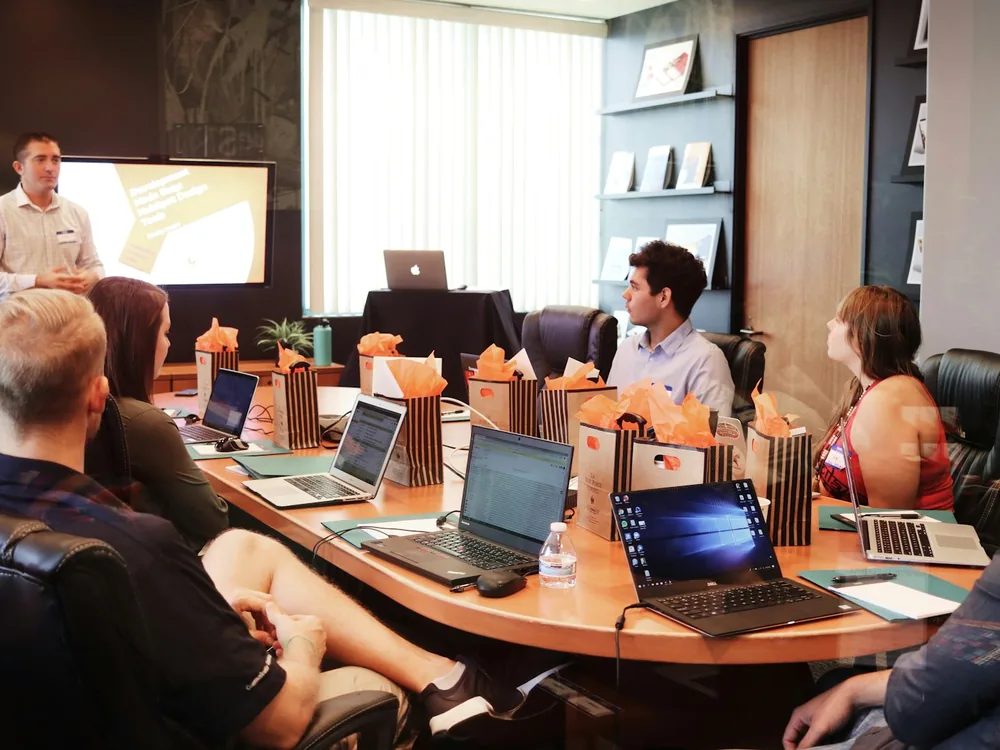
Corporate leadership team in coordinated tailoring in a boardroom

Leadership & Head Office

Executive team · board-facing staff

WearsBlazers, dress shirts, tailoring, knitwear

Brand touchpoint

Owns the brand at the highest-stakes meetings — investor days, client pitches, press.

Front desk staff in branded corporate wear greeting a visitor

Client-Facing & Front Desk

Reception · account managers · host staff

WearsPolos, blouses, blazers, cardigans

Brand touchpoint

First physical impression of the brand for every visitor and client who walks in.

Sales team in coordinated branded shirts reviewing documents

Sales & Customer Teams

Field sales · account teams · trade

WearsShirts, polos, branded outerwear

Brand touchpoint

Represents the company off-site, at client premises and trade events.

Field operations staff in branded work wear in a warehouse

Operations & Field Crews

Logistics · service · on-site teams

WearsWork shirts, softshells, hi-vis where required

Brand touchpoint

Visible at client sites and on the road — where a mismatched crew reads as a sub-contractor.

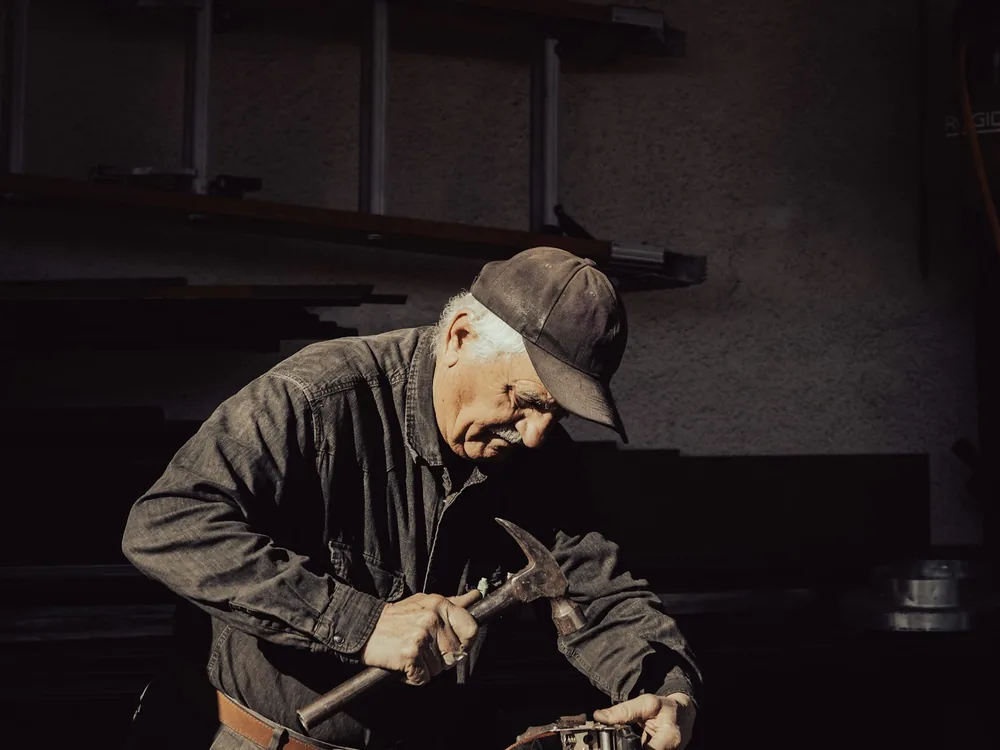
Tradesperson in durable branded work wear at a workbench

Trades & Technical Staff

Workshop · maintenance · installers

WearsCoveralls, workshop coats, hard-wearing shirts

Brand touchpoint

The craft side of the brand — durable wear that still carries the mark cleanly.

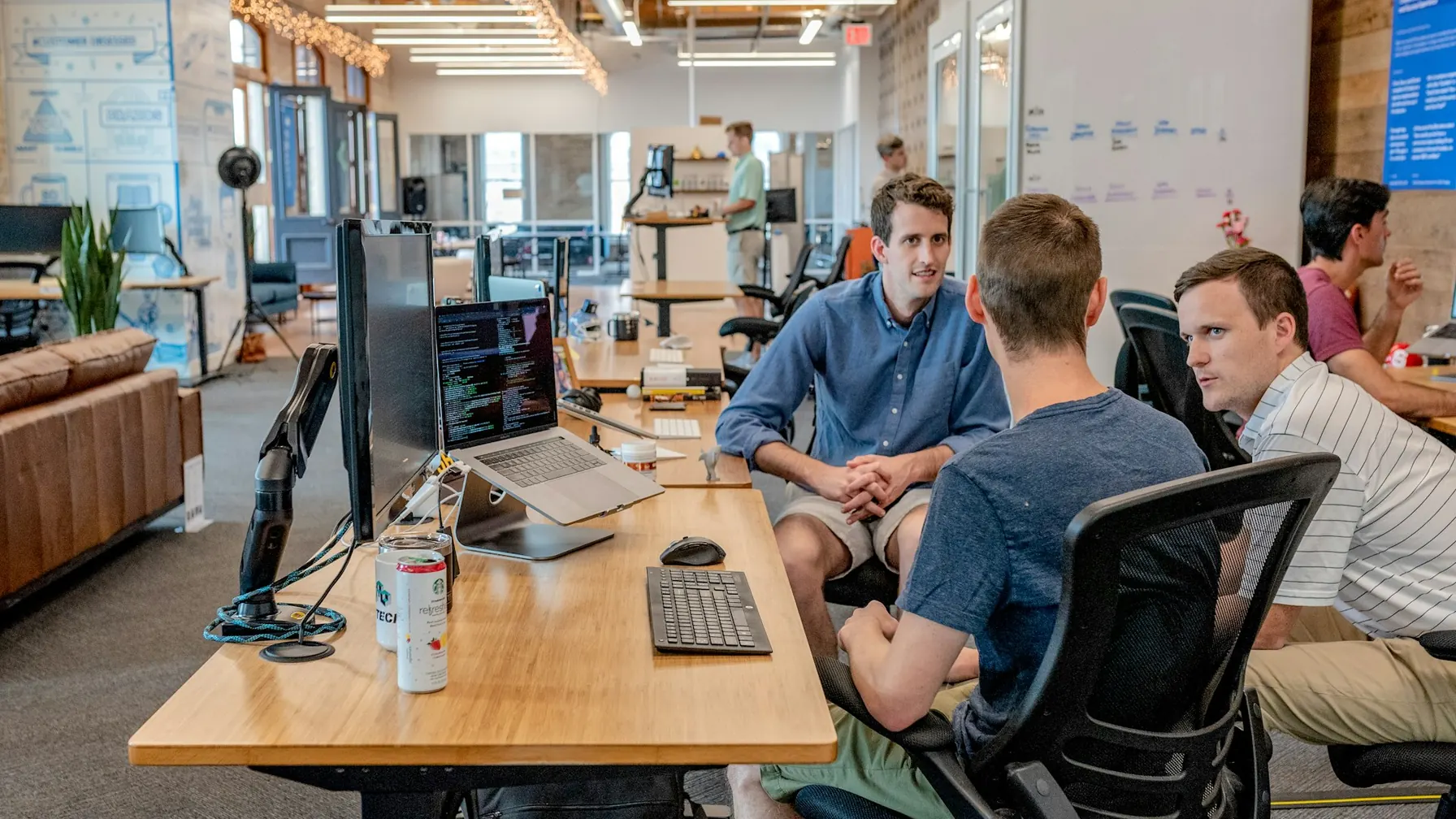
Remote worker in branded knitwear on a video call

Hybrid & Remote Staff

Home-based · distributed teams

WearsBranded knitwear, polos, soft knit layers

Brand touchpoint

On-camera half the day — the touchpoint most programs forget.

Roles can share a palette position without sharing a garment — a client-facing polo and a leadership blazer can read as one collection when the colour, trim, and logo treatment are drawn from the same spec.

Beyond the Uniform

The other half: apparel people choose to wear.

A staff uniform is worn because the job requires it. Branded merchandise is worn because the wearer wants to — that is what turns a logo into a relationship. The same locked palette and logo placement can carry your mark onto customer-, event-, and employee-facing apparel.

Why it earns its place

Uniforms protect the brand at work. Merchandise grows it everywhere else. Ordered on the same spec as your staff program, it removes the usual failure of buying promo goods twice: a one-off supplier with looser colour, thinner fabric, and no archive — so the shirt a member bought last year and the one they buy next year are not the same product.

Attachment

Wearers who opt in

A garment someone chooses to wear earns a place in the closet — and a logo seen far more often than any ad.

Conversion

Gifting that converts

Client and event apparel moves a relationship forward in a way a coaster does not. It is the rare gift the recipient keeps and re-wears.

One spec

Uniform-grade, not promo-grade

Colour, weight, and logo placement come off the same archived spec as your staff program — so reorders match, cycle after cycle.

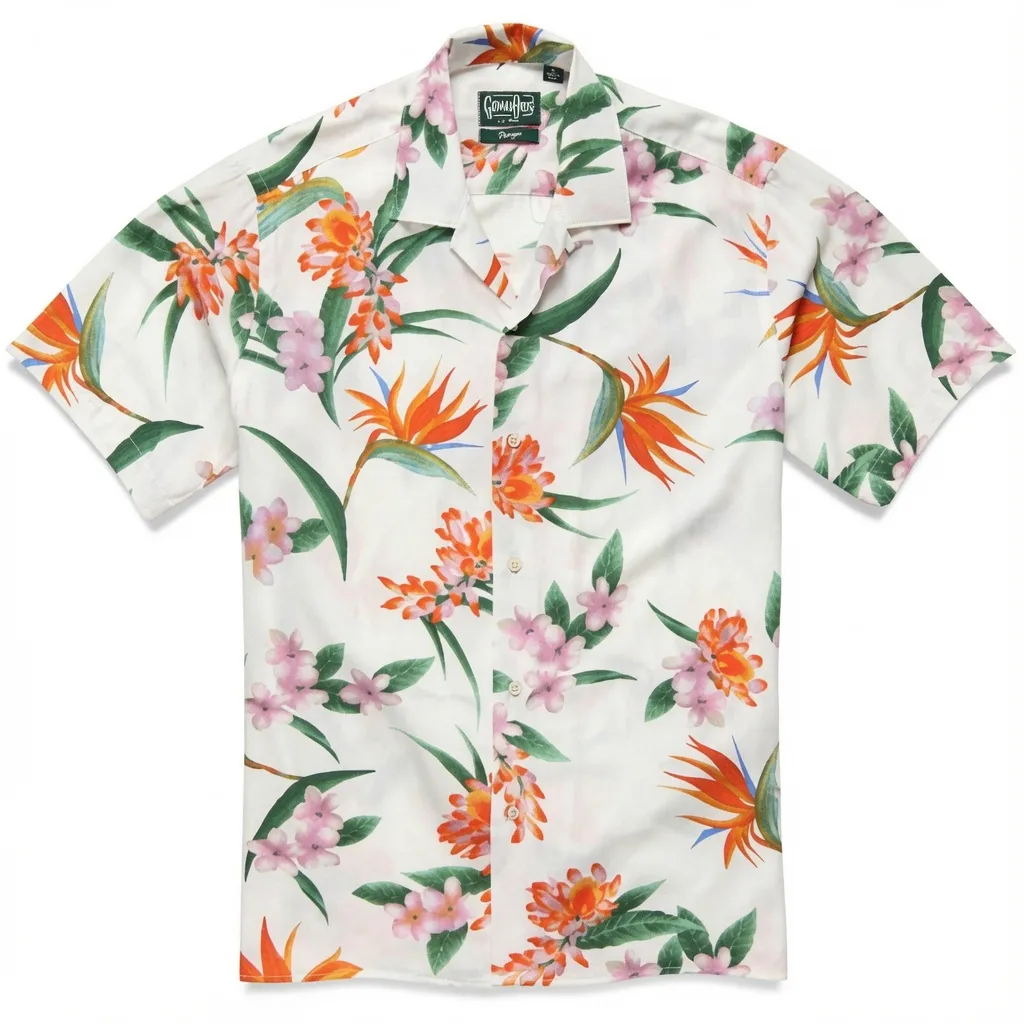
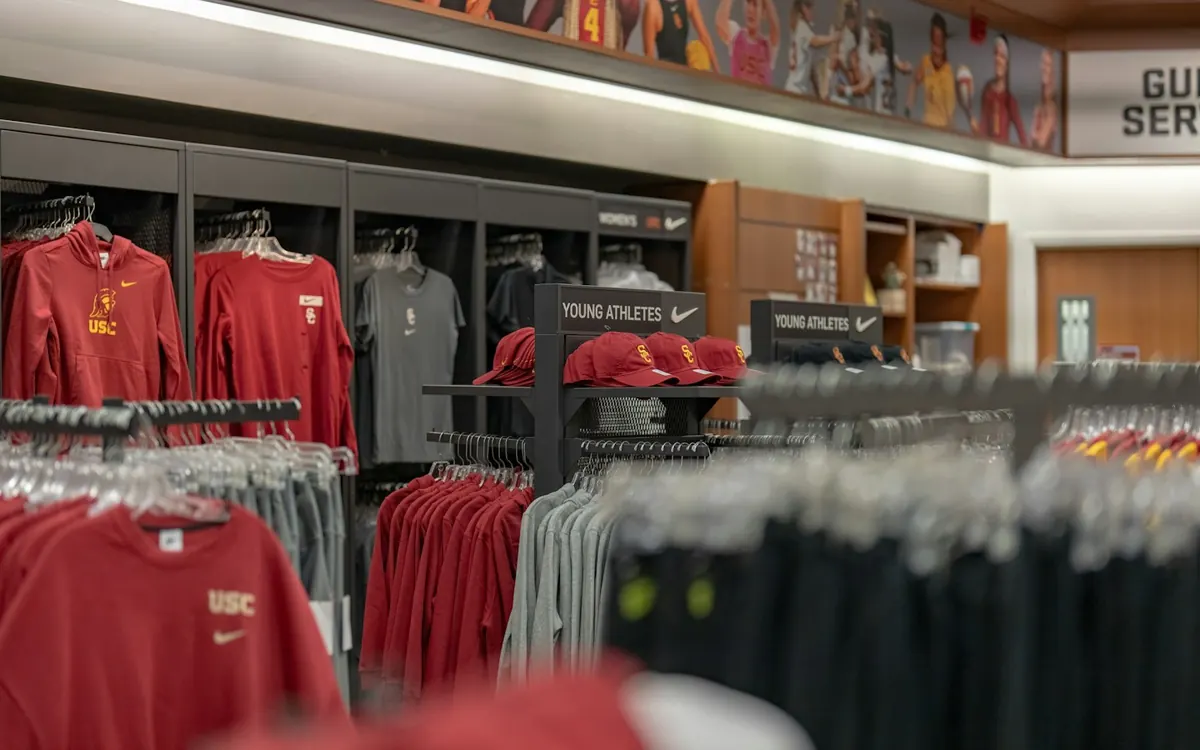
Branded corporate merchandise displayed on rails in a retail-brand store

What the same line can carry

Tees & Polos

Everyday branded basics, cut to the same graded chart as your staff wear.

Hoodies & Sweats

Heavyweight fleece that survives repeat washing without pilling or fading.

Caps & Headwear

Embroidered or woven labels, matched to your logo placement spec.

Outerwear

Softshells, gilets, and jackets for staff, teams, and gifting tiers.

Knitwear

Fine-gauge knits for leadership, client gifts, and on-camera teams.

Bags & Accessories

Totes, backpacks, and cases on the same palette and trim language.

Three places it pays for itself

Customers

The re-purchase the brand earns

Merch your customers or members buy — branded apparel that turns an audience into wearers of the mark.

Clients & Events

Gifting that travels

Conference, launch, and thank-you apparel that leaves the room and keeps working off-site.

Employees

Wear that builds the team

Opt-in team and team-offsite apparel — one identity inside the company, not just outward.

Merchandise runs on the same factory, palette, and logo-placement spec as your staff program, so a customer tee and a staff polo read as one brand. Order it as a run on its own, or bolt it onto an existing uniform program.

The Locked Spec

One spec, archived, so it cannot drift.

Consistency is not a promise — it is a record. At program start, five things are fixed and filed. Every office order is produced against that record, so a branch added a year later lands matching the first.

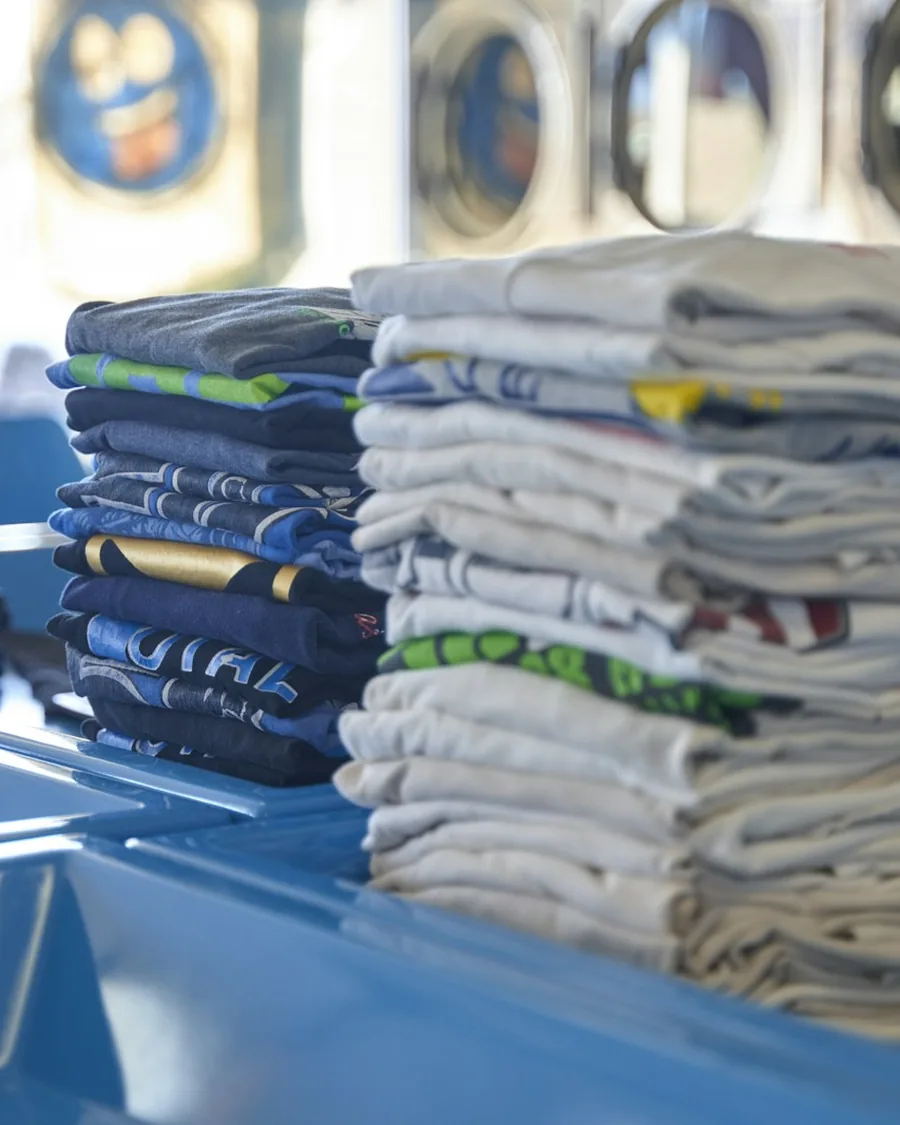
Folded corporate uniforms in a coordinated brand palette
The sealed record
5 records on file
01

Brand colour

Read from your swatch or reference garment by spectrophotometer and locked at the dye house.

Every dye lot verified to ΔE ≤ 1.5 before a yard is cut.

02

Logo placement

Position, size, and stitch or print method locked to your brand guide and filed per style.

Set to the placement spec — not to whoever ran the machine.

03

Size grade

One graded chart, XS–6XL, agreed up front and cut into every pattern block.

A reorder draws the same chart — an "M" means the same fit everywhere.

04

Fabric spec

Fibre, weight, and finish fixed per role and archived under the style code.

A reorder matches handle, drape, and wash behaviour — not just the colour.

05

Sealed sample

The sample you approve is sealed as the golden standard.

Every bulk lot is measured against it, so nothing changes quietly.

Held in an access-logged library, with a non-disclosure, non-use, non-circumvention agreement signed before the first file changes hands. Sampling runs 5 business days; reorders skip it entirely.

The Decision

One program vs many suppliers — the honest comparison.

Most groups arrive comparing price per garment. The choice that actually decides whether the brand holds is how many suppliers sit between your standard and the shirt — because each one is a place the colour, logo, and sizing can move.

Local suppliers per office

Local speed, many standards

Colour control
Each shop matches its own way
Logo placement
Re-set by each shop
Sizing
A new sample per shop
Fabric spec
Whatever is in stock locally
Per-office pricing
A different price per city
Compliance file
Files scattered, none complete
Opening a new office
Re-quote and re-sample every time
Merch capability
Not offered
Recommended

One factory-direct program

One standard, everywhere

Colour control
Locked at the dye house, ΔE ≤ 1.5, archived per SKU
Logo placement
Locked to the brand guide and filed per style
Sizing
One graded chart, XS–6XL, on every reorder
Fabric spec
Fixed per role and archived under the style code
Per-office pricing
Mill-direct, one price schedule for every office
Compliance file
Batch pack filed by PO — mill cert, lab reports, AQL
Opening a new office
Reorder against the sealed sample
Merch capability
Same palette and spec for customer-facing apparel

A single promo / print vendor

Cheap basics, no archive

Colour control
Stock colours, matched by eye
Logo placement
Whatever the print file allows
Sizing
Generic blanks, no grading
Fabric spec
Lightweight promo-grade blanks
Per-office pricing
Low per-unit, no program value
Compliance file
A certificate that traces to nothing
Opening a new office
Re-buy from a new stock run
Merch capability
Yes, but off-spec

A single factory-direct program earns its place when colour, logo, and sizing must hold across three or more offices, or when the same brand also runs customer-facing merchandise. For one office needing 72-hour local restock, a local supplier is often faster — and we will say so. Production MOQ is 50 units per SKU.

How It Rolls Out

Five stages. Every office on one record.

Five stages: spec-and-role intake in 24 hours, a sealed sample in 5 business days, production across your offices in 15–20 days, packing and documents filed by PO, then reorders in 10–14 days. A brand-new office draws on the same sealed sample — order six to eight weeks before it opens.

0124 hr

Spec & role intake

Send your offices, roles, brand guide, and quantities — or just a brief. A named engineer builds the role-to-garment list and replies with a spec.

025-day sample

Palette & sample locked

Brand colours are read at the dye house, the logo placement is set, and a pre-production sample is cut on the line and couriered in 5 business days.

0315–20 days

Production across offices

Bulk runs 15–20 days from sample approval, with AQL 2.5 checks at every stage and colour measured against the sealed standard.

04Filed by PO

Packed & filed by office

Each shipment is packed and labelled per office with its own packing list, and the batch compliance pack ships filed by PO.

0510–14 days

Reorder per office

Any office reorders on a one-line PO against the archived spec — no new sampling, and a later office still matches the first.

Opening a new office? Work back from day one.

Sample
5 business days
Production
15–20 days
Freight
18–30 days

A brand-new office needs its spec, sample, production, and freight — plan 6–8 weeks before day one. Adding an office to an existing program is faster: it draws on the sealed sample and archived spec, so there is no fresh sampling round. A restock ships in 10–14 days.

Fit Check

Where this program hits hardest.

Fit is a scale, not a yes or no. Every segment is ranked on one five-notch gauge by how much a single-factory program actually buys it — so the right buyer sees themselves near the top, and the wrong one sees themselves off the chart.

Fit indexRanked · built-for-it first
01rank

Groups running 3–50+ locations

Best fit
Multi-office & franchise

Branches, franchise networks, and regional offices that must read as one company on one palette, whatever the city.

Built for it · 5/5
02rank

Promotional & retail apparel

Best fit
Brands with merch ambitions

Companies running corporate merch, client gifting, or a small retail line who want it on uniform-grade spec, not promo-grade.

Built for it · 5/5
03rank

Brand-led corporates

Head office & professional services

Law, finance, consulting, and tech firms whose staff are the brand — tailoring and client-facing wear on one spec.

Strong · 4/5
04rank

Customer-visible teams

Hospitality & retail groups

Where front-of-house wear is a guest-facing asset and the palette has to hold across every site.

Strong · 4/5
05rank

Private-label corporate programs

Distributors & resellers

Resellers who need a factory to run a branded corporate line to a locked spec under their own label.

Solid · 3/5

Where the model stops working

Single site, no scale

One office below 50 units per SKU never reaches a run — and does not need one.

72-hour local restock

We ship from our own factory; rapid local replenishment is faster sourced closer to home.

Certified protective wear

FR, hi-vis, and arc-flash are a different program, tested to their own standards — not this one.

Buying one finished garment

This is a program built per style, not per wearer. Single pieces do not get a spec file.

The honest read

None of the four above is a defect in the program — each is a deliberate limit. A corporate identity program is worth running when colour, logo, and sizing must hold across several locations; below that scale, a local supplier is simply the faster answer, and we will say so before you spend.

Testimonials

From brand and procurement teams keeping
the standard across every office.

"

The navy was our recurring argument. The vendor before shipped batch two a half-shade lighter, called it "within tolerance", and we had two hundred polos staff would not wear together. You cannot argue that away at the front desk.

They did not fix it at the cutting table — they locked the colour at the dye house with a spectrophotometer reading on file. Nine reorders over eighteen months, batch after batch matching the first. And because the colour card and dye formula are archived under the SKU, reorders skip re-sampling: quote to cutting table in about ten days.

Replacement spend is down roughly 15% a year, and we stopped retiring whole batches early for shade drift — a six-figure leak nobody had tracked. Eight hundred staff across thirty-eight branches finally look like one company.

"
Priya Raman

Priya Raman

Facilities Director — 38-Branch Retail Group

"

Our brand team changes the logo placement note every couple of years, and each supplier re-interpreted it. Now one file holds the placement spec, and every office order stitches to it. The last brand review closed on a forwarded PDF — one email, no findings.

"
Aaro Vainio

Aaro Vainio

Procurement Lead — Nordic Business Services Group

"

We added merch on the same spec as the staff program — same navy, same logo placement. Customers now buy the same shirt the team wears, and a reorder still matches a year later. That never happened with the promo vendor, and it is the reason the line pays for itself.

"
HB

Helena Brandt

Head of Brand — Independent Hospitality Group

FAQ

The questions that decide a corporate program,
answered straight.

If your question isn't here, our RFQ desk responds within 24 hours — no sales pitch, just specs.

Production MOQ is 50 units per SKU. Pre-production samples are available from a single unit, and your sampling fee is credited against your first production order above the MOQ. Reorders carry no minimum once your spec is on file.

No — they are three separate windows, and we quote them separately. Sampling is 5 business days with up to 3 revision rounds. Bulk production runs 15–20 days from final sample approval. Enquiry to delivery is 14–21 days end to end, plus 18–30 days in freight once the factory ships. Reorders ship in 10–14 days because the spec is already locked.

We agree the criteria before cutting. Dimensions must sit inside your tech-pack tolerance (±0.5" / 1.3 cm unless you specify tighter). Colour is spectrophotometer-checked to ΔE ≤ 1.5 against your approved Pantone, on the finished garment. Construction and reflectivity are re-checked after the wash cycle your program requires. The sample ships with the fabric mill cert, per-batch lab report, and 4-point inspection record.

That is the core of the program. Your spec — colour formula, logo placement, size chart, fabric specification — is archived per program, and every office order draws from that same record. An office added eighteen months later is produced against the sealed sample and the stored colour reading, so it lands matching the first rollout. Each location is labelled and packed per office, so distribution unloads straight to the floor.

Colour is locked at the dye house, not eyeballed at the cutting table. Your brand swatch or an existing garment is read by spectrophotometer, and every new dye lot is verified against that reading within ΔE ≤ 1.5 — tighter than most people can reliably see — before a metre is cut. The reading is archived by style, so a reorder a year later still matches your original batch at every office.

Yes. Logo position, size, and method — embroidery, print, or woven label — are locked to your brand guide and filed per style at program start. Every batch is produced to that placement spec rather than to whoever is running the machine, so the mark lands the same on an office polo and a customer tee. Placement is re-checked at the pre-shipment inspection.

Yes — and it runs on the same archived spec. Tees, polos, hoodies, caps, outerwear, knits, and bags can be produced to the same palette and logo-placement spec as your staff program, for customer sales, client gifting, or opt-in team wear. Because it shares the spec, a merchandise reorder matches the same as a staff reorder. Merchandise can be ordered as its own run or added to an existing program; the production MOQ is 50 units per SKU either way.

One graded chart, XS–6XL, is agreed and cut into every pattern block for the program. That chart applies to every office and every role that shares the style, so an "M" means the same fit at head office and at a branch, and a new starter orders from the same chart. Measurement tolerance is your tech-pack tolerance — ±0.5" (1.3 cm) unless you specify tighter — and it is checked on the finished garment.

Every shipment ships filed by PO with the fabric mill certificate, per-batch lab reports (AATCC 61 colourfastness and AATCC 135 shrinkage), the OEKO-TEX 100 certificate, the spectrophotometer colour reading for the batch, and the AQL 2.5 pre-shipment inspection record. Each certificate ties to the exact cartons it covers, and cartons are labelled per office. Reorders ship the same pack against the archived spec.

Local suppliers solve speed within one city, but they multiply the problem you are trying to fix: a different fabric, a different colour match, and a different placement at each location. That is how a group ends up with six navies. A single program gives you one archived spec, one sealed sample, and one documentation format across every office — which is what makes the group look like one brand.

When you need 72-hour local restock, or when each office buys so little that it never reaches the 50-unit per-style minimum. A single-factory program earns its place when colour, logo, and sizing have to hold across three or more offices; for a single site sourcing a one-off, a local supplier is usually faster. We will tell you plainly if your scope does not fit.

Give us your offices. We'll return the brand spec.

Send your offices, roles, brand guide, and quantities — or just a brief. A named engineer replies within 24 hours with a role-to-garment spec and a mill-direct quote. No sales pitch.

Sourcing a single garment line instead? See ourcustom corporate wear manufacturingrange — polos, blazers, shirts, and branded outerwear.Last updated: October 2026.