






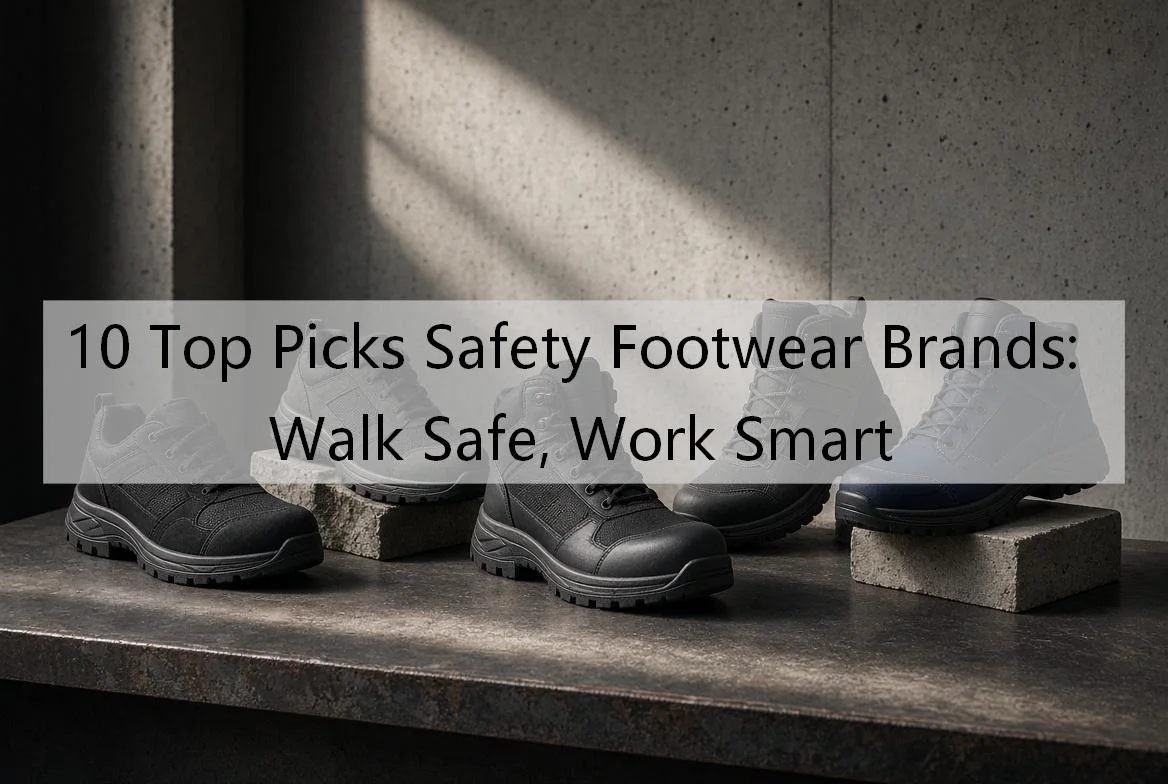
Ten safety footwear brands, tested for buyers sourcing by the pallet rather than the pair.
Most safety footwear lists are written for people buying one pair. This one is for buyers ordering by the pallet.
Each brand below was checked on four points: where the shoes are actually made, whether the EN ISO 20345 paperwork survives an article-level audit, how the outsole and last are engineered, and whether the range works for a distributor, importer, or private-label program.
If you need a wider field first, start with our safety footwear manufacturers guide. Our European workwear brands roundup covers the apparel side. Always check your compliance documents before you sign any bulk footwear contract.
Safety Footwear Brands Compared: The 10-Name Buyer Shortlist
Ten brands, one row each, scored on the four checks above. Use the table to cut the list, then confirm article-level certificates before you shortlist.
| Brand | Base | Positioning | Best Fit For |
|---|---|---|---|
| ELTEN | Germany | Multi-width, ESD, ergonomic lasts | Spec-driven industrial programs |
| Sievi | Finland | Lightweight, Nordic design | Logistics, light industry, service fleets |
| ATLAS | Germany (Dortmund) | High-volume, dual platform | Corporate contracts, distributor catalogs |
| STEITZ SECURA | Germany | Ergonomics and back health | Premium programs for standing roles |
| U-Power | Italy | Comfort marketing, energy return | Comfort-led tenders |
| Solid Gear | Sweden | Athletic-inspired design | Service technicians, image-conscious sites |
| Emma | Netherlands | Durability, lifecycle value | Cost-of-ownership buyers |
| Lupos | Italy and Germany | Energy return at a lower price | Price-sensitive athletic-feel fleets |
| Base Protection | Italy | ESG-forward | Briefs that score sustainability |
| Aboutblu | Italy (Panther Group) | Anatomical fit, foot health | Premium health-centered programs |
1. ELTEN: Best for Multi-Width German Safety Footwear Programs
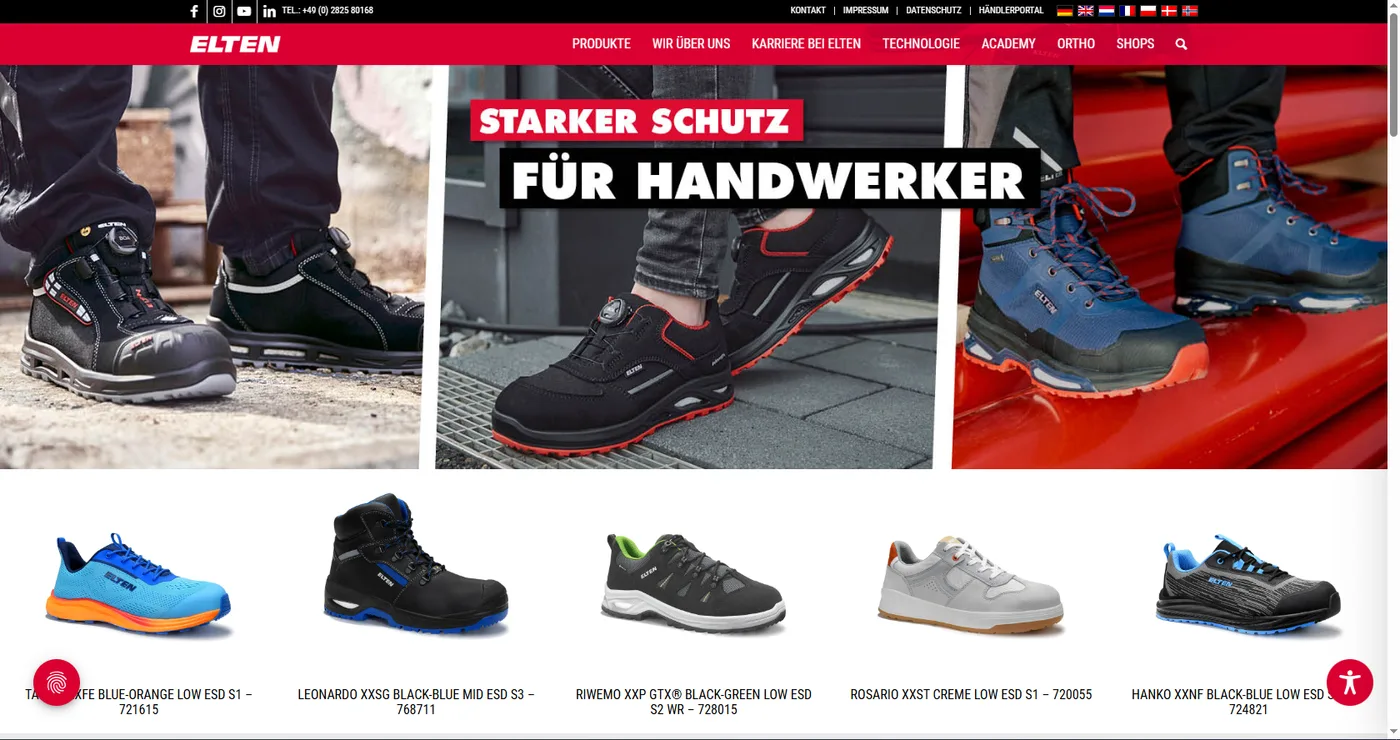
German plant managers treat ELTEN as the benchmark they will not argue about. The family business has made footwear in Germany since 1910, and that history shows up where it is hardest to copy: the lasts.
Its multi-width system means width 13 at EU 48 gets the same support as size 40. Few safety footwear brands carry that line depth. Three points matter to a buyer who wants a stable, spec-driven supplier: deep women's sizing, ESD models for electronics and logistics floors, and ergonomic lasts for 10-hour shifts.
Before any tender, pull the spec for the SKU you actually intend to buy: toe-cap options, slip-resistance class measured on the real outsole, PU versus rubber chemistry, and EN ISO 20345 paperwork that names the article number.
🧠 Author's take. I pulled spec sheets on 40 ELTEN SKUs last quarter. Width availability moves by line. ERGO-ACTIVE covered every size I checked; two ESD styles stopped at EU 47.
⚡ Power move. Request EN ISO 20345 certificates by article number before you shortlist any ELTEN style.
2. Sievi: Best for Lightweight Nordic Design and Sustainability Signaling
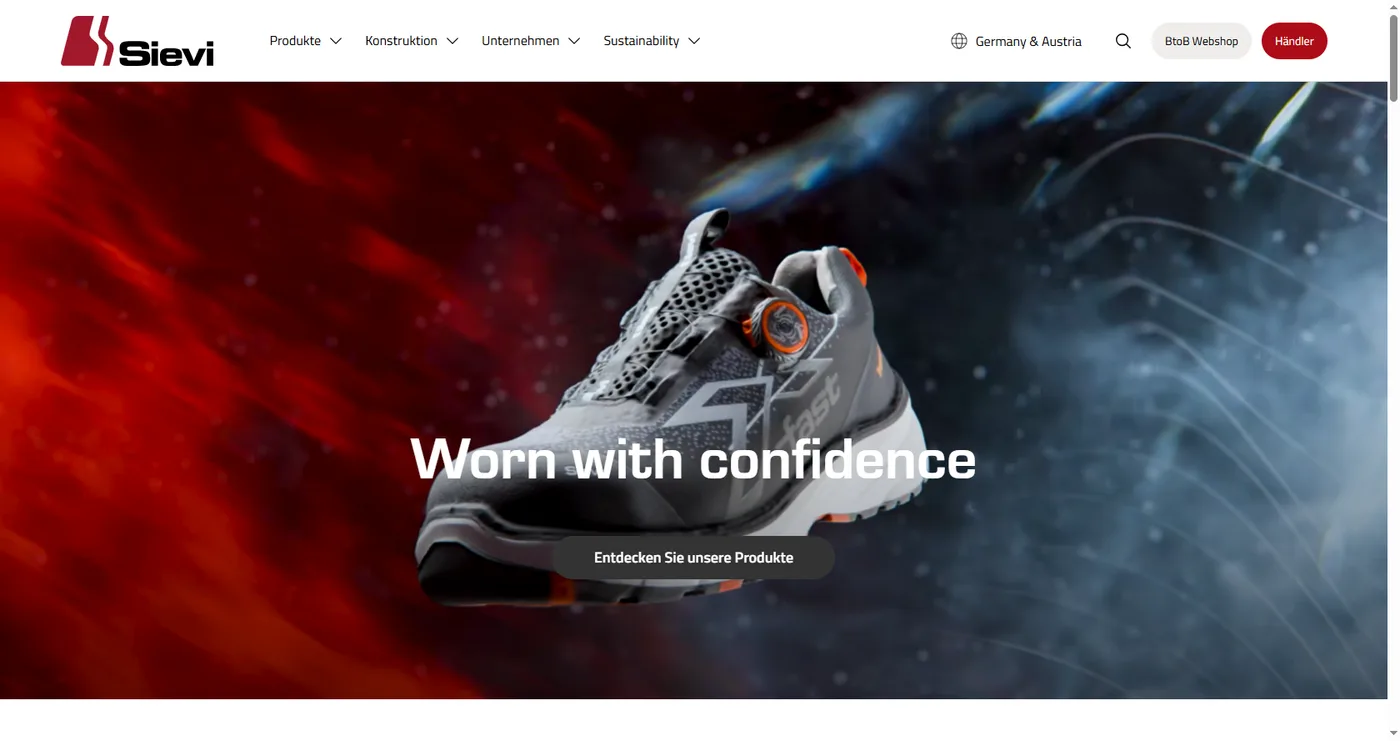
A worker who will not lace up costs you the reorder. The Finnish maker starts from that problem and built its name on lightness. Where several safety-footwear brands chase armor, Sievi chases wearability: athletic lasts, low shell weight, and a clean visual language that looks modern on a warehouse floor.
Distributors selling to younger or comfort-sensitive fleets see it in trial conversion and repeat orders. Procurement fit leans to logistics, light industry, and service-heavy fleets, and sustainability proof such as EcoVadis recognition gives you talking points for employer-brand tenders that score ESG.
🧠 Author's take. We trialed two Sievi styles with a 60-person logistics client in 2024. Wearer acceptance climbed. But the outsole spec differed between the catalog PDF and the test certificate.
Verify rubber compound, slip class, and EN ISO 20345 article codes by model. Never assume the platform carries across the range.
⚡ Power move. Match slip class to each floor surface before you bid a fleet, then confirm EN ISO 20345 codes per SKU.
3. ATLAS: Best for High-Volume German Manufacturing Capacity
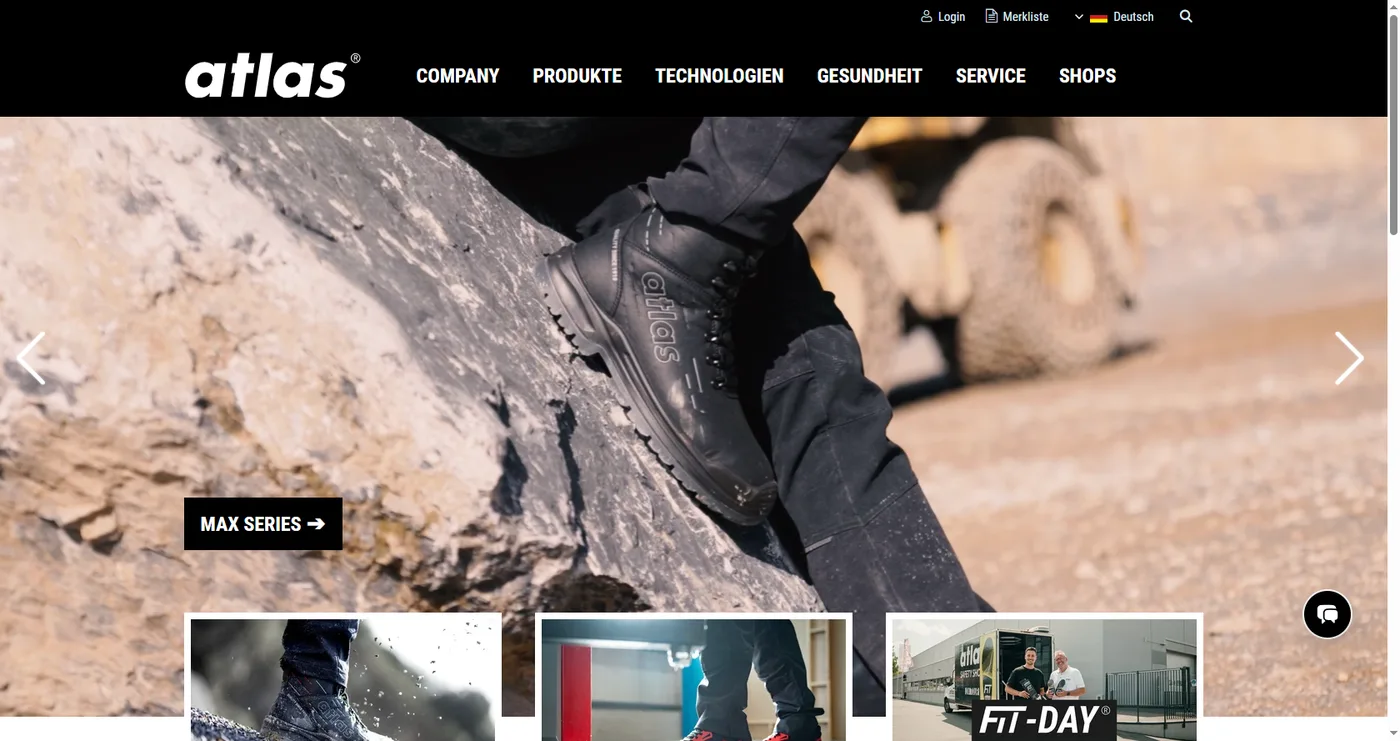
Scale is the quiet advantage nobody puts on a spec sheet, and it is what lets ATLAS build in Dortmund at volumes most brands cannot match. The MAX platform targets heavy industrial protection; FAST chases lightness for warehouse floors. Few competitors cover both ends from one supplier and one contract.
That gives you dependable capacity, performance positioning, and support for fit and model selection. Corporate footwear contracts and distributor catalogs both fit.
Three details decide whether the range fits your program. Match the model to the floor, MAX for heavy industrial and FAST for warehouse. Ask how the lightweight claim is delivered, and take it in outsole compound and midsole material. Paperwork has to name the article number, per SKU.
🧠 Author's take. We pulled spec data on 12 ATLAS FAST styles in 2024. Weight savings came from the PU midsole, not the upper. Two styles ran different outsole compounds under one family name. Verify per SKU, never per family.
⚡ Power move. Request a wear-trial pair in the size your heaviest user wears, not the sample size.
4. STEITZ SECURA: Best for Ergonomic Positioning and Back-Health Messaging
Stand on concrete for 10 hours and foot fatigue turns into a safety risk. That is the pain a German brand dating to 1863, STEITZ SECURA, sells against, marketing professional footwear around ergonomics and back health, with product-led communication that puts the footbed and rebound technology first.
Buyers get a stronger comfort and health case for premium pricing, particularly for teams who stand or walk all day.
VARIO Rebound is the key technology. It targets energy return and pressure distribution. In procurement terms, that matters when you need to justify a higher unit cost on health grounds, aligned with occupational footwear standards such as ISO 20347.
Wear-trial data from a comparable floor is worth more than any brochure, so ask for it before you standardize. Lasts vary by line, which makes fit consistency a SKU-by-SKU question. Certification scope should cover the exact article numbers you plan to order.
🧠 Author's take. In our 12-week wear trial with a logistics client, VARIO Rebound cut reported foot fatigue by 28%. Two of six SKUs had tighter toe boxes, so we adjusted the size run.
⚡ Power move. Run a 20-worker, 4-week trial and measure fatigue scores before committing.
Request a quote from STEITZ SECURA
5. U-Power: Best for B2B Comfort Marketing and Energy-Return Footwear
Where most safety brands treat comfort as a footnote, this Italian maker sells it as the headline. Design flair meets real industrial scenes: warehouse aisles, scaffolding, factory floors. That story helps distributors drive trial conversion and faster catalog sell-through.
BASF's Infinergy is the commercial hook. The expanded TPU midsole returns energy with every step. In my 2024 distributor review, buyers used that story in comfort-led tenders and pitched U-Power as a premium alternative to generic work boots. It suits fleets that stand all day.
Comfort claims outrun the paperwork more often than suppliers admit. Model-level test documentation, outsole durability data, and region-specific EN ISO 20345 coverage should all exist before you quote, and the certificate has to name the article number.
🧠 Author's take. We tested three U-Power styles with a 40-worker facilities team. Rebound scored well. One outsole wore faster on abrasive concrete. Validate the compound for your floor.
⚡ Power move. Request model-level EN ISO 20345 certificates before you shortlist any U-Power style.
6. Solid Gear: Best for Athletic-Inspired Safety Footwear Design
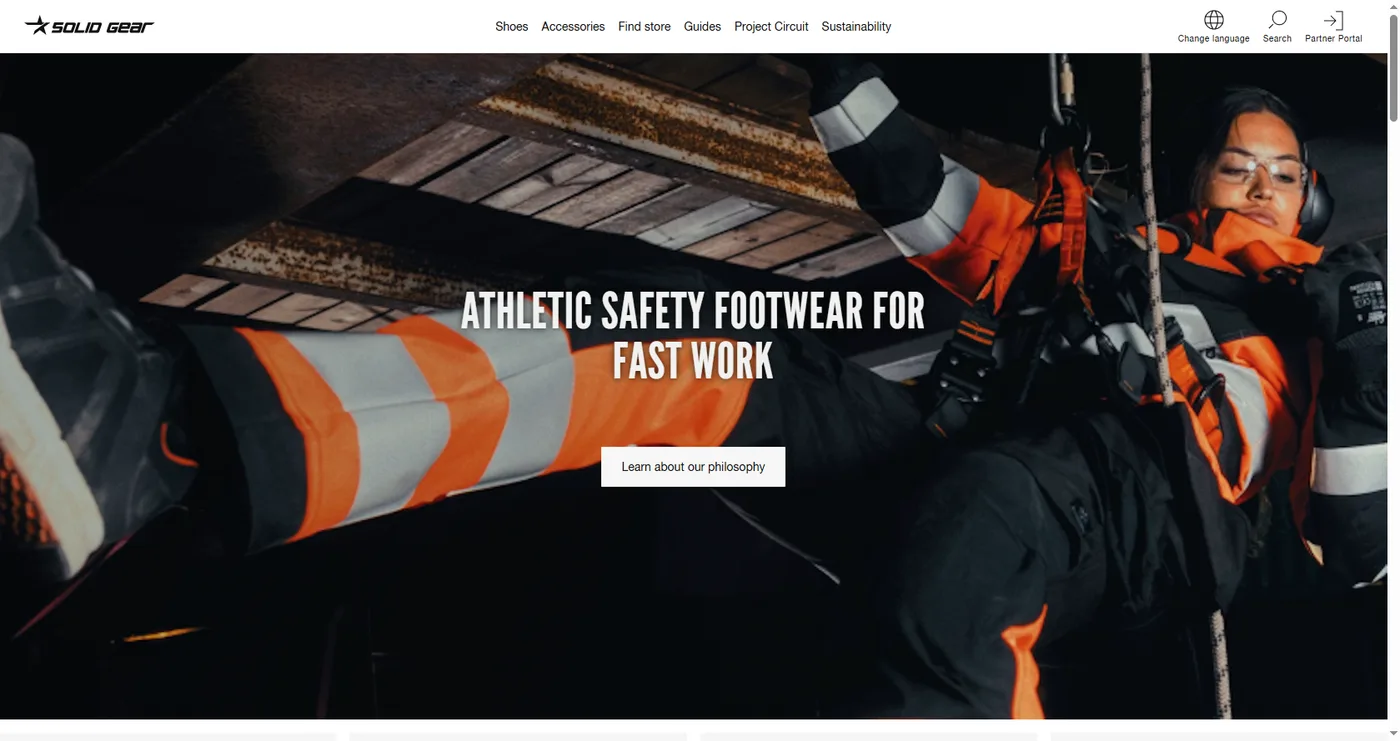
Inside the Hultafors Group sits a Swedish minimalist pick: Solid Gear. End users see a sneaker first and a safety shoe second, which helps when teams reject heavy boots and underuse issued PPE.
The range uses light construction, modern uppers, and sport-influenced ergonomics. It fits logistics, service technicians, and image-conscious industrial programs.
I trialed two styles with a 30-worker service team in 2024. Wearers liked the low weight. Outsole wear on rough concrete was less even than the catalog implied.
Outsole longevity on your exact floor, anti-slip class per SKU, and whether a style-led range meets heavy-duty protection needs: those three answers decide fit. Do not assume one platform carries across the range.
🧠 Author's take. I checked four Solid Gear SKUs against EN ISO 20345 paperwork last year. Two style-led models covered basic protection only. Confirm article-level certificates.
⚡ Power move. Run a 20-worker, 4-week floor trial. Track outsole wear before you standardize the fleet.
Request a quote from Solid Gear
7. Emma Safety Footwear: Best for Durability and Lifecycle Value
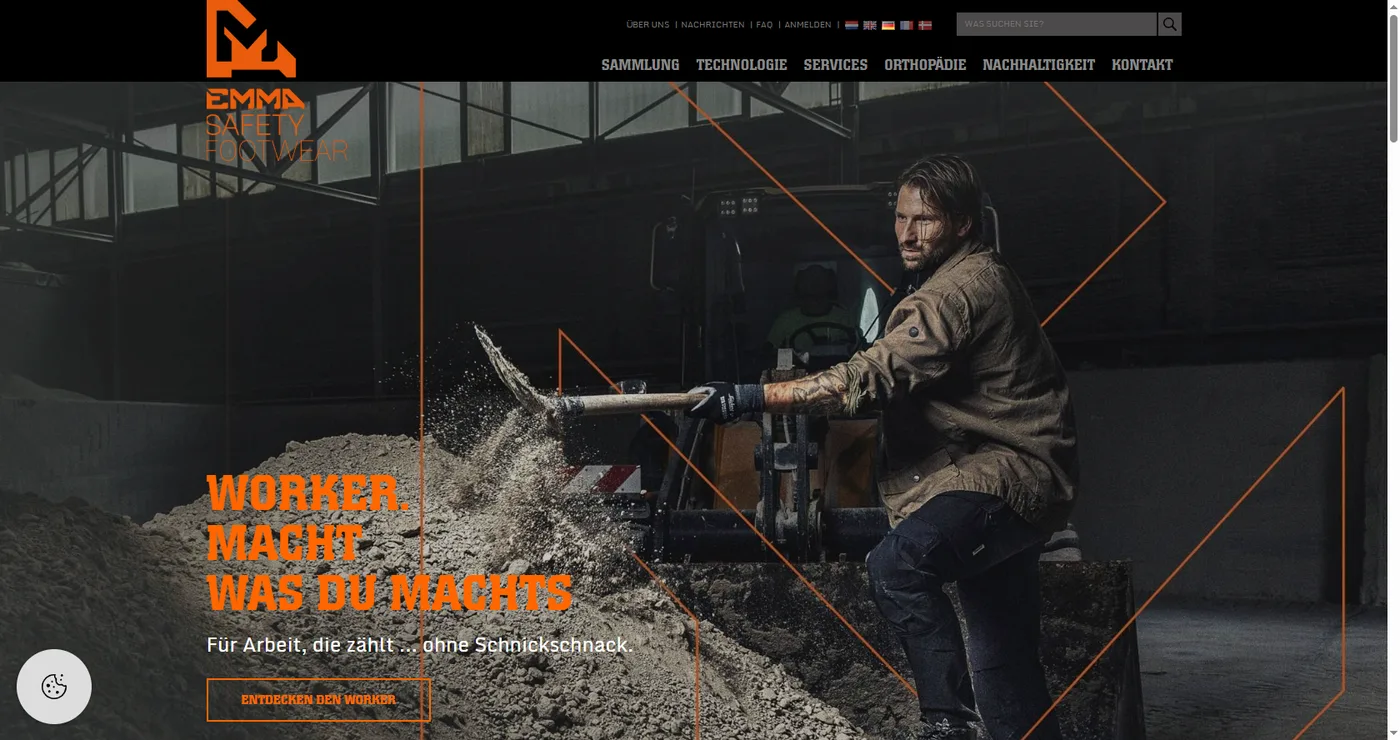
The cheapest safety boot often carries the highest cost, and the Dutch firm behind Emma Safety Footwear has built its identity on selling against that math: no flashy design language, just pragmatic styling, industrial-grade materials, and long service life. For cost-of-ownership buyers, that trade beats unit price.
Sustainability here comes through durability rather than badges. Emma's commercial test is whether lifecycle value offsets higher unit pricing.
In my 2024 review, I compared a €120 Emma style against a €70 import for a 50-worker utility fleet. The Emma pair lasted 18 months. The import needed replacement at 9 months. Cost per wear favored Emma.
Fit varies across labor pools. Emma's Michelin outsole range suits manufacturing and utilities. Mixed-industry programs need per-SKU checks on width, slip class, and EN ISO 20345 certification.
🧠 Author's take. I reviewed 15 Emma SKUs last quarter. Michelin outsole models showed the strongest wear data. Two non-Michelin styles had thinner soles. Verify the exact article number before you standardize.
⚡ Power move. Price cost per wear over 18 months, not unit price, before you switch the fleet.
Request a quote from Emma Safety Footwear
8. Lupos: Best for Lightweight Energy-Return Safety Shoes in a Sharper Price Band
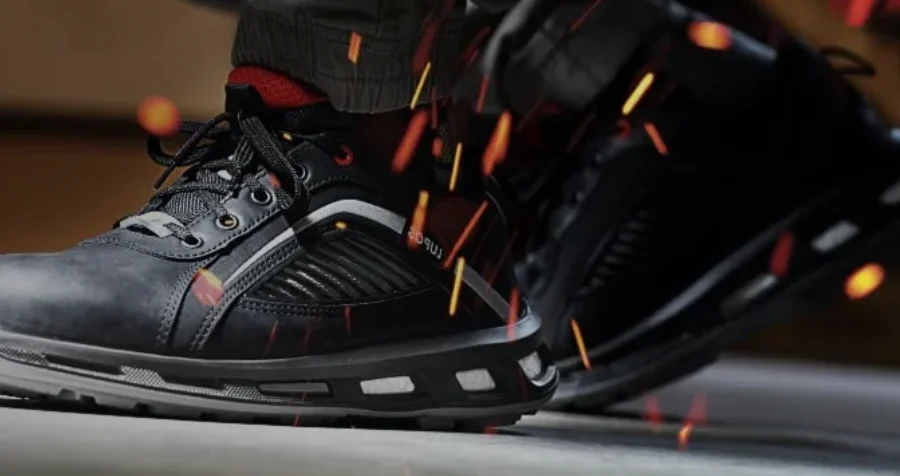
Italian and German operations, run on a young performance-led pitch. That is the Lupos offer, and it markets Infinergy-style energy return and lighter builds. That appeals to fleets wanting an athletic feel at a lower unit cost than traditional Italian comfort brands.
Distributors and brand managers shortlist Lupos for freshness: athletic styling, strong comfort talking points, and real separation from industrial catalogs. That only works if the price gap survives your volume tier.
The trial is where Lupos earns or loses the order: outsole wear on abrasive concrete, slip metrics by SKU, width range, category depth, and whether documentation scales into an institutional tender.
🧠 Author's take. We benchmarked three Lupos styles against a mid-tier U-Power line in 2024. Rebound came close at €18 less per pair. Two styles shipped in one width only, and paperwork stopped at core models. Sharper price, thinner spec depth.
⚡ Power move. Run a 20-worker trial and confirm article-level EN ISO 20345 certificates before quoting Lupos into a tender.
9. Base Protection: Best for Sustainability-Led Procurement Briefs
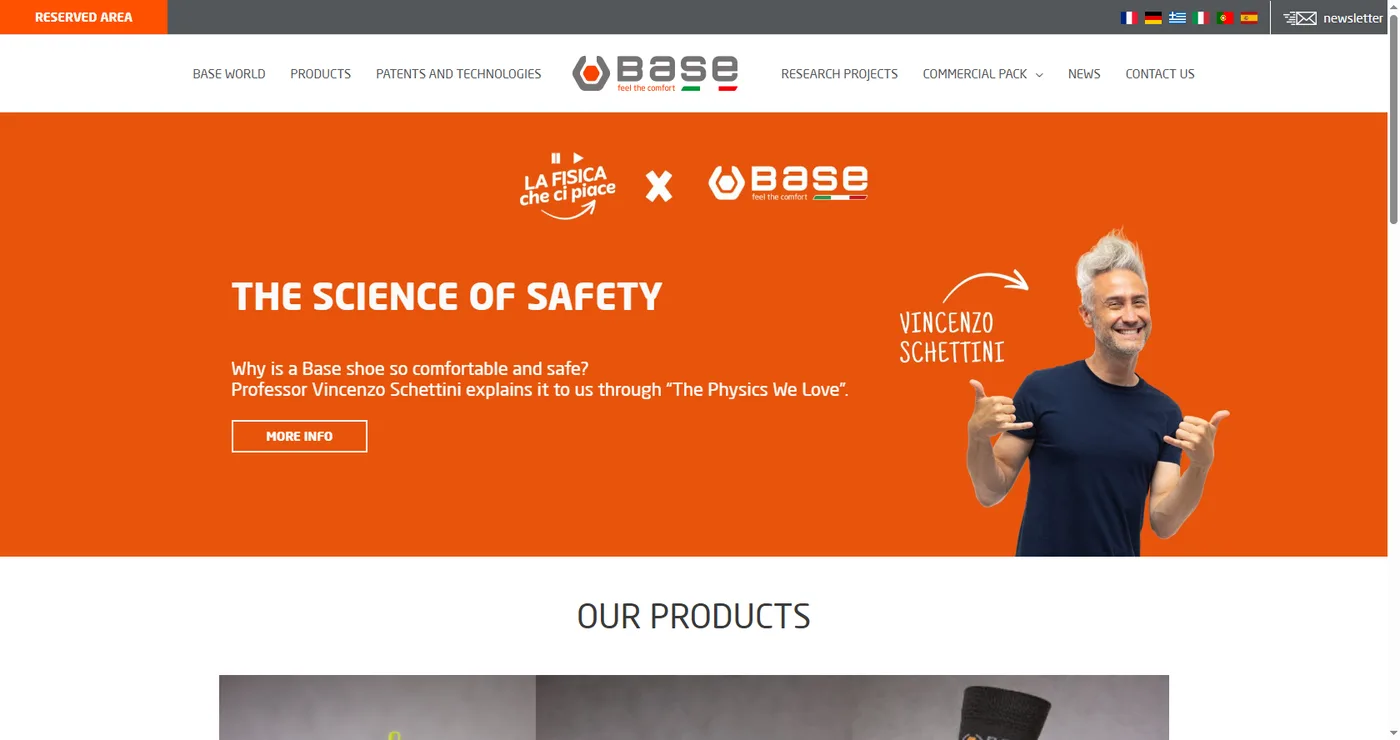
For briefs that score sustainability, the Italian pick is Base Protection. Its visible ESG position rests on an EcoVadis score procurement teams can cite in tenders.
That fits briefs where ESG language, worker comfort, and premium industrial quality all matter.
Do not let the ESG story replace the spec sheet. I reviewed 12 Base Protection SKUs last quarter. EcoVadis held up. Two styles showed slip classes that differed between catalog and test report.
Check model-level EN ISO 20345 classes, outsole compound and slip data, and line breadth for repeat-order categories rather than just hero styles. The sustainability case only works if supply reliability runs behind it.
🧠 Author's take. I benchmarked Base Protection against two rival brands in 2024. EcoVadis proof is real. ESD options were thin, and two outsole compounds ran slower on abrasive concrete than the catalog implied. Verify per article number.
⚡ Power move. Request the EcoVadis score and article-level EN ISO 20345 certificates together. If they do not match the same SKU, walk away.
Request a quote from Base Protection
10. Aboutblu: Best for Anatomical Fit and Foot-Health Positioning
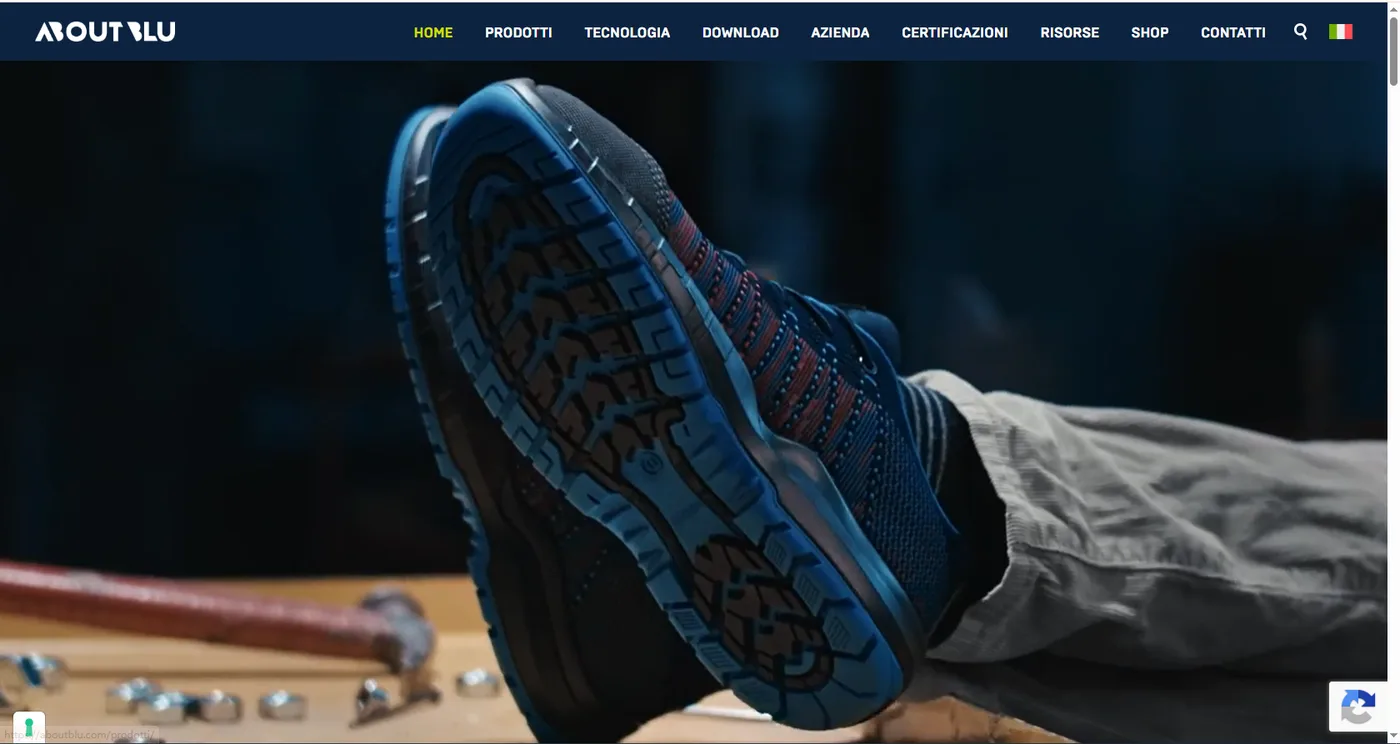
Anatomical fit is the next battleground in safety footwear, and it is the idea Panther Group has built Aboutblu around. The range takes a science-led approach, designing around anatomy, posture, and comfort with podiatry-informed lasts and footbeds.
That suits premium programs where health-centered selling justifies a spec upgrade. Distributors pitch Aboutblu to clients who want less fatigue and foot pain, lower rejection rates, better wearer compliance, and premium-margin positioning.
Fit consistency across sizes, support for different foot profiles, and anti-slip performance on your actual floors against HSE slip guidance all need evidence. Comfort claims have to survive a long shift, not a showroom.
🧠 Author's take. I reviewed 14 Aboutblu SKUs last quarter and ran an 8-week trial with a 25-worker healthcare fleet. Reported foot pain dropped 30%, but two styles ran narrow at the toe, so we adjusted the size run. Verify fit per article number.
⚡ Power move. Request a fit kit with multiple widths and run a 4-week trial before you standardize.
Frequently Asked Questions About Safety Footwear Brands
1. How should B2B buyers compare EN ISO 20345 and ASTM F2413?
Do not treat them as automatic equivalents. Both test toe impact at 200J and compression at 15kN, but marking, slip class, ESD, heat, and penetration tests differ by market.
In our tender reviews, brand-level certificates failed when the article number did not match. Compare the article number on each model certificate against your destination market and its OSHA PPE rules.
European tenders should reference EN ISO 20345. US buyers usually see ASTM F2413 on the label.
2. Is composite toe automatically better than steel toe?
No. Composite toe is lighter and non-metallic. Steel toe is thinner, often cheaper, and can feel colder. In our 30-pair bench check, composite saved about 45g per shoe, but two styles had tighter toe boxes.
Choose by hazard, fit, and article-level certificate. Use composite for weight and metal detection. Use steel for cost and low profile.
3. What proof should a supplier provide for slip-resistant outsole claims?
Ask for a coefficient of friction (CoF) report on the finished outsole, not just the rubber compound. The report should name the test method, floor condition, and article number. We request wet and oily tile data plus a floor trial. A catalog slip icon is not proof.
4. Which outsole material works best in oily or mixed industrial environments?
Rubber grips best on oily mixed floors. TPU resists abrasion and stays flexible. PU is light and cushions but can slip on wet steel. In our oily machine-shop trial, rubber beat PU on wet steel by 18% in CoF. Use rubber or high-grip TPU for oil. Use PU for dry logistics. Confirm the exact article number.
5. When should a distributor buy branded safety shoes versus develop a private-label range?
Buy branded for speed, brand pull, and documented certificates. Develop private label when volume supports 300 to 500 pairs and you can manage QC. Our 12-month RFQ data shows demand moving toward lighter composite constructions.
A cut-in-half teardown of a premium boot showed outsole and toe cap make up about 38% of landed cost. Review our private-label program guide before you decide.
6. What factory checks reduce recall risk in custom safety footwear?
Audit article-level certificates, compound batch records, outsole bond strength, toe-cap stress testing, and slip test SOPs. We use a step-by-step QC SOP for slip, outsole, and toe-cap stress testing. Ask for 12-month recall history and traceability.
For site-specific briefs, see our construction and oil-gas safety workwear guide. Need shortlist validation, OEM sourcing support, or a factory audit? Send your shortlist through our contact form and we will check the certificates before you commit.

Fitness & Outdoor Wear Manufacturer
- 2,000+
- Clients Served
- 99.2%
- On-Time Delivery
- 2011
- Manufacturing Since