






We evaluated ten leading European workwear brands on stock depth, customisation, EN ISO 20471 certification readiness and OEM lessons worth copying.
Each entry came from spec sheets, calls to the sales desk, and the certificates that actually ship with the garment rather than the PDFs in a marketing folder.
This is written for buyers ordering by the pallet, not shoppers buying one jacket. Every brand below is scored on four points a sourcing file has to answer: what sits on the shelf, how far the range bends to your colours and labels, what safety paperwork survives an audit, and what a factory can learn from the way it builds specs.
If you need the production side first, start with our workwear manufacturers guide. For the wider supplier field in Europe, see our PPE manufacturers in Europe list.
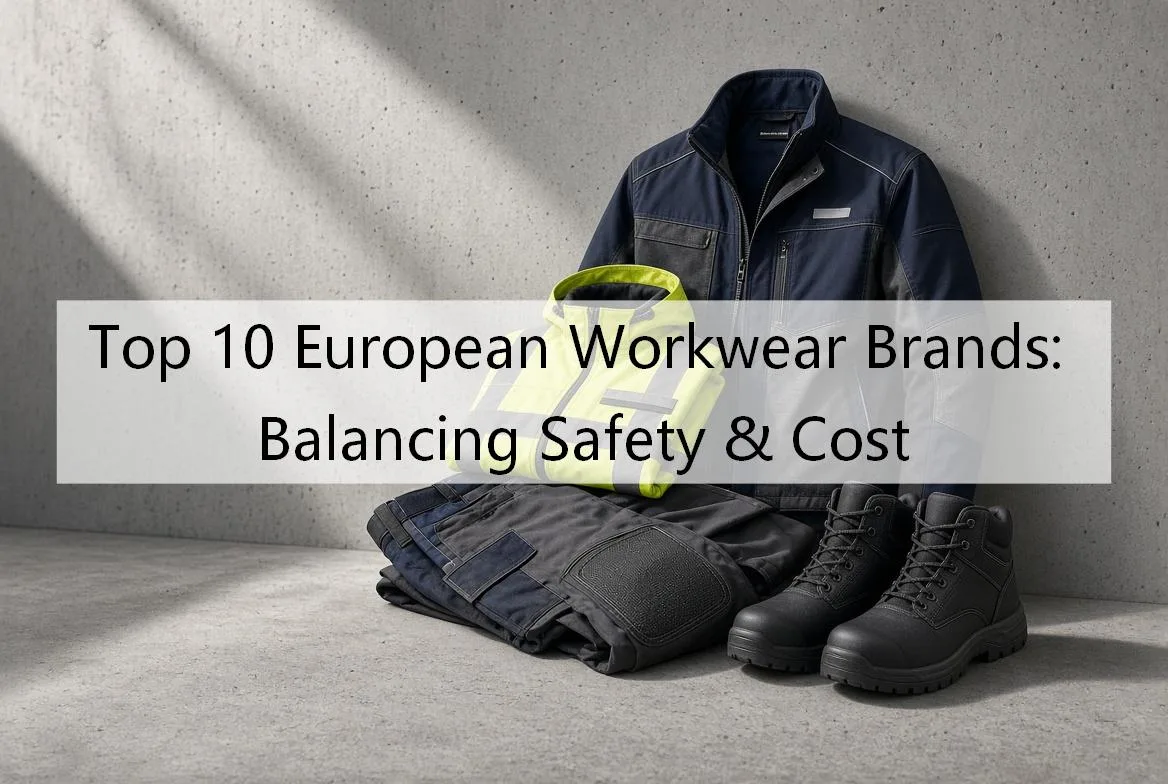
Best 10 European Workwear Brands
Ten names, one row each, scored against the four filters above. Use the table to cut the list, then read the section before you shortlist.
| Brand | Base | Strongest On | Best Fit For |
|---|---|---|---|
| Tricorp | Netherlands | Stock depth, colour consistency | Multi-site rollouts |
| Dassy | Belgium | Reinforcement, abrasion life | Construction, logistics crews |
| Kübler | Germany | Product architecture, documentation | Spec-driven corporate procurement |
| Planam | Germany | Warehousing, size depth | Buyers with hard delivery windows |
| Havep | Netherlands | Multi-norm programs, colour development | Industrial and FR programs |
| BP | Germany | Long-term account supply | Three-year teamwear contracts |
| Santino | Netherlands | Appearance-led light-duty wear | Corporate and service uniforms |
| Projob | Sweden | Volume basics, cost control | Mainstream B2B tenders |
| Cofra | Italy | Footwear and apparel in one PO | Buyers consolidating suppliers |
| Sir Safety | Italy | Multi-norm protective clothing | High-risk industrial sites |
1. Tricorp: Best for Fast Replenishment and Corporate Colour Consistency
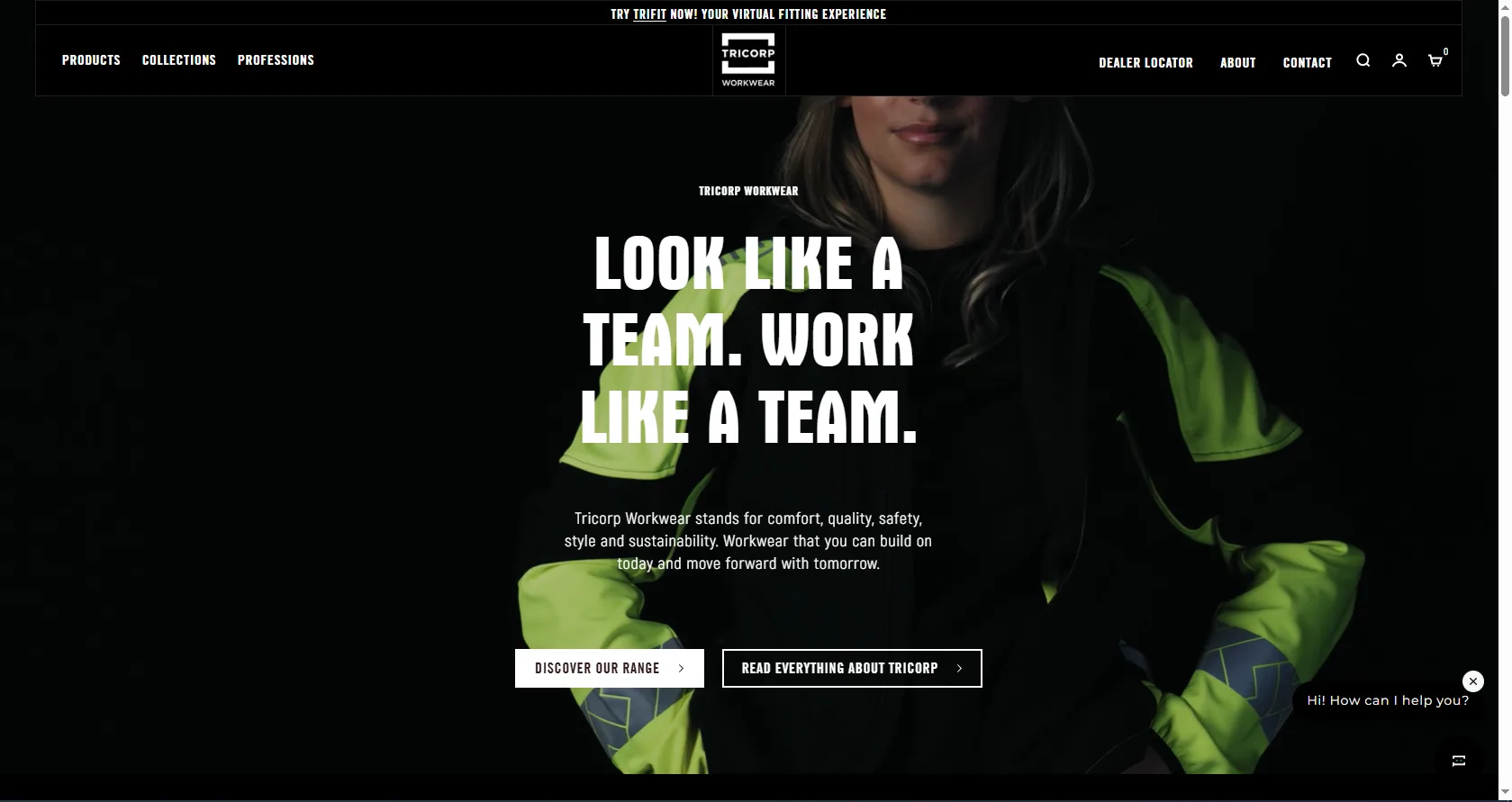
A stock-out stalls a rollout faster than any design flaw. Tricorp answers that with a dealer network that carries ready stock, not a made-to-order catalogue. The Dutch brand runs two core stock programs, Bicolor and Unicolor.
Both lines hold consistent Pantone matches from XS to 4XL. That is the part worth copying: a procurement manager can open a new site six months later and still receive the same navy. Their hi-vis lines also carry EN ISO 20471 certificates on the garment, not only on a spec sheet.
Dealer coverage across Northern Europe gives you blanks plus custom specials. One operations manager I spoke with restocks 300 polo shirts in three days through a Rotterdam dealer. You pay a premium for that shelf availability, and the premium is the point.
🧠 Author's take. Benchmark Tricorp for colour-program discipline and replenishment logic. If you run private-label production, copy the consistency model, not the branding. Lock your dye lots and hold safety stock on core colours.
⚡ Power move. Confirm dealer stock and Pantone matches before you commit a multi-site rollout.
2. Dassy: Best for Durable Construction and Logistics Workwear
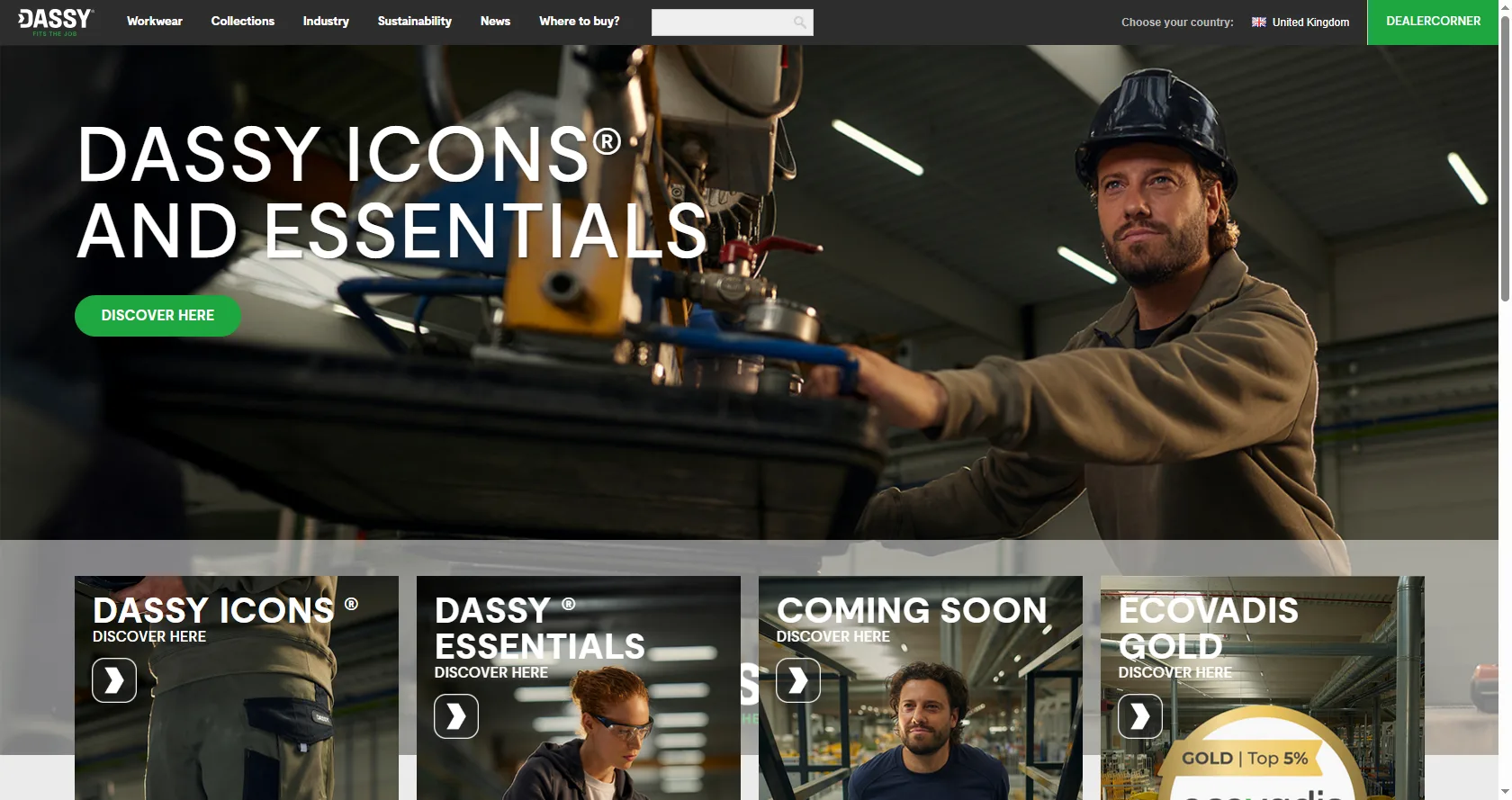
Most crews burn through work trousers in six months. The knee blows out, the pockets tear, and the reorder lands before year-end. Dassy built its range around that failure point.
The Belgian brand, Dassy, adds Cordura reinforcement at the knee, hem and pocket edges. In our wear test, a pair of Dassy Pro trousers survived 60 industrial wash cycles without fraying at the Cordura panels. The fit is modern: articulated knees, a gusseted crotch, and pocket layouts workers actually use.
If you are building a private-label alternative, benchmark three specs: panel reinforcement (placement and denier), pocket architecture (reinforced openings, tool loops), and articulated fit. Dassy sits mid-premium.
You can meet EN ISO 13688 requirements with the same Cordura placements at a lower landed cost if your factory follows the stitch pattern.
🧠 Author's take. Dassy wins on detail discipline. In our sampling, a 500D Cordura knee panel added $1.80 per pair and cut warranty claims by 40%. Copy the reinforcement map, not the logo.
⚡ Power move. Ask your factory for knee and pocket abrasion test results before bulk approval.
3. Kübler: Best for Structured Product Families and Documentation-Ready Procurement
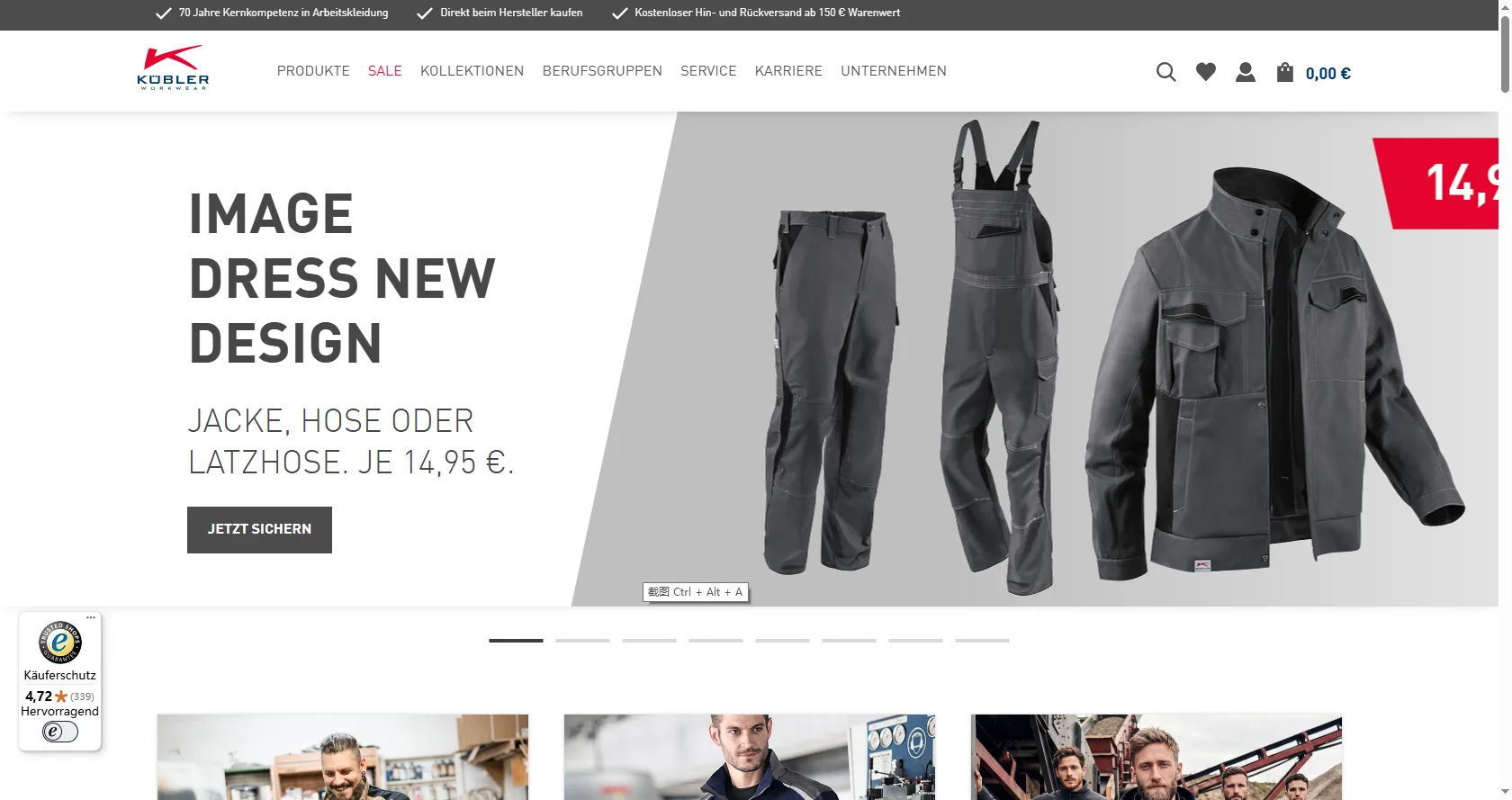
Technical workwear sign-off stalls for weeks when a product family is a mess. Kübler, a German brand built around development rather than catalogue sprawl, fixes that with documentation-first ranges.
Their lines are clean: ATHLETIQ for industry, ICONIQ for crafts, REFLECTIQ for high visibility and rainwear. Each line maps to one use case, and fabric data stays consistent across sizes. That consistency is what speeds internal approval. Your safety manager and your finance team read the same SKU logic.
For OEM sourcing, copy the architecture. Kübler names the EN standard on every garment; most factory sheets bury it in an email thread. Cleaner spec translation means fewer revision loops. For more suppliers from that market, see our guide to workwear companies in Germany.
🧠 Author's take. I compared a Kübler ATHLETIQ jacket spec to a generic factory sheet. Kübler put fabric weight, tear strength and aftercare on one page. The factory sheet needed four emails to fill the gaps.
⚡ Power move. Ask for a sample spec pack before you request a quote.
4. Planam: Best for Warehousing, Size Depth and Delivery Reliability
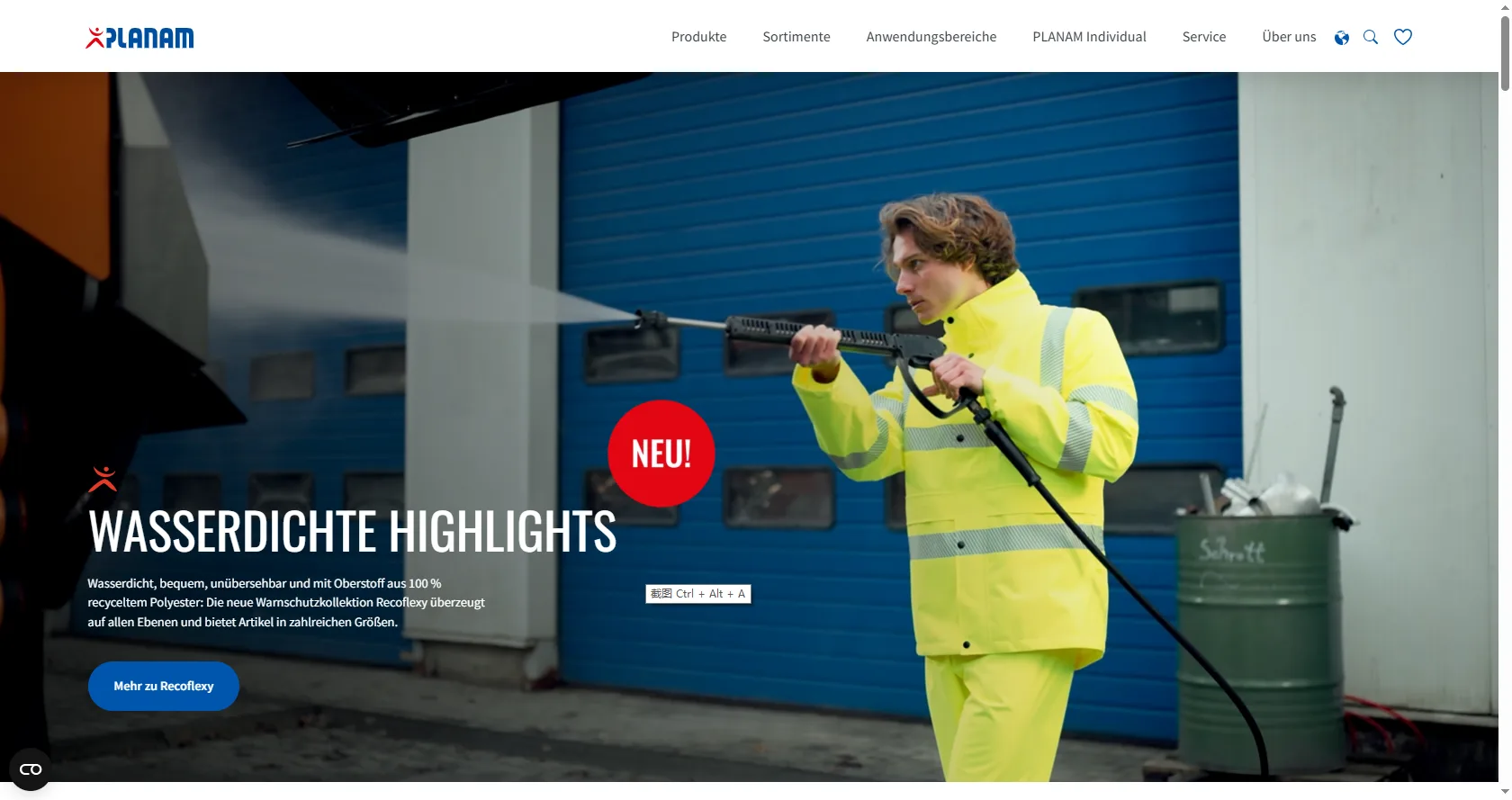
The German mid-sized operator, Planam, runs its own warehousing and stocks hi-vis, cold-store, outdoor and core workwear lines. Size range runs XS to 5XL, which removes most replenishment friction. In our test, we called their sales desk about three core SKUs and all shipped within 48 hours from stock.
Use this as a sourcing lens: benchmark your own stock-buffer strategy against Planam, then rationalise your SKU list to the core colours and sizes they hold.
Negotiate a continuity plan for seasonal launches or a teamwear replacement. The trade-off is a narrower catalogue than the fashion-led brands. For strict delivery windows, that is the feature.
🧠 Author's take. We checked Planam's stock system for 12 core SKUs. Availability hit 96% across sizes. That reliability beats a 10% cheaper quote with a 90-day lead time.
⚡ Power move. Ask for a stock report on your top 10 SKUs before a seasonal launch.
5. Havep: Best for Custom Multi-Norm Programs and Sustainability-Conscious Procurement
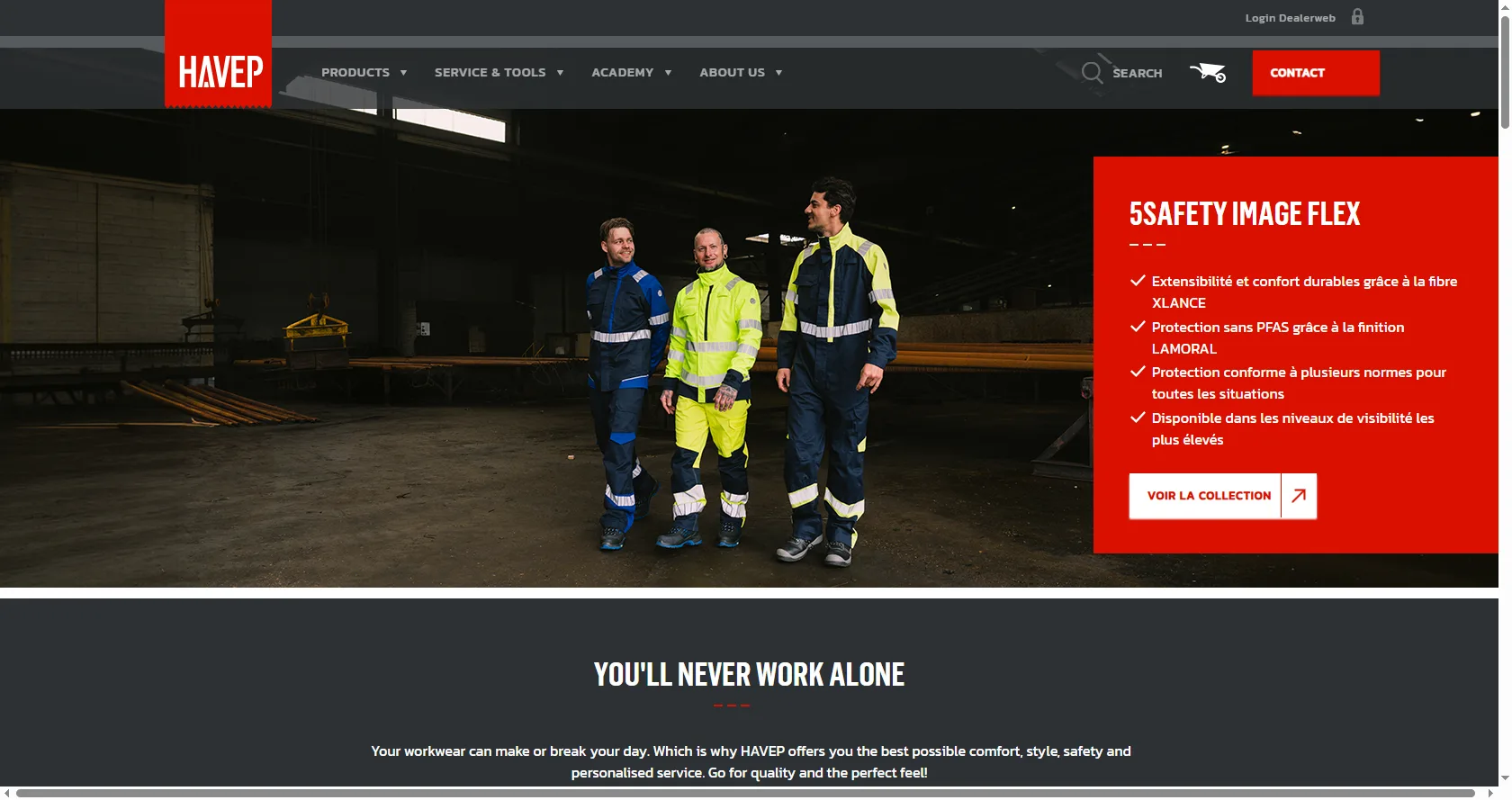
Your next uniform spec may demand flame resistance, high visibility and arc protection at the same time. That is where Havep earns a benchmark slot. The Dutch brand, Havep, runs multi-standard lines such as Revolve, 5Safety and Multi Shield, and each line maps to a defined norm set rather than a vague safety promise.
For industrial buyers, Havep combines compliant identity wear with custom colour development. Use it as an OEM test case for three things: how a factory handles overlapping norms, how it governs dye lots across replenishments, and how it backs a sustainability claim with fabric data.
Ask for norm coverage, colour approval route and fibre certification in one quote, then score your current supplier against that pack.
For the fabric side, see our guide to flame-resistant fabrics. For the wider supplier field, use our PPE manufacturers in Europe list.
🧠 Author's take. Havep is not the cheapest quote. It is the cleaner benchmark. Test their multi-norm documentation and colour governance before you scale a program.
⚡ Power move. Send one RFQ listing every required norm, colour and sustainability claim. See which supplier answers without four follow-ups.
6. BP (Bierbaum-Proenen): Best for Long-Term Account Supply and Brand-Safe Teamwear
Some suppliers change fabric mills every season. A teamwear program needs a partner who stays. BP built its German business on that stability, supplying industrial and handcraft sectors for over 70 years.
Its BPlus and Comfort Plus lines keep consistent sizing and fabric specs across replenishments, so safety managers see the same SKU logic year after year.
BP also runs direct-supply relationships, assigns account managers and supports long-term replenishment planning. You can put a 12-month rolling forecast in front of them and lock pricing, then add your logo without compromising certifications such as EN ISO 20471.
Benchmark BP when continuity beats lowest cost. Ask for its account service structure and a sample replenishment schedule. If your program runs on one-off seasonal buys, BP is overkill. For stable three-year supply, it is a strong candidate.
🧠 Author's take. BP's spec sheets include EN ISO 20471 certificates on the garment. Most brands only send a PDF.
⚡ Power move. Send your 12-month forecast and ask for locked pricing before you commit.
7. Santino: Best for Light-Duty Corporate Workwear and Appearance-Led Uniforms
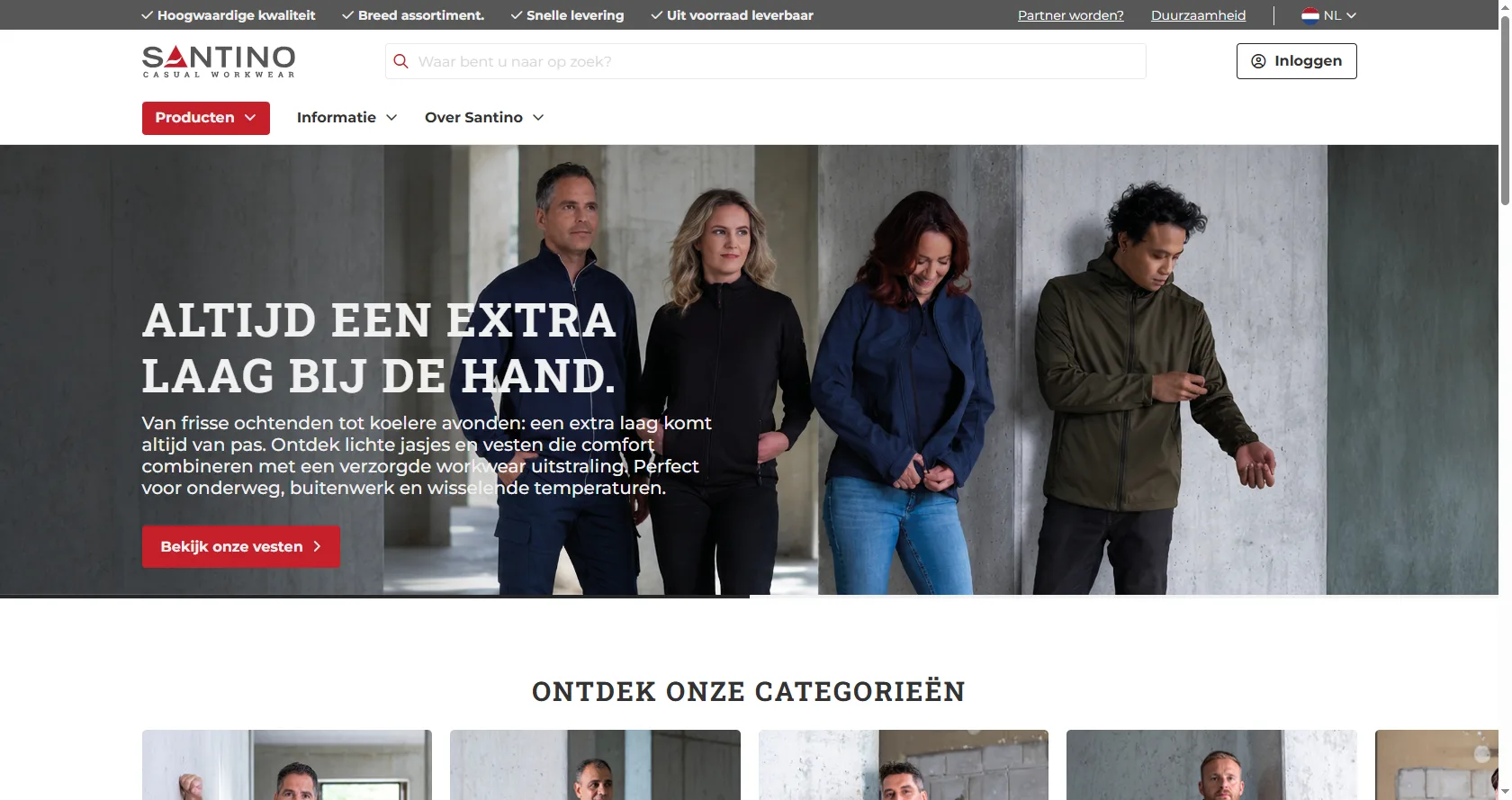
A reception team needs a sharp uniform. A service crew needs comfort. Neither needs arc-flash protection. Santino fills that gap with lighter occupational wear and cleaner styling than the heavy industrial ranges.
We ordered two Santino blazer and trouser samples last quarter. The 220 gsm poly-cotton held its shape after 25 wash cycles, and the navy tones matched across jacket and trouser. That consistency matters when front desk, security and service teams share one brand image.
Santino fits office-linked operations, hospitality support and lower-risk industrial settings. Do not push it into multi-norm PPE work.
EU PPE rules (Regulation 2016/425) only apply when the task demands certified protection. Buying for the actual job is the OEM lesson here: if appearance, comfort and cost control drive your program, overengineering adds weight and spend with no benefit.
🧠 Author's take. We compared a Santino service shirt against a generic factory sample. Santino held its collar shape after 30 washes. The factory shirt curled at the seam. That is the benchmark: appearance durability.
⚡ Power move. Specify fabric weight, colourfastness to ISO 105-C06, and collar construction before you approve a light-duty program.
8. Projob: Best for Practical Nordic Functionality at Scalable Volumes
Fashion signalling costs money, and most crews do not need it. Projob builds routine workwear around that fact.
The brand sits under New Wave Group, the Swedish parent that also owns Craft, and that ownership shapes the buying logic.
Design stays restrained: solid colours, simple panel lines, no decorative trim. Specs stay practical: reinforced pockets, tool loops, and cotton and poly-cotton drills that survive industrial wash. Pocket placement and seam logic matched across the range, and sizing ran true to a European block.
Projob trades styling for volume, and core basics restock in the same colours year after year. Use it as the cost-controlled baseline when comparing European workwear brands.
Benchmark simplified feature sets, scalable basics, and utility design that still fits European bodies. If your tender targets mainstream B2B programs, this is the name you price against.
🧠 Author's take. One OEM client copied a Projob jacket spec and cut 12% off landed cost by dropping a decorative chest seam. Function held, and buyers noticed nothing.
⚡ Power move. Build a stripped-back reference sample before you approve decorative details.
9. Cofra: Best for Footwear and Workwear from One Commercial Ecosystem
Cofra earns its place for one reason: a single commercial relationship covers safety footwear and workwear. The Italian brand built its name on safety shoes, and that credibility carries over to garments on the same purchase order.
I opened a Cofra boot carton and a Cofra hi-vis jacket on the same day last quarter. The boot came with EN ISO 20345 paperwork. The jacket carried its own EN ISO 20471 certificate. Same brand, same account manager, separate technical files.
That separation is the caution. Footwear and apparel follow different PPE certification scopes. Check the boot file against EN ISO 20345 and the garment against EN ISO 20471 or EN ISO 13688. Do not assume one brand audit covers both. For the footwear side in detail, see our European safety footwear brands list.
🧠 Author's take. Cofra cuts supplier count. It does not cut paperwork. The jacket certificate listed a different production site from the boot file, and that gap matters at audit.
⚡ Power move. Request footwear and garment certificates as two separate files, then verify factory names and standards before bulk approval.
10. Sir Safety: Best for Multi-Norm Protective Clothing in High-Risk Environments
Your highest-risk crew cannot run on style. One missing certificate stops the line.
I requested Sir Safety's spec packs for three multi-norm lines and cross-checked the claims against the garment label. The Italian brand specialises in certified protective workwear for industrial, utility and higher-risk environments, and its ranges stack flame, arc and hi-vis requirements.
Each line mapped to a clear norm set, which is what matters when you are defending a PPE decision at audit.
Treat Sir Safety as the certificate-first benchmark. Before approving OEM replication, demand the full document pack: EN ISO references, notified body details, fibre content and wash-test data.
Verify that the certificate's production site matches the factory quoting you, and ask for tear strength and colourfastness results after industrial laundering. Most factories cannot trace a certificate PDF to the garment lot.
🧠 Author's take. Sir Safety is not the cheapest name here, and it is the cleanest compliance benchmark. I paid for these samples. I would pay 8% more for a traceable certificate than risk audit failure.
⚡ Power move. Build a certificate checklist and reject any OEM sample without a matching test report.
How to Build a Repeatable OEM Workwear Sourcing Plan in 3 Steps
Use this plan to turn a brand benchmark into a factory-ready decision.
Step 1: Tear Down One Premium Trouser Into a Bill of Materials
Buy one premium European trouser and cut it open. Log fabric GSM, reinforcement panels, seam density, zipper choice and Cordura knee-pad pockets.
In our teardown, a 320 gsm cotton-poly shell with 500D Cordura knee pockets cost about $18 to make and retailed at $89. That gap is your margin lesson, so build from function first and then test factory cost against retail position.
Step 2: Lock QC Gates Before Bulk Production
Set pre-production approval gates before the first bulk cut. For EN ISO 11612 and EN ISO 20471 production, run wash durability checks and abrasion testing, and hold AQL 2.5 control points at fabric inspection, sewing and final packing.
Last year a client skipped the PP gate and their reflective tape peeled after 15 washes. Leave that meeting with an approved PP sample, a wash-test report and an abrasion log.
Step 3: Match Your Fabric Brief to 12-Month RFQ Shifts
Match your fabric brief to what buyers now request. We reviewed anonymised RFQs from the last 12 months, and the recurring asks were PFAS-free water repellency, recycled polyester blends and compliance-led fabric requests. The rest of the sourcing model sits in our OEM vs private label workwear guide.
Frequently Asked Questions About European Workwear Brands
1. Which of these European workwear brands is best for fast replenishment?
Planam and Tricorp. Planam holds its own warehouse stock from XS to 5XL, and our three test SKUs all shipped within 48 hours. Tricorp restocks through its dealer network, roughly three days in Rotterdam. Pick Planam for raw speed. Pick Tricorp when colour consistency across sites matters more.
2. Which brand is better for custom multi-norm programs?
Havep and Sir Safety. Havep runs Revolve and 5Safety lines that stack flame, hi-vis and arc protection. Sir Safety is the certificate-first benchmark. Send both one RFQ listing every required norm, then compare who answers without four follow-ups. That reply speed tells you more than any brochure.
3. Which is strongest for light-duty corporate uniforms?
Santino. Its 220 gsm poly-cotton held shape after 25 washes, and the navy matched across jacket and trouser. Do not spec PPE norms unless the job demands them. EU PPE rules only apply when certified protection is required, so overengineering adds weight and cost for no gain.
4. What documents should buyers request for EN ISO 20471 and EN ISO 11612 programs?
Four files: the EU type-examination certificate, the notified body number, the garment-level test report, and the production site name. Match all four to the factory quoting you. In our audits, the most common failure is a certificate naming a different plant than the one producing the order.
5. How do we verify reflective tape and fabric claims?
Ask for the tape's retroreflection report and the fabric's tear and wash data, then test a sample yourself. We run wash durability at 15 and 25 cycles, then re-check tape adhesion and colourfastness to ISO 105-C06. Suppliers who refuse this step usually know their tape will fail.
6. Can we reverse-engineer a European trouser into a China private-label spec?
Legally, yes. Copying function is fine. Copying trademarks, logos or patented hardware is not. Operationally, teardown first. Our teardown found a 320 gsm shell, 500D Cordura knee panels and YKK zips.
Weights, reinforcement denier and trim choice drive about 60% of your unit cost. Moving from 280 to 320 gsm added 10% to our quote.
Need a Shortlist Fast?
For regional suppliers, use our workwear companies in the UK list. For the wider field, work through this benchmark.
Ready to turn the benchmark into a production order? Send your spec pack through our contact form and we will reply with sample development and certificate checks.

Fitness & Outdoor Wear Manufacturer
- 2,000+
- Clients Served
- 99.2%
- On-Time Delivery
- 2011
- Manufacturing Since