





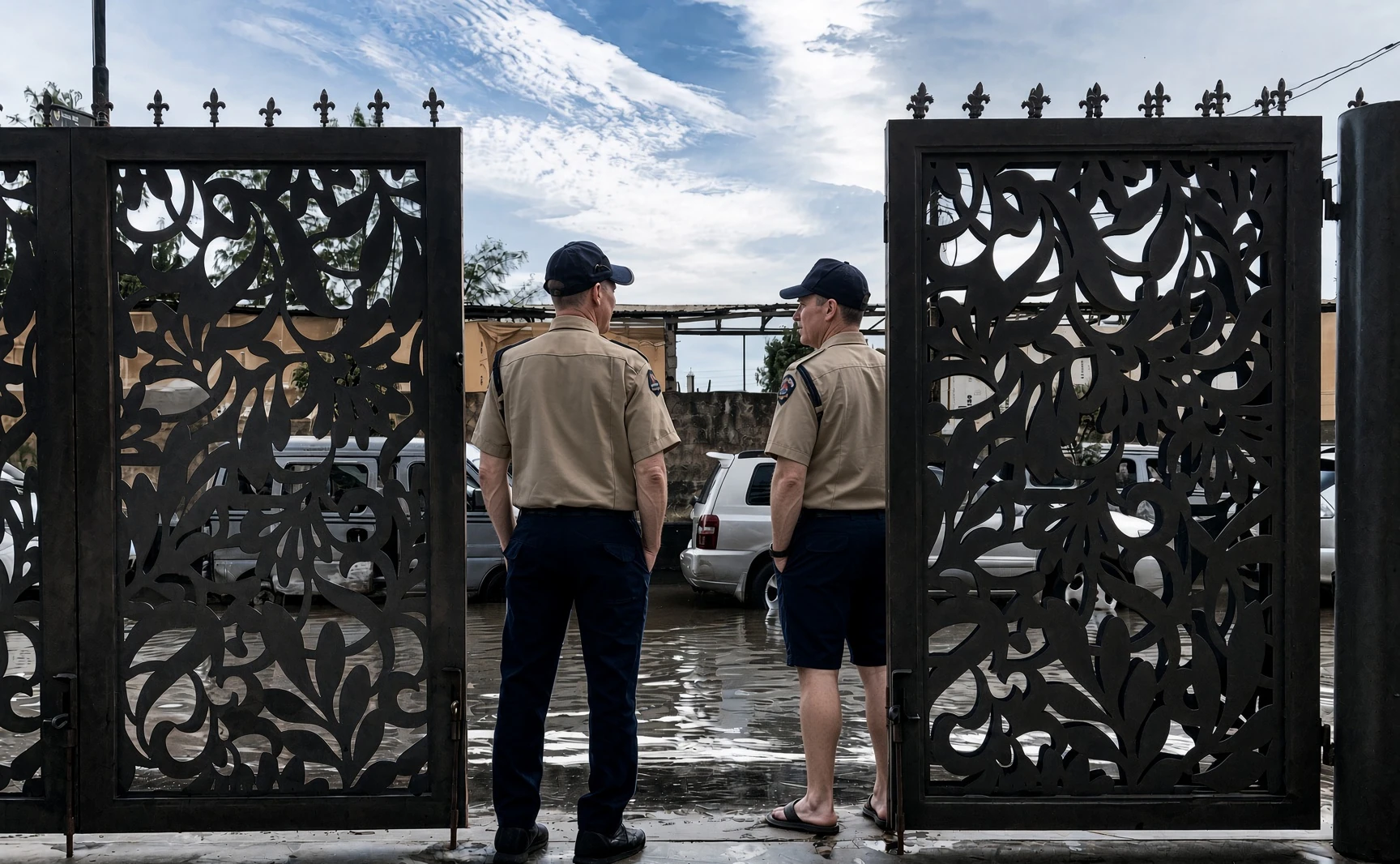
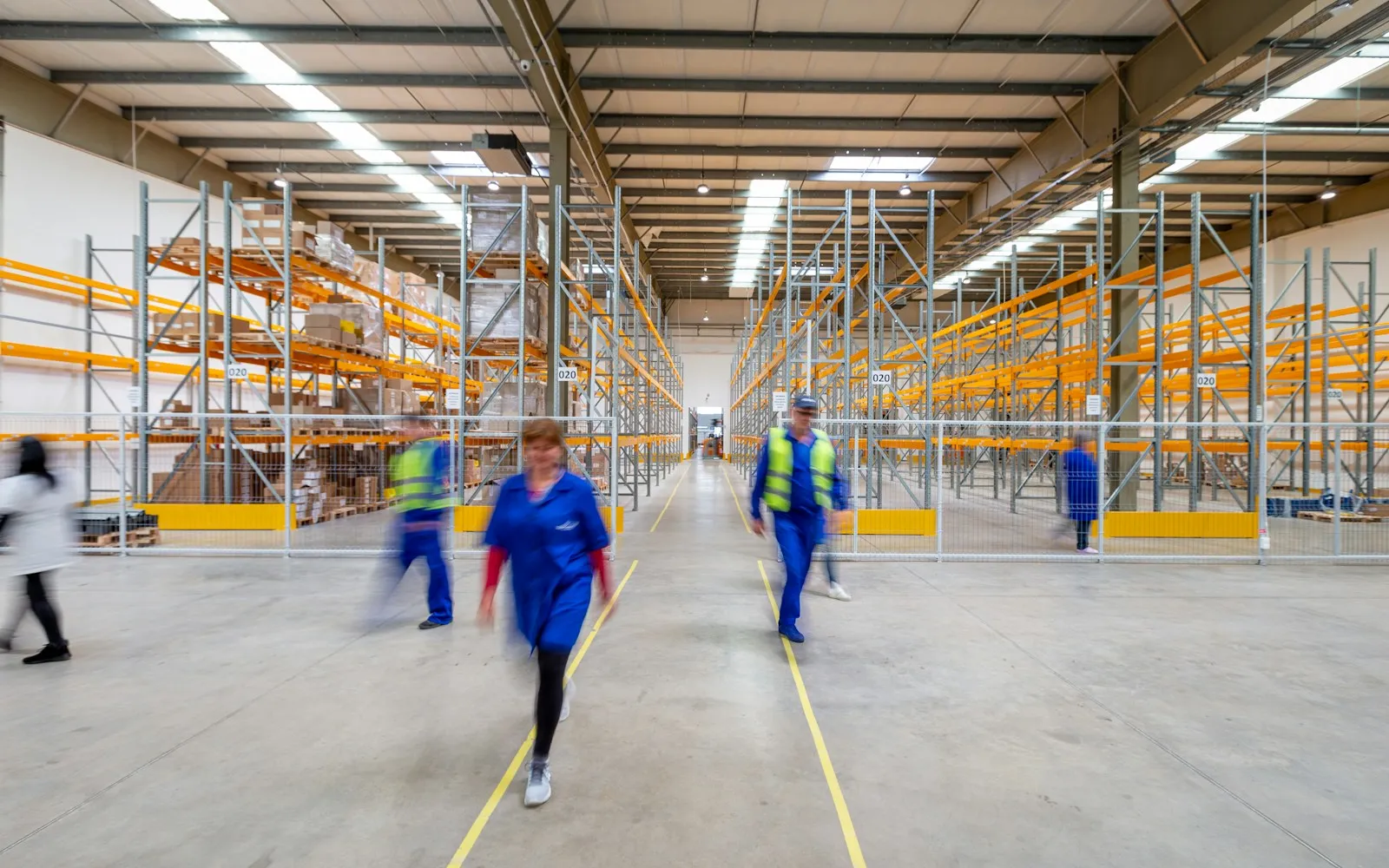

Security & Facilities Management Uniform Programs

One uniform system, every post and every site.

A factory-direct program for contract guard firms, property managers, and campus or facilities operators: roles that read distinct at a glance, fabric built for daily patrol and industrial wash, insignia placement locked to a spec, and a replenishment path that keeps a high-turnover workforce dressed.

MOQ 50 units per SKU · 7–10 days sample with insignia tooling · about 4 weeks bulk build.

A role ladder, not one shirt

Front desk

Light dress shirt

Indoor, client-facing

Patrol

Ripstop shirt + duty trouser

Field durability

Supervisor

Contrast shoulder + tab

Rank at a glance

Response

Hi-vis ANSI garment

Visibility-critical posts
The Diagnosis

Where a multi-site uniform program comes apart.

Six fault lines · one spec

Individually, each of these is a nuisance the site manager absorbs. Across a portfolio of posts and properties, they compound into an operation that looks inconsistent to its clients and costs more every quarter it runs.

Rank & role
A second-year officer, a shift lead, and a concierge all wear the same shirt, so clients and staff cannot tell who to escalate to.
Slower incident response and repeated client complaints about who was on post.
Durability
Radio loops, belt loops, and underarm seams tear first, and navy or bottle-green fades long before the fabric fails.
Garments retired on a 90-day replacement cycle instead of an annual one.
Identity & insignia
Badge, name tag, and patch placement is eyeballed per site, so the same logo sits in three positions across one brand.
The organisation stops reading as one company the moment it is off-paper.
Visibility
Patrol roles at car parks and road-adjacent posts wear an indoor uniform, or a vest bought separately that fails the required class.
Safety exposure where a vehicle or low light is in play — and a credibility gap on inspection.
Replenishment
Turnover means new hires arrive faster than a re-order clears a fresh quote and sample, so people work in borrowed or street clothes.
Every unfilled kit re-opens the negotiation the program was meant to close.
Spend visibility
Each site buys from whoever is quickest, at its own price, so the group has no single cost per officer or per post.
Fragmented buying adds a margin to every unit — and hides where it goes.
Who It Is For

Built for whoever answers for every post and property.

Four buyer types · one factory

The factory and the compliance discipline are the same; what changes is the governance layer — a guard firm bills by contract, a property group answers to owners, a campus operator answers to one employer, and an outsourced facilities provider answers to all of them at once.

Contract security firms — staff in coordinated security and facilities uniforms
Manned guarding

Contract security firms

Guard firms staffing lobbies, patrols, mobile routes, and access desks across many client sites under fixed-term contracts.

The pressure

Turnover above 100% a year, and a client who judges the whole firm by the officer on the desk that morning.

What the program absorbs

A role ladder that reads at a glance, a new-hire kit path off an archived spec, and ΔE ≤ 1.5 colour so every client site matches the pitch deck.
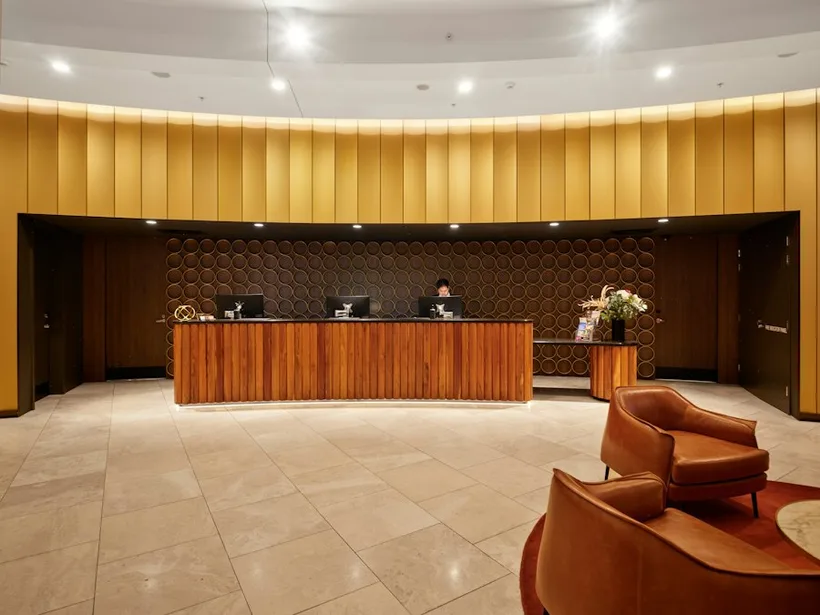

Property management groups — staff in coordinated security and facilities uniforms
Portfolio operators

Property management groups

Groups running concierge, maintenance, grounds, housekeeping, and security staff across a national or regional portfolio of properties.

The pressure

Brand standards set centrally, but every property still orders and sizes locally — so no two buildings look alike and spend is opaque.

What the program absorbs

One locked palette, one role-to-colour map, and one price schedule the whole portfolio draws from — per-property packing included.

Large corporate & industrial campuses — staff in coordinated security and facilities uniforms
Single-owner estates

Large corporate & industrial campuses

Corporates, universities, hospitals, and data-centre or logistics campuses dressing their own security, facilities, and front-of-house teams.

The pressure

One employer, one badge, but vendors and departments each buy their own kit — the campus gate and the loading dock wear different navies.

What the program absorbs

A department-to-role spec so gatehouse, patrol, maintenance, and reception read as one institution without looking identical.

Outsourced facilities providers — staff in coordinated security and facilities uniforms
Integrated FM

Outsourced facilities providers

IFM providers delivering multi-service contracts — cleaning, maintenance, security, and front-of-house — to client-owned buildings on a service-level basis.

The pressure

Several client brands on one contract, each with its own look, plus staff who move between sites and roles week to week.

What the program absorbs

Multiple client identities held as separate line items on one program record, with role-graded sizing so one hire can be dressed for any post.

Role Differentiation

One ladder, so every rank reads at a glance.

Six posts · one ladder

A single shirt across every post tells staff and clients nothing about who is in charge, who patrols, and who responds. The program maps each post to its own garment set and one unmistakable marker — so a supervisor is obvious from the lobby, and a client knows who to escalate to.

Front desk & concierge uniform post example

Front desk & concierge

Lobby, reception, access-control desks — the client-facing first impression.

Dress shirt or blouseTailored trouser / skirtNameplate

Marker: Light dress shirt against the field uniform

Indoor presence and a crisp, hospitable read.

Patrol & mobile uniform post example

Patrol & mobile

Interior sweeps, walking routes, and vehicle patrols across the estate.

65/35 ripstop shirtCargo duty trouserCap

Marker: Shoulder patch + radio position

Abrasion resistance and pocket carry for a full shift on foot.

Supervisor / shift lead uniform post example

Supervisor / shift lead

The officer who runs the shift and is the client’s first point of contact.

Patrol set in contrast trimEpaulette slideSupervisor tab

Marker: Contrast shoulder / collar + tab

Instant rank recognition without a paramilitary look.

Emergency response uniform post example

Emergency response

Car-park patrol, roadside-adjacent posts, night shifts, and incident response.

ANSI/ISEA 107 / EN ISO 20471 garmentReflective bandingDuty belt access

Marker: Certified reflective class

Visibility where a vehicle or low light is in play.

Maintenance & technical uniform post example

Maintenance & technical

Building engineers, technicians, and repair crews moving between plant rooms.

Branded polo or work shirtUtility trouserPhoto ID

Marker: Department colour block

Reach, tool loops, and a clean professional read on the floor.

Grounds & housekeeping uniform post example

Grounds & housekeeping

Landscaping, cleaning, and waste teams working the site inside and out.

Performance poloWork trouserCap

Marker: Department colour block

Stretch, stain resistance, and wash survival.

Sampling

What "sample approved" actually means.

A sample is a decision, not a gesture. These are the success criteria we agree before cutting — so neither side is negotiating the standard after the sample lands. Copy this into your approval doc.

CriterionPass rule
Dimensions & fitEvery measurement within your tech-pack tolerance — we confirm the tolerance band before cutting, ±0.5" (1.3 cm) unless you specify tighter
ColourSpectrophotometer ΔE ≤ 1.5 against your approved Pantone, checked on the finished garment, not the greige roll
After-washConstruction, colour, and reflectivity tested through your required wash cycles — ISO 6330 at 60 °C default, or your standard
Reflective / hi-vis areaTape and reflective area measured against the required class layout — ANSI/ISEA 107 or EN ISO 20471
Batch inspectionBulk lots sampled to ISO 2859-1 General Inspection Level II — Critical 0 / Major 2.5 / Minor 4.0, the same AQL plan the lot is judged against before it ships
DocumentationFabric mill cert, per-batch lab report, and 4-point fabric inspection record filed by PO with the sample

What you need to give us.

A sample lands approved in one round when these arrive with the brief. Hand them over late and the first sample is guessing — this is the checklist that stops that.

Wash conditions

How the garment is laundered on site — commercial or industrial, wash temperature, detergent, and dryer or iron finish. Our default test is ISO 6330 at 60 °C.

Role list

Every role on site, the colour and standard each one needs, and headcount per role per location — the map the whole program is built against.

Size distribution

The size breakdown to order, and human measurements where the program is made-to-measure rather than graded from a chart.

Reference colour

A Pantone number, physical swatch, or existing garment we can read by spectrophotometer, so the colour formula is locked to your reference, not matched by eye.

Standards by market

Which product standards apply and where the goods ship — so we confirm ANSI/ISEA 107, NFPA 2112, EN ISO 20471, or a local equivalent is genuinely required before you pay for over-spec.

First delivery window

The date the first site needs stock, so sampling and production are scheduled against a real deadline instead of a placeholder.

Durability Engineering

Built where a guard uniform actually fails.

Five stress points · tested per lot

Patrol wear does not fail evenly — it fails at five points first, and those points are the same on every budget garment. The program reinforces each one and then proves the fabric through the wash cycle the contract runs, so the shirt is retired for a real reason, not a torn belt loop.

The stress map
01

Radio loop & mic tab

Single-stitch tab rips out under a clipped radio.

Bar-tacked tab on reinforced facing.

02

Belt loops & waistband

One-row stitching pulls free when the duty belt loads.

Double-row belt loops on a faced waistband.

03

Underarm & side seam

One-needle seam gapes and tears on reach and restraint.

Flat-felled, double-needle seam with a gusset.

04

Seat & knee

Fabric bags and shines where an officer crouches and drives.

Higher-tensile thread and a shaped knee panel.

05

Pocket seams & carry

Cargo pockets split under a torch, cuffs, or keys.

Bar-tacked pocket mouths and reinforced base.

Fabric match by role
PostSpec
Lobby & front desk
Light poly-cotton shirt145–170 GSM
Patrol & mobile
65/35 ripstop trouser180–220 GSM
Heavy-duty / response
Dense twill or canvas230–250+ GSM
Hi-vis posts
ANSI/ISEA 107 background + tapeCertified class layout

Tested to the cycle the contract runs

Martindale 20k–40kAbrasion (ISO 12947 @9 kPa)Grade 4–4.5Colourfastness to wash (ISO 105-C06)ISO 15797Industrial-laundry durabilityISO 13937Tear strength≤ ±3%Dimensional change (ISO 6330)

Industry-typical thresholds; actual life depends on wash temperature, detergent, and load. Each batch ships with its own lab report.

How fabric durability is tested
Identity Standards

Badge, patch, and hi-vis — placement on a measured spec.

One drawing · archived per style

The fastest way a multi-site brand stops reading as one company is an insignia that moves. Every mark on the garment is set from one annotated drawing with fixed coordinates, so the logo sits in the same place on the tenth batch as the first — and the hi-vis class is confirmed to the post, not guessed.

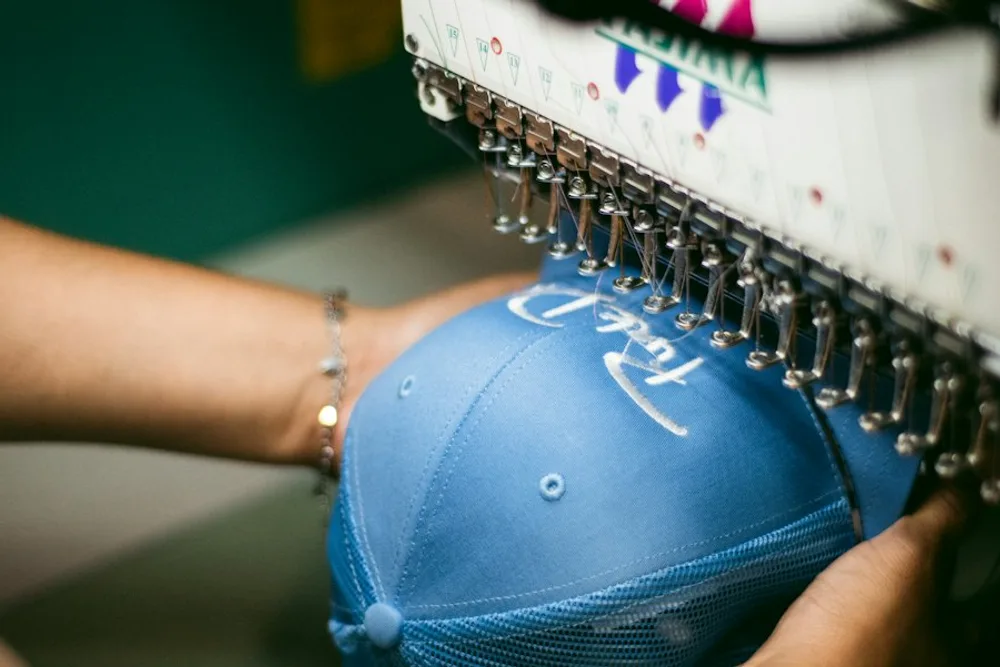
Close-up of machine embroidery stitching a logo onto a uniform cap
Placement drawing — archived per style
Embroidery, patches, and tape positions are drawn once and archived per style.

Marks are applied by machine embroidery or sewn patch — both hold placement and resist industrial wash better than print or a pinned badge.

See custom embroidery capabilities
Placement register — measured, not eyeballed

Left chest

90 mm below shoulder seam · 35 mm from placket

Company badge

Right chest, mirrored to the logo

Nameplate / ID

Centred over the left pocket

Rank tab

Collar point or epaulette slide

Shoulder / arm

Mid-upper sleeve, front-facing

Reflective band

Chest + waist, full wrap per class

The compliance line on identity

No law-enforcement lookalike. US private-security rules vary by state — several (NC, ND, OR) bar “police” wording and police-style insignia. Marks are set to read as private security, never as police.

Identifiable at all times. The badge carries the company name and wording that identifies private security, placed so it is visible on duty, front-facing, at all times.

Licence-visible by design. For UK SIA-licensed roles the front-line licence must be worn on the front and visible — the garment is built to hold and display it without covering the badge.

Reflective class by post. Hi-vis is specified to the ANSI/ISEA 107 or EN ISO 20471 class the post actually needs — parking and roadside get more, an indoor lobby gets none.

Reflective & Hi-Vis

Specified to the post — not one vest for everyone.

ANSI/ISEA 107 · EN ISO 20471

An indoor lobby and a night-shift car park are not the same visibility problem. The program assigns a reflective class to each post against the standard that applies in your market, so you buy the visibility a role genuinely needs — and skip a hi-vis garment on the desks that do not.

PostUS · 107EU · 20471
Indoor lobby & deskNo hi-vis garmentNo hi-vis garment
Parking structuresANSI/ISEA 107 Class 1–2EN ISO 20471 Class 1–2
Roadside / traffic-adjacentANSI/ISEA 107 Class 2–3EN ISO 20471 Class 2–3
Night patrol & responseANSI/ISEA 107 Class 3EN ISO 20471 Class 3
What each class requires
Class 1

0.14 m² background · 0.10 m² reflective

Low-speed, ample sightlines

Class 2

0.50 m² background · 0.13 m² reflective

Traffic 25–50 mph

Class 3

0.80 m² background · 0.20 m² reflective

High speed, night, poor contrast

EN ISO 20471 area figures shown; the US ANSI/ISEA 107 equivalent works in square inches (Class 2 ≈ 775 in² background + 201 in² reflective). Tape is ≥ 50 mm wide, and logos never reduce the required reflective area.

Replenishment & Turnover

A high-turnover workforce stays dressed on the archived spec.

Turnover math · one spec

Contract security has the highest churn of any major industry, so replacement — not the first order — is where a uniform program is won or lost. Because colour, role set, sizing, and insignia are locked on file, a new hire is a one-line kit against that spec, not a fresh quote and sample.

The turnover maths
~77%
US guard turnover, 2024 average
Source: ASIS International
100%+
Annual churn at many contract firms
Source: Allied / ASIS
~$5,000
Replacement cost per officer
Source: Industry estimate

Industry figures for context — what a program controls is how fast and cleanly each replacement happens, not the churn itself.

Modern glass office building representing a multi-site security portfolio
01

Role assigned

The new hire is slotted into the ladder — front desk, patrol, supervisor, response, maintenance, or grounds.

02

Kit pulled from spec

Size and garment set are read from the archived role spec — no re-measure, no re-quote.

03

Branded to the site

Insignia runs from the sealed placement drawing, so the kit matches the site the hire reports to.

04

Shipped, site-coded

Packed and labelled per site on the reorder window, so it lands ready to hand over.

First rolloutSample sealed, bulk built, freight to door.
Season start5–7 weeks
Add a siteIts own sample and freight, then joins the program.
New contract won6–8 weeks
New hire / top-upNo sampling, no re-quote — reserve or archived spec.
Spec on file10–14 days production
See a patrol program hold through 100 industrial washes
One Spec, Every Site

Each site is the same record — only the label changes.

One record · many labels

Fabric, colour formula, role set, sizing, and insignia live on one program record. A site is added by pointing that record at a new building, so a property that joins the portfolio next quarter is produced against the same sealed sample as the flagship — not re-sourced and re-matched.

HQ-01Same spec

Corporate HQ

Desk · patrol · supervisor

Per-floor totes
PL-07Same spec

Parking structure

Patrol · night response

Per-shift cartons
RS-03Same spec

Regional office

Desk · concierge

Per-desk labels
DC-12Same spec

Logistics campus

Gate · maintenance · grounds

Per-department
SC-05Same spec

Shopping centre

Patrol · response · cleaning

Per-zone cartons
MC-02Same spec

Medical campus

Desk · patrol · facilities

Per-unit labels
Corporate lobby interior representing a site-standard uniform program

The archived program record

  • Fabric mill cert and weight, by role
  • Pantone reading, ΔE ≤ 1.5 per lot
  • Graded size chart, XS–6XL
  • Sealed placement drawing for insignia
  • The golden sample each lot is measured against

Packed for the site it lands at

  • Cartons labelled by site code
  • Packing list filed per site, per PO
  • Compliance pack filed by purchase order
  • Directions to the role it dresses
Compliance, Filed by PO

One file per shipment — audit-ready, not photocopied on request.

Filed per PO · one pack

A security and facilities program is judged by a client audit as much as by wear. Every carton ships with a compliance pack filed by purchase order, so each certificate traces to the exact lot it covers — and a new site or a reorder inherits the same pack.

PO-000000 · compliance pack

Fabric mill certificate

Fabric

Fibre composition, blend, weight, and colourfastness for the roll the batch was cut from.

Per-batch wash report

Test

Colourfastness and shrinkage on the finished garment, tested to the contract’s wash cycle.

Hi-vis class declaration

Standard

ANSI/ISEA 107 or EN ISO 20471 class confirmed to the post, with the reflective-area measurement.

Insignia placement record

Spec

The sealed drawing each mark was placed from, so a reorder ships the same position as batch one.

AQL 2.5 inspection record

QC

ISO 2859-1 sampling — Critical 0 / Major 2.5 / Minor 4.0 — from the pre-shipment audit, per lot.

OEKO-TEX 100 + export set

Compliance

Harmful-substance screening on skin-contact fabric, plus commercial invoice, packing list, and certificate of origin.

What a client audit sees

Documents are filed by PO, so a site added later or a top-up order inherits the same pack. The factory itself holds ISO 9001, ISO 14001, ISO 45001, OEKO-TEX 100, SMETA (Sedex), BSCI.

Factory management & social audits
ISO 9001ISO 14001ISO 45001OEKO-TEX 100SMETA (Sedex)BSCI

Product standards tested to

ANSI/ISEA 107 · NFPA 2112 · EN ISO 20471 — confirmed to the class each post requires before you pay for over-spec.

Standing It Up

A first site live in about 5–7 weeks — then every site after is inside the program.

First site → every site

The first rollout sets the spec; every site after simply points the same record at a new building. Sampling gates out on reorder, and a new site carries its own short onboarding before it joins. This is how the timeline maps once the role list and colour reference are agreed.

01
Week 0

Role & site map

Every post, the colour and class each one needs, headcount per role per site, and the wash cycle the contract runs.

Role mapWash spec
02
+7–10 days

Sample sealed

Insignia is tooled and a pre-production sample is approved and sealed as the golden standard, colour read at the dye house.

Golden samplePantone lock
03
+about 4 weeks

Bulk built

AQL 2.5 gates at each stage; every garment measured against its role spec and the sealed sample.

AQL 2.5Role check
04
+14–20 days

Site-coded delivery

Cartons labelled per site with per-site packing lists; the compliance pack ships filed by PO.

Per-site packCompliance file
05
Ongoing

New hire, new site

A top-up runs on the archived spec in the reorder window; a new site runs its own onboarding, then joins.

Reorder 10–14 daysNew site 6–8 weeks

A site that has never been in the program runs its own sample before it can be supplied — budget a separate onboarding window, and the standard cycle applies once it is inside.

Lock in your first rollout
The Offer, In One Line

One system for every post and every site — professional in the field, durable in the wash.

The whole point of a program is that the tenth site, the newest hire, and the busiest shift all draw from the same record — so the operation always looks like one company, and the budget reflects one standard instead of a dozen.

01

Every post reads distinct

A role ladder — front desk, patrol, supervisor, response, maintenance, grounds — so staff and clients always know who is who, at any site.

02

Professional and durable

Reinforced at the five points a guard uniform fails, matched by role fabric, and tested through the contract’s wash cycle — not retired on a 90-day cycle.

03

Dressed, not delayed

A high-turnover roster stays dressed from an archived spec — a new hire is a one-line kit in 10–14 days, a new site joins in 6–8 weeks.

Testimonials

From security and facilities leaders who put every post on one spec.

"

We dress front desk, patrol, shift leads, and a night response crew across eleven sites, and every post used to wear the same navy shirt — clients could not tell a supervisor from a concierge, and patrol kit failed at the belt loops inside a quarter.

They set a role ladder with one clear marker per post and moved patrol to a reinforced ripstop, then proved it through our wash cycle before bulk. The contrast shoulder on the supervisor alone ended a recurring client complaint about who was in charge.

The real win is the roster. With turnover where it is, a new officer is dressed from reserve in the reorder window — no re-quote, and the same placement on the patch every time.

"
Daniel Whitmore

Daniel Whitmore

Director of Security Operations — Contract Guard Firm

"

We run concierge, maintenance, grounds, housekeeping, and security staff across a regional property portfolio, and each property had its own supplier and its own shade of navy. No owner could tell me what the portfolio actually spent.

They built one role-to-colour map, a graded size chart that holds across every property, and a single price schedule the whole portfolio draws from — with each building’s cartons labelled so distribution goes straight to the floor.

First audit, the fabric certs, wash reports, and AQL records were already in the box, filed by PO. My team stopped chasing paperwork, and the portfolio finally reads as one brand.

"
Sofia Renner

Sofia Renner

Head of Facilities & Vendor Management — Property Group

FAQ

The questions a security director,
and a property owner, both ask.

If your question isn't here, our RFQ desk responds within 24 hours — no sales pitch, just specs.

That is the core of what we do. Your spec — fabric per role, colour formula, size chart, insignia placement, and hi-vis class — is archived per program, and every site order draws from that same record. A site that joins next year is produced against the sealed sample and the stored Pantone reading, so it lands matching the first rollout. Each site is labelled and packed per property so distribution unloads straight to the floor.

Roles are mapped to a ladder — front desk, patrol, supervisor, response, maintenance, and grounds — and each post carries one defined visual marker (a contrast shoulder, an epaulette slide, a nameplate, a department colour block). Placement is set from one sealed drawing and archived per style, so a new officer dressed six months later gets the same rank marking in the same position. It reads at a glance from across a lobby, which is the whole point.

Daily patrol shirts and trousers are typically 65/35 poly-cotton ripstop at 180–220 GSM, with bar-tacked radio and belt loops, double-needle flat-felled seams, and reinforced pocket bases — the five points a guard uniform fails at first. Lighter 145–170 GSM poly-cotton suits indoor lobby and desk roles, and 230–250+ GSM twill goes to heavy-duty or response posts. Every lot is tested to the wash cycle the contract runs.

Hi-vis is matched to the post, not applied uniformly. Indoor desks need none; parking structures typically land at ANSI/ISEA 107 or EN ISO 20471 Class 1–2; roadside and traffic-adjacent posts move to Class 2–3; night patrol and response to Class 3. We confirm the class against the standard that applies in your market before you buy, and the reflective-area measurement ships with the batch. We will tell you plainly if a hi-vis garment is over-spec for a role.

Because the role, size, colour, and insignia are all on file, a new hire is a one-line kit against the archived spec — no re-measure, no re-quote, no new sample. Reorders run in 10–14 days from the archived spec, and garments are cut from same-lot reserve where the colour has to match exactly. A brand-new site runs its own onboarding of 6–8 weeks before it joins the program; existing sites top up on the reorder window.

Private-security identity rules vary by state — several (North Carolina, North Dakota, Oregon among them) bar “police” wording and police-style insignia on private security uniforms. Marks are set to read as private security: the company name, a badge number, and clear private-security wording, with no law-enforcement-lookalike imagery or “POLICE” lettering. For UK SIA-licensed roles, the front-line licence is built to sit on the front, visible, without covering the badge.

Send your posts and sites — we'll return a program spec

Send your role list, site count, standards, and headcount per post — or just a brief. A named engineer replies within 24 hours with a role ladder, a fabric and hi-vis spec, and a quote. No sales pitch, no rate-card guesswork.

Read the patrol uniform case study

Scoping a single garment line instead? See our custom security uniform manufacturing range — guard shirts, trousers, outerwear, and hi-vis.Comparing program patterns? See all uniform programs. Browse the verified case studies.Last updated: November 2026.