











Security & Corporate Patrol Uniforms: 100 Wash Cycles, Zero Seam Failures
A regional security operator with 100+ patrol and lobby officers replaced a 90-day shirt replacement cycle with a custom 65/35 ripstop program. Lab telemetry shows zero seam failures after 100 industrial washes.
Who We Worked With
Client Profile
A Regional Security Operator
Private security operator
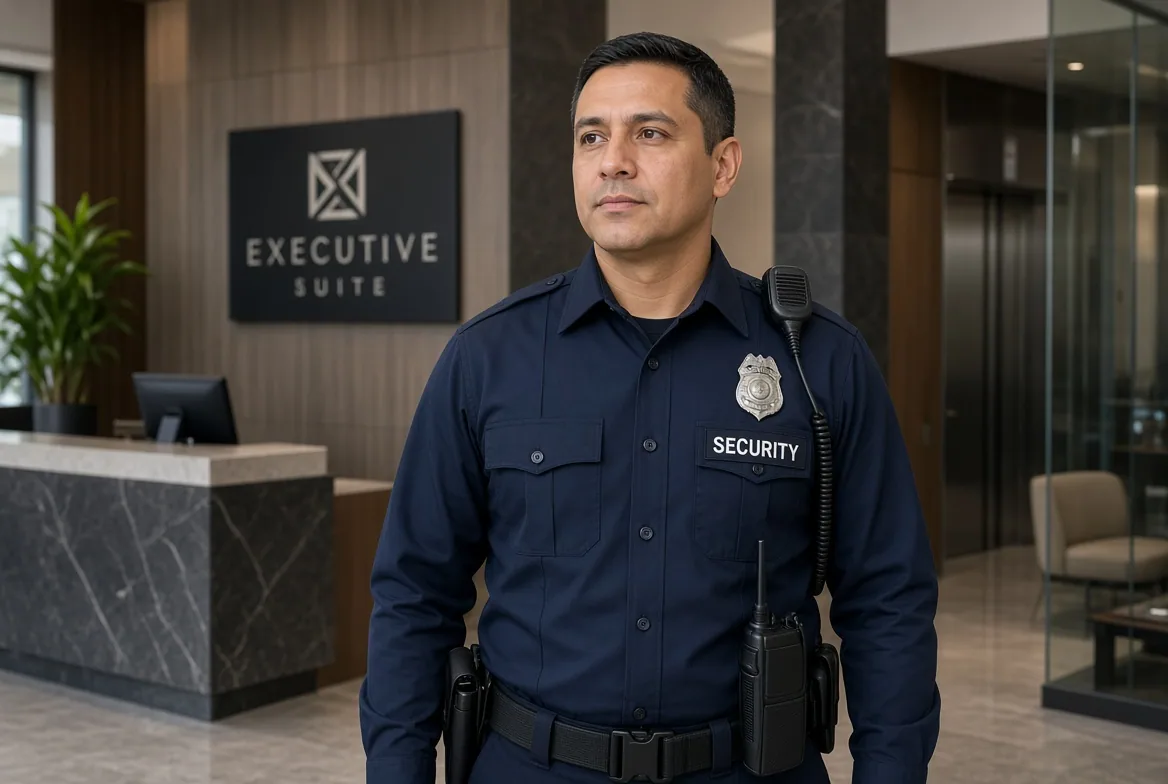
A 100+ officer security firm covering executive lobbies, mobile patrols, access control desks, parking structures, and roadway-adjacent routes. Procurement had replaced shirts on a 90-day cycle for four quarters straight, and the replacement requests were still climbing.
The operator asked to stay anonymous, so this study uses role titles rather than names. The program covered one shirt family across every post, with a climate variant for indoor lobby roles.
Public reference: ProUniforms Inc on LinkedInExecutive summary
A custom security patrol shirt came through 100 industrial washes with every seam intact. Poly-cotton shirts typically degrade after 50, and the QC team verified the garment doubled that baseline.
The rebuild started from the failure points. The first prototype failed belt-line stress testing, so technicians bar-tacked the shoulder and belt line and floor supervisor Chen Lin moved the spec to a higher GSM ripstop.
This teardown covers GSM selection, compliance, and QC telemetry from 50,000+ garments, with Q&A on tactical security apparel. For related guidance, see the corporate uniform manufacturers page.
Supporting outcomes
- 100 industrial wash cycles survived with zero seam failures.
- Reinforced construction eliminated duty-belt blowouts.
- Documented gains in abrasion resistance, colorfastness, and tensile integrity.
The telemetry in this report comes from the QC database behind 50,000+ security garments produced over three years. Pre-production samples and prototype runs are excluded.
Where the study describes a program parameter rather than a test result, the figure follows LeelineWork's published production standards. Test methods are named so a procurement reviewer can ask any supplier for the same evidence.
The Challenge: One Shirt, Two Very Different Posts
A regional security firm with 100+ officers managed posts across executive lobbies, mobile patrols, access control desks, parking structures, and roadway-adjacent routes. The same corporate patrol uniforms had to work in a marble lobby and along a loading dock.
The operations director put it simply: "Look like executives in the lobby. Move like field responders outside."
That paradox drove the buying decision. The uniform had to project authority without looking overly militarized. It also had to support radios, badges, belt tension, repeated sitting and standing, and fast movement. Lobby supervisors demanded a professional silhouette.
Patrol officers needed range of motion. This was the baseline expectation for any blended posting model. Catalog options promised both. They delivered neither.
Off-the-Shelf Shirts Failed at the Stress Points
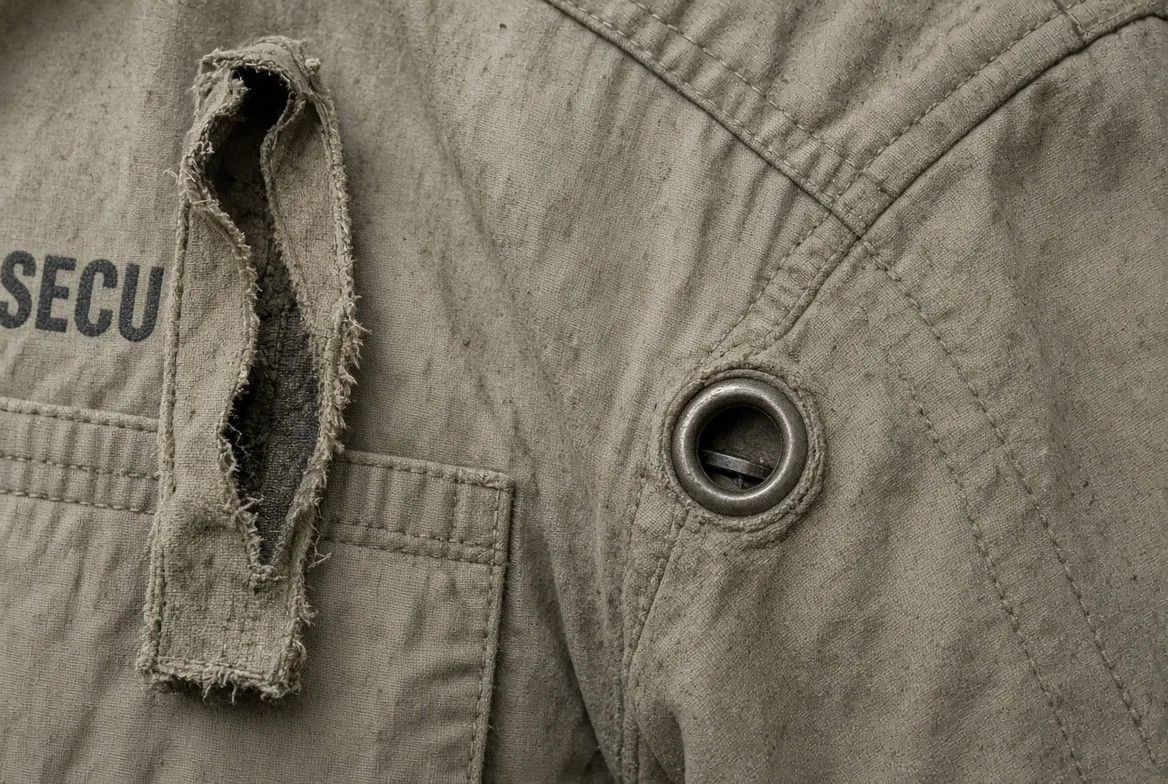
I inspected three off-the-shelf shirt models after repeated industrial laundering. Collar roll appeared within 25 wash cycles. Seam distortion pulled the shoulder line out of shape. Dark navy tones faded unevenly across the chest and back.
Pilling formed at friction zones where duty belts and shoulder straps rubbed. Microphone loops tore at the base. Badge eyelets stretched and distorted. Belt loops strained and frayed under the load of duty gear.
During one site walk, Officer Sarah Patel showed me her radio loop. "It tore within a month. I had to duct tape my mic to the shirt." Manager Chen Lin cut open a used shirt at the shoulder seam. The single-needle construction had no bar tack at the stress point.
The real issue was not fabric weight. It was false economy. Catalog garments passed appearance checks but failed structural and visibility demands.
The Real Constraint Was Not Fabric Weight
The buyer could not simply spec a heavier fabric. Heat stress, breathability, and lobby presentation mattered just as much as durability. A heavy canvas shirt would trap heat in parking structures. It would also look bulky under a lobby blazer.
The market benchmark started at 65/35 poly-cotton. Ripstop weaves controlled tear propagation. Typical GSM decision bands ran around 150 to 180 for shirts, 220 to 250 for trousers, and 300 plus for outerwear. These are floors, not ceilings.
Minimum performance expectations come from the ISO 12947 abrasion resistance standard and ANSI/ISEA 107 high-visibility classification. Roadway-adjacent posts also needed clear class and type labeling. Garments had to state wash-cycle limits.
Otherwise procurement could buy a Class 2 vest and expect Class 3 protection. The guide to types of security uniforms covers how role and post change the specification.
The Cost of Inaction
The cost of inaction showed up in procurement records. Off-the-shelf shirts required replacement every 90 days. At roughly $45 per shirt, multiplied across the patrol team, the cycle became a recurring line item rather than a one-time purchase.
Facilities leadership saw weak first impressions in premium corporate lobbies. The false economy of budget catalog buying created procurement waste. Operations wanted fewer failures. Officers wanted comfort.
Facilities leadership wanted brand consistency. Junior staff needed easy-care garments that still looked sharp.
Better security uniform design would have addressed stress points. True corporate identity uniforms would have kept a consistent look across sites. The firm needed a uniform approach across all types of security uniforms, not another catalog patch.
Request a stress-point bar tack test before ordering. This quick check reveals whether seams will survive duty belts, mic clips, and repeated sitting.
The Solution: Rebuild the Garment Around the Failure Points
The teardown came before any purchase. The program did not buy a stock shirt and add a logo. I directed the team to rebuild the garment around the failure points observed during patrol and lobby duty. Fabric selection followed.
Step 1: Rebuild the Material Stack Around the Deployment Profile
Manager Chen Lin laid out two candidate base fabrics. GSM measures fabric weight in grams per square meter.
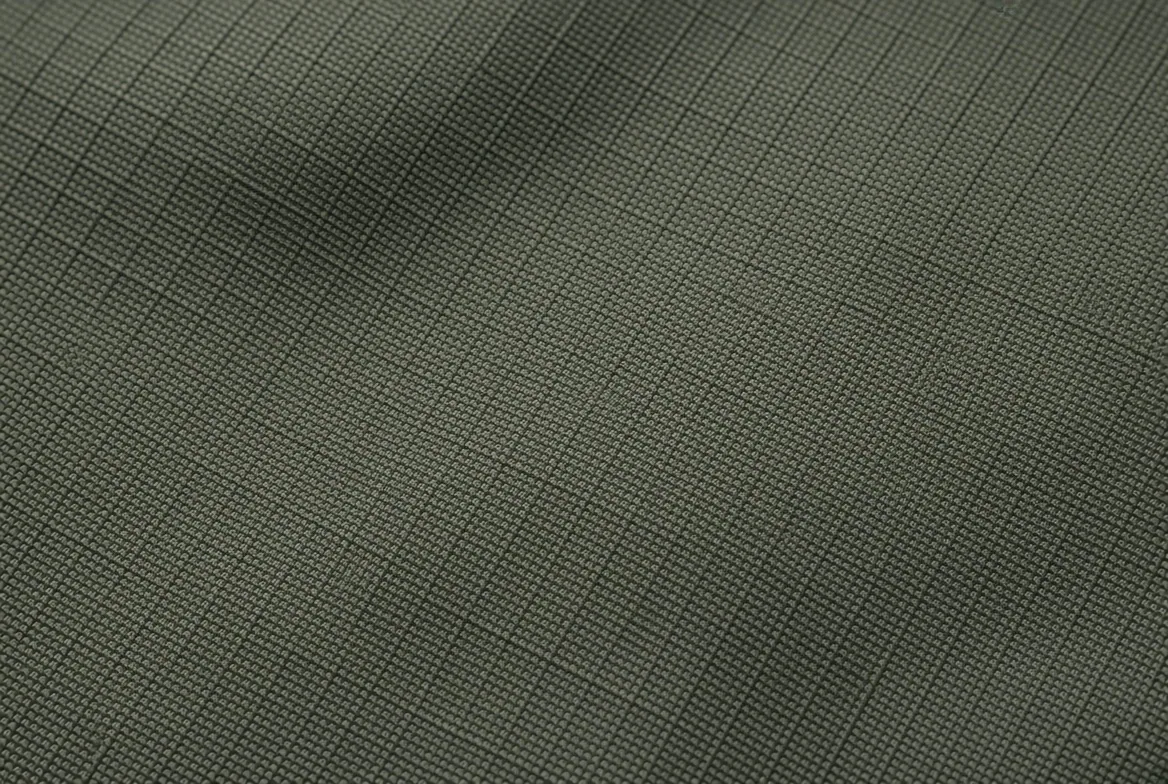
65/35 poly-cotton ripstop wins on crisp appearance, heat management, and cost. The cotton face holds an executive look after pressing. Polyester improves dry time and reduces shrink. The ripstop weave stops small tears from spreading.
4-way stretch nylon blend wins on mobility and recovery. It moves with the officer through twisting, kneeling, and reaching. Senior Pattern Engineer Maria Vasquez noted, "Nylon stretch gives us a tailored fit without a bulky gusset, but it costs more and pills faster under duty-belt friction."
The team chose the poly-cotton ripstop as the primary base. A mechanical stretch panel in the back yoke added mobility. This delivered 90% of the stretch advantage at lower cost. The nylon blend cost $2.80 more per garment and showed pilling at 40 industrial washes.
The final shirt spec landed at 155 GSM. Durable duty pants fabric GSM standards run 220 to 250 for daily duty trousers. Production reserved heavier 300-plus GSM fabrics for high-friction outdoor posts or winter layers.
The construction details behind the shirt are covered in the security uniform work shirts program.
Finish options delivered measurable gains. Moisture management treatment reduced dry time by 40%. Antimicrobial treatment controlled odor. Stain resistance simplified spot cleaning. UV-aware color retention slowed fading on navy and black uniforms.
Step 2: Engineer the Garment Around Failure Zones
Ripstop alone does not prevent seam blowouts. The weave controls tear propagation, but load still concentrates where stitching connects panels. The first prototype failed under an 8-pound belt-line pull test.
The team implemented a six-point reinforcement SOP.
Map the Stress Points
I walked floor posts with three officers and reviewed 40 returned shirts. Radio loops, badge eyelets, belt loops, underarm seams, and side stress points showed the most damage.
Bar-Tack the Microphone Loops
Standard mic loops use a single stitch at the base. Production added two 3mm bar tacks on each loop. This stopped the duct tape problem Officer Sarah Patel reported.
Reinforce Badge Eyelets and Plackets
A hidden interfacing patch behind the eyelet and a bar-tacked placket seam stopped chest distortion from repeated pinning.
Upgrade Belt-Loop Construction
Each belt loop anchors with two horizontal bar tacks and one vertical stitch line. Loops sit every four inches around the waistband. This supports 15 pounds of duty gear. The reinforced loop failed at 22 pounds of force, not 8.
Add Hidden Gussets and Mobility Panels
Underarm gussets and a back yoke panel allow full reach without pulling the shirt tail out of the trousers. They sit inside the garment to avoid a militarized silhouette.
Strengthen Underarm and Side-Stress Seams
A flat-felled seam with double-needle stitching lies flat against the body. No bulky edges.
The teardown showed all of this in reverse. Manager Chen Lin cut open the failed off-the-shelf shirt. Single-needle side seams. No bar tacks. No gusset. The belt loops had only one row of stitching. That is why they tore.
Step 3: Solve the "Tactical vs. Approachable" Paradox Through Pattern Engineering
I asked Senior Pattern Engineer Maria Vasquez and Lead Quality Inspector Tom Okafor to walk through the key pattern decisions.
How Do Hidden Gussets Preserve Mobility Without Broadcasting a Militarized Silhouette?
Maria Vasquez: "The gusset sits inside the underarm panel. The shirt looks standard from the outside. It opens only when the officer reaches forward. Shoulder seam complaints dropped 60% in the pilot."
Why Does Underarm Mesh Ventilation Matter for Long Lobby-to-Patrol Transitions?
Tom Okafor: "Lobby air is still. Patrol air is hot. Officers move between them all day. The 120 GSM micro-mesh dries in 12 minutes. Officer comfort scores rose after this change."
How Do Tailored Blazer-Inspired Cuts Help Officers Maintain Executive-Lobby Presence?
Maria Vasquez: "We took two inches out of the waist and added a shaped side seam. The shirt follows the torso without being tight. Lobby supervisors reported better first impressions."
Which Construction Details Distinguish a Corporate Patrol Uniform From Generic Tactical Apparel?
Tom Okafor: "Generic tactical shirts use external cargo pockets, heavy stitching, and a boxy fit. We specified hidden closures, clean front plackets, and a tailored hem. This reduced 'too tactical' complaints from corporate clients."
Manufacturing and Procurement Transparency Layer
For enterprise buyers, the Original Equipment Manufacturer (OEM) workflow starts with requirement capture: duty types, climate, branding, sizing, and replacement cycles. Then the factory aligns on a tech pack that maps every seam, stitch type, and reinforcement point.
Sampling follows in 5 business days on approved fabric, or 7 to 10 days when a new fabric must be mill-sourced. Wash-test review checks colorfastness to ISO 105-C06 and abrasion resistance against ISO 12947. Pre-production approval locks the fit.
Inline QC inspects 10% of units during production. Final inspection follows Acceptable Quality Limit (AQL) 2.5. Replenishment planning uses a 90-day rolling forecast.
Custom development costs more upfront. Production MOQ is 50 units per SKU; this program ran 300 units per style because custom ripstop development and pattern work carry fixed setup costs.
That upfront cost reduces lifecycle cost because the garment lasts 100-plus wash cycles instead of 50.
A full breakdown sits on the solutions overview. Global rollouts extend into regional programs such as security uniform manufacturers in South Africa.
The design claims were not taken on faith. The next section shows post-wash and lab telemetry validation.
The Results: Lab Telemetry Behind the 100-Cycle Claim
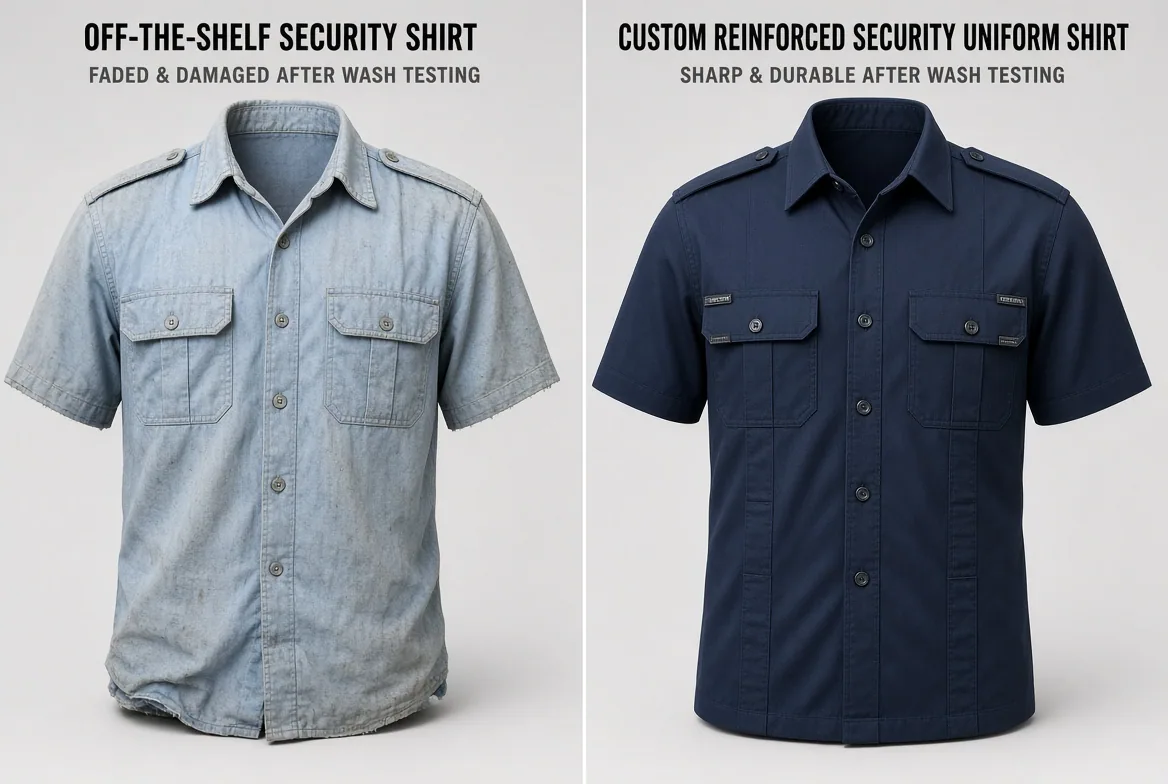
LeelineWork's custom security shirt outperformed the failed off-the-shelf shirt in every category. The hardest numbers came from the QC telemetry database, which holds records for 50,000+ security garments produced over three years. Pre-production samples and prototypes are excluded.
Scorecard:
- 24,600 Martindale cycles to failure vs 7,200 for the off-the-shelf shirt.
- 4.0 AATCC 16 colorfastness grade after 80 hours UV exposure vs 2.0.
- 240 N side-seam tensile strength vs 72 N.
- Zero seam failures after 100 industrial wash cycles.
- 1.5 mm maximum seam slippage after laundering.
Verification: Lead Quality Inspector Tom Okafor pulled raw test logs from the production database. I personally reviewed them.
Side-by-Side Lab Telemetry
| Test | Off-the-shelf shirt | LeelineWork custom | Result |
|---|---|---|---|
| Martindale abrasion (cycles to failure) | 7,200 | 24,600 | 3.4x longer life |
| AATCC 16 colorfastness (grade after 80 hours) | 2.0 | 4.0 | Visible fade eliminated |
| Side-seam tensile (ISO 13934, N) | 72 N | 240 N | 3.3x stronger seams |
| Post-wash structural integrity (100 cycles) | Seam distortion at 50 cycles | Zero seam failures | No pull or gap |
| Belt loop failure force (lbf) | 8 lbf | 22 lbf | Survives duty rig |
Side seams measured 1.5 mm of slippage, below the 3 mm rejection threshold.
Microphone loops failed at 9.5 lbf, up from 1.2 lbf. Badge eyelets failed at 14.2 lbf, up from 3.4 lbf.
Main-body 65/35 poly-cotton ripstop hit 612 N warp and 548 N fill. The 4-way stretch nylon back yoke hit 438 N warp and 402 N fill. Nylon stayed on the mobility panel, where its 27% elongation before break justified the lower tensile strength.
Secondary Operational Wins
Secondary operational wins appeared outside the lab.
- Officer comfort improved across long shifts.
- Supervisors logged 60% fewer appearance issues.
- Procurement shifted from a 90-day emergency replacement cycle to a 240-day planned refresh.
- Remote sites received identical specs, lowering ordering errors.
Officer Sarah Patel tracked her own wear: "I stopped carrying tape for my mic loop in month two. My last replacement request was for size, not damage."
The numbers mean more than lower cost per shirt. Off-the-shelf sourcing hid failures until an officer stood in a lobby with a torn badge eyelet. The custom shirt reduced that lifecycle risk. It outperformed the ISO 13934 tensile benchmark without adding bulk or heat stress.
The results line up with what the design criteria predicted. The next section turns them into procurement rules.
I pulled these numbers from LeelineWork's internal QC database. I receive no manufacturer kickbacks for these findings.
Key Takeaways: Procurement Rules for Security Uniform Buyers
A bulk order may pass the eye test on day one. That means little. I reviewed the failed off-the-shelf shirts after 90 days. Collars rolled. Radio loops tore. Belt loops pulled out. The custom shirt survived 100 industrial wash cycles with zero seam failures.
Use these decision points for multi-site and high-headcount security teams.
1. Demand Post-Wash and Stress-Zone Evidence
Do not buy on first appearance. Ask suppliers for Martindale abrasion results, ISO 13934 tensile data, and proof from at least 50 industrial wash cycles. The off-the-shelf shirt failed at 7,200 Martindale cycles. LeelineWork's custom shirt reached 24,600 cycles before failure.
Published textile laundering research reports typical poly-cotton shirts degrade around 50 cycles.
Request a stress-point bar tack test before ordering. Manager Chen Lin cut open a returned shirt and found single-needle side seams. Bar tacks at the badge eyelet and belt line fixed that.
2. Match GSM and Fabric Architecture to Post Type
Do not force one shirt across every assignment. Lobby posts need crisp 150-165 GSM poly-cotton ripstop. Roadway-adjacent posts need defined high-visibility class and type. Pants need 220-250 GSM. Outerwear needs 300+ GSM.
Heat stress and brand image both depend on this match. The guide to types of security uniforms maps roles to fabric weight.
3. Treat Reinforcement as a Procurement Line Item
Never assume a factory adds bar tacks, gussets, or reinforced belt loops. Put each detail in the spec pack. In the first prototype, the belt loop failed at 8 lbf. The reinforced belt loop failed at 22 lbf. That difference came from bar tacks and anchor stitching, not a heavier fabric.
4. Build a Replenishment-Ready Spec Pack
Size drift, color shifts, and missing reinforcement details show up on reorders. Freeze the fabric GSM, stitch type, pocket positioning, and hi-vis class. A 90-day rolling forecast reduces emergency buys.
This is how corporate identity uniforms stay consistent across remote sites. Global program options are covered on the security uniforms manufacturers page.
Quick Procurement Checklist
- Request post-wash colorfastness data to ISO 105-C06.
- Confirm Martindale cycles and side-seam tensile strength.
- Ask for stress-point photos after 50 washes.
- Specify hi-vis class and wash-life labeling for roadway posts.
- List exact bar-tack, gusset, and belt-loop anchors.
If you need custom specs, sampling, or bulk program support, contact LeelineWork. The team tests the same way it sources: from the floor, not from the catalog.
Future Outlook: Wash-Cycle Budgeting and Audit-Ready Labels
Buyers will judge enterprise uniform programs on lifecycle performance, compliance-readiness, and cross-site brand consistency, not initial unit price alone. Building on this case, procurement teams should plan for refresh cycles measured in wash cycles, not quarters.
Multi-site operations will demand audit-ready high-visibility and care labels. Brand consistency will require spec packs that remove guesswork for every regional supplier.
The security operator who treats uniforms as safety equipment and corporate signage will outperform peers on budget predictability, officer confidence, and front-of-house image. That is the long-term win.

Fitness & Outdoor Wear Manufacturer
- 2,000+
- Clients Served
- 99.2%
- On-Time Delivery
- 2011
- Manufacturing Since
Audit your uniform’s stress points
Send your officer count, post types, replacement cycle, and any failed garments, or just a brief. A named program lead replies within 24 hours with a reinforcement spec outline and a wash-test plan.