






01
Dock · RouteWear at the knees and seat
Pickers kneel, drivers climb in and out, and trousers shine, snag and tear at the knees, seat and hem long before the fabric is finished.
Trousers replaced every one or two quarters instead of annually.
A factory-direct program for courier groups, third-party logistics operators, warehouse estates, and ground-fleet carriers: fabric built for the five points a working uniform fails at, role pockets that carry a scanner and a tool, visibility specified to the zone, one colour locked across every site, and a replenishment path that keeps a high-turnover crew dressed.
MOQ 50 units per SKU · 5-day sample · 24-hour quote · programme record archived for every site.
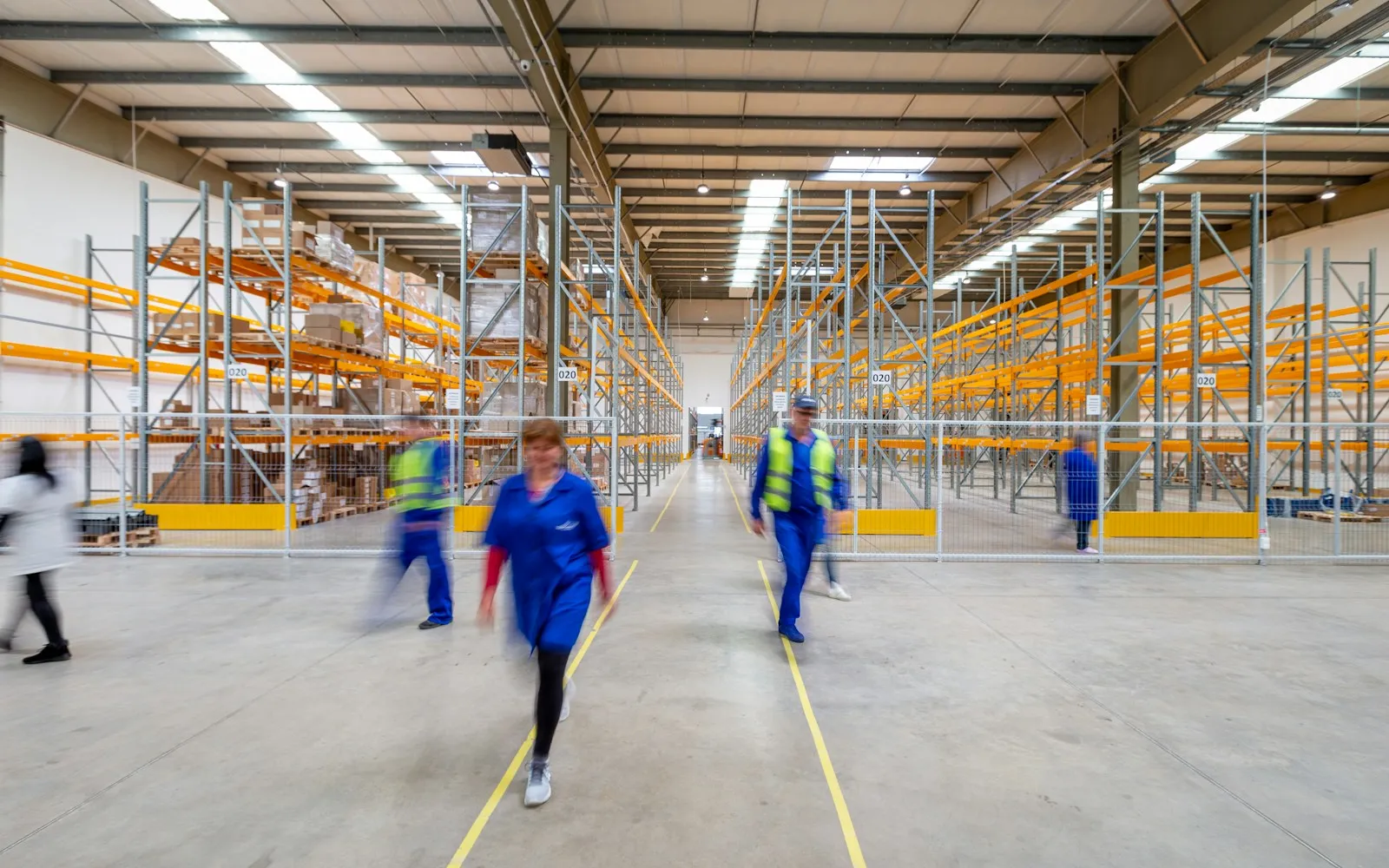 Network coverage
Depot
Picking, packing, storage
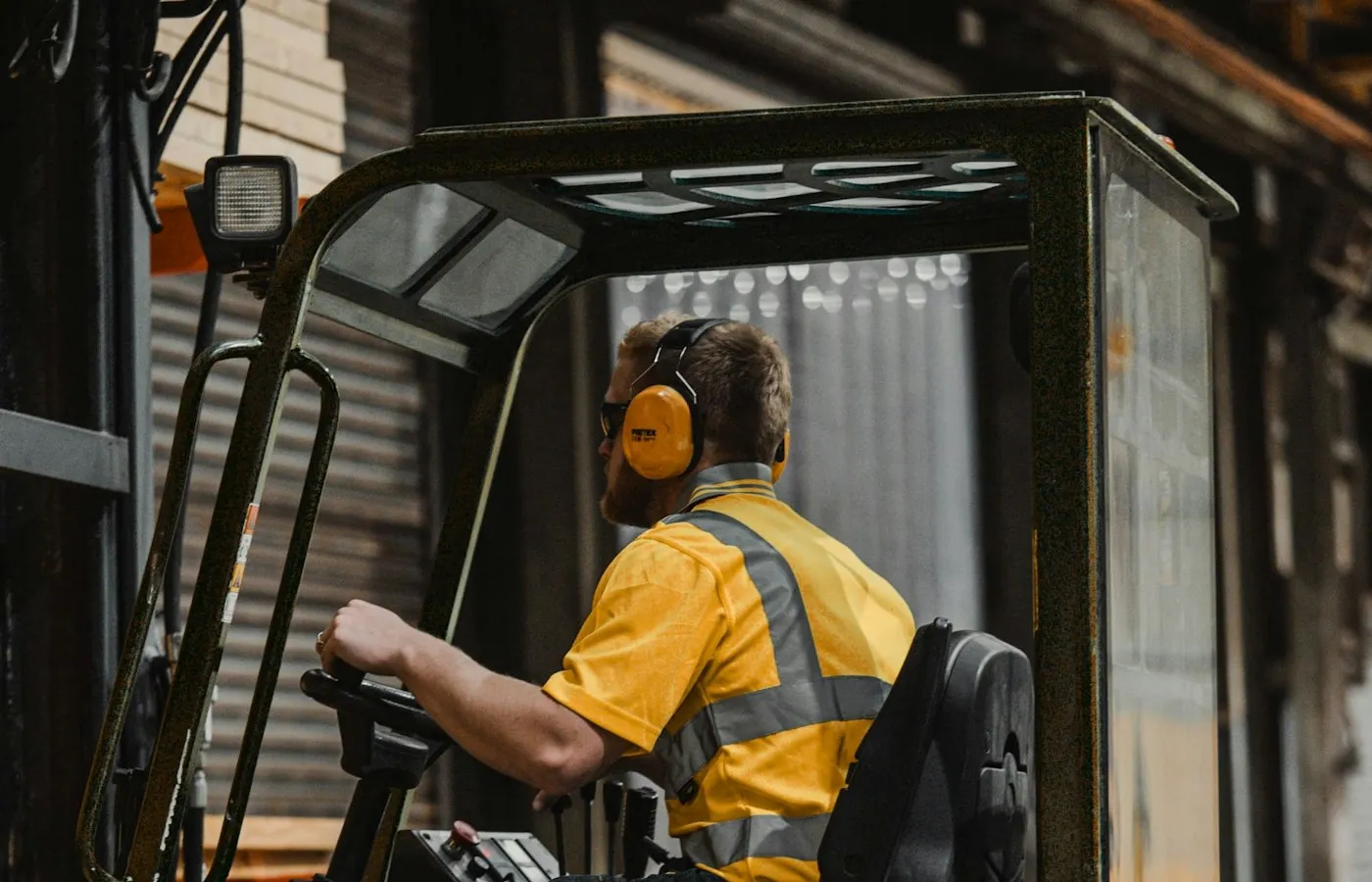
Dock
Loading, receiving, staging
Route
Last-mile delivery
Yard
Trailer & plant movement
Six fault lines · mapped by zone
None of these look like a uniform problem on their own. Across a depot, a dock, a route, and a yard, they compound into a network that looks inconsistent to its customers and quietly re-spends on replacement every quarter.

Pickers kneel, drivers climb in and out, and trousers shine, snag and tear at the knees, seat and hem long before the fabric is finished.
Trousers replaced every one or two quarters instead of annually.
Each depot buys on its own cycle, so the same navy reads a shade different from the next site — obvious the moment two vans park side by side.
A network that stops looking like one company.
A shirt with one chest pocket and no scanner loop, tool point or radio tab forces staff to improvise — and tears the seam when they do.
Dropped scanners, lost tools, and split pocket seams.
An indoor picker and a yard or roadside driver are not the same hazard, but both end up in the same garment — or a separate vest that fails the required class.
Safety exposure where a forklift or a road is in play, and a gap on inspection.
Cheap poly-cotton fades, shrinks and loses shape inside the wash cycle the contract actually runs, so the replacement clock starts early.
Four or five replacement batches a year on a garment meant to last one.
Warehouse and last-mile churn is steep, so new hires arrive faster than a fresh re-quote and sample can clear the line.
People working in borrowed or street clothes on day one.
Four buyer types · one factory
The factory and the wear engineering are the same; what changes is the governance layer — a courier group answers for its brand on the street, a third-party logistics operator answers to several client brands at once, and a warehouse or fleet operator answers to a single security and spend mandate.
 Last-mile
National and regional courier and parcel groups running vans, bikes and walkers across many delivery routes.
Churn is steepest on the route, and the driver at the door is the whole brand to the customer.
Durable route kit, visibility to the curbside, and a new-hire path off an archived spec — so a replacement driver is dressed and branded the same week.
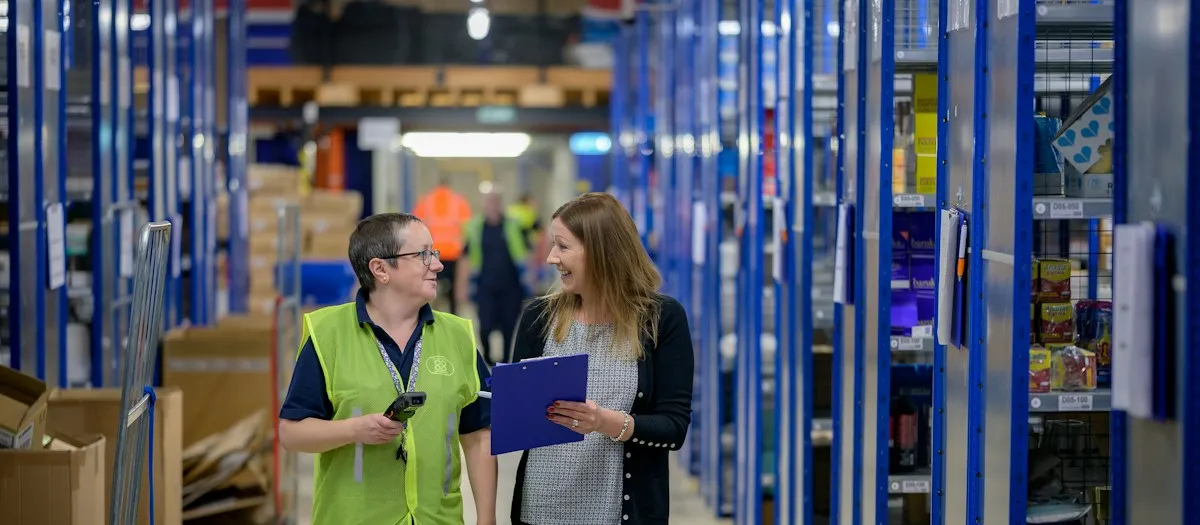 3PL
3PLs and fulfilment operators running warehouses and dockets for several client brands under contract.
Several client identities on one floor, with the same staff moving between clients and shifts.
Client-to-role colourboards kept as separate line items on one record, with role-coded picking and supervision wear that reads at a glance.
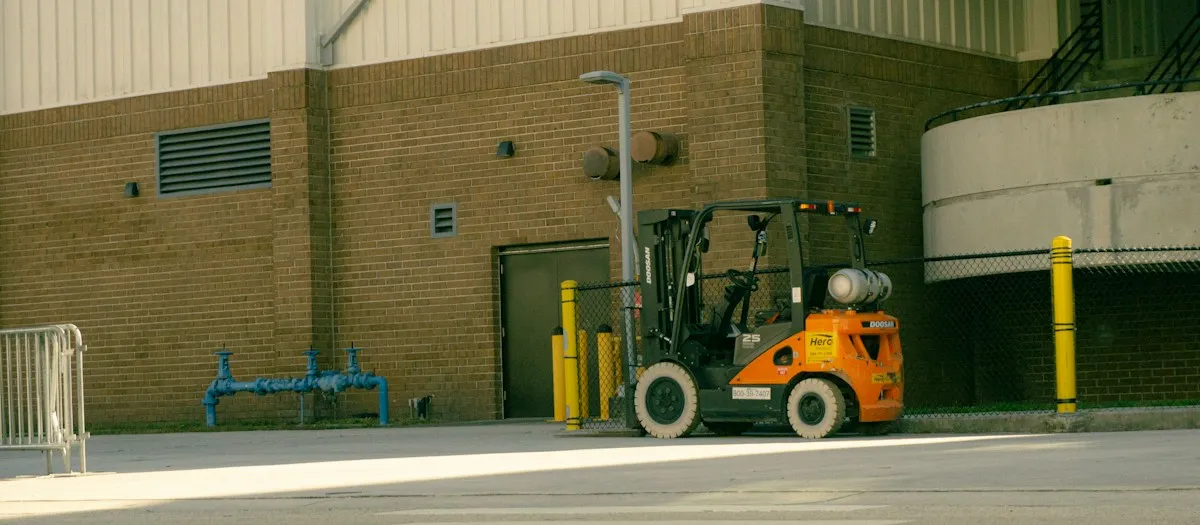 Distribution
Retail, grocery and e-commerce distribution centres running large picking, packing and receiving floors.
A high-turnover floor where wear, fit and visibility rules are set centrally but supplied unevenly.
One pallet colour, a graded size chart held across every DC, and zone-correct hi-vis so the floor, the aisle and the dock each get the right class.
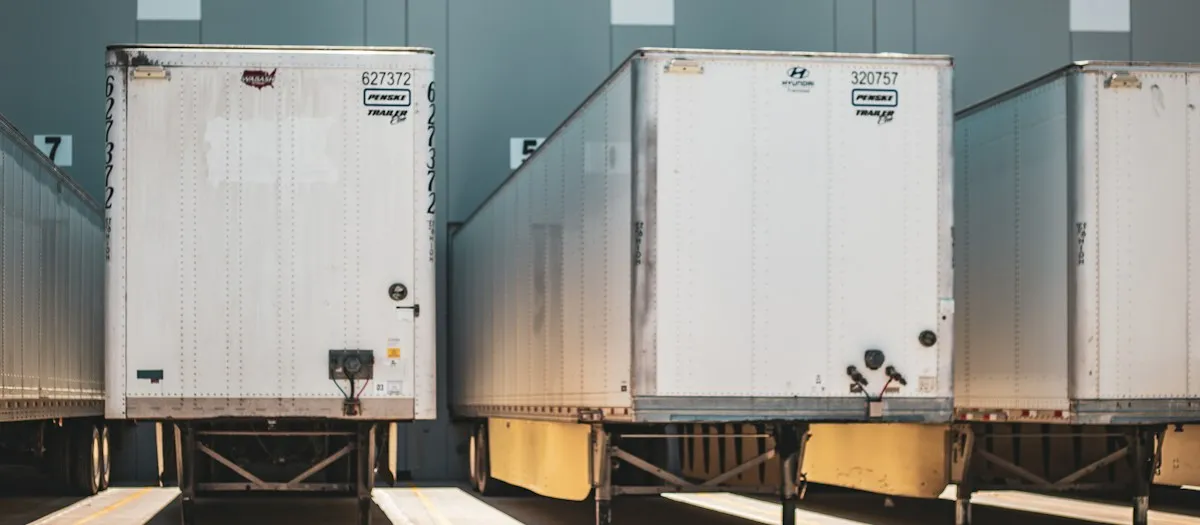 Line-haul
Trucking, freight and ground-fleet carriers dressing drivers, yard crews and terminal staff across terminals.
Drivers and yard staff work around moving vehicles, weather and long wash cycles at scattered terminals.
Heavier-duty yard fabric, road-class visibility for the terminal apron, and one colour that holds across every terminal and every reorder.
Six wear points · built in, not patched
Working wear does not wear evenly. A picker’s trouser fails at the knees and seat, a driver’s kit at the hem and thigh pocket, a shirt at the underarm and the loaded pocket — usually inside a year. The program reinforces each point and proves the fabric through the wash cycle the contract runs.
A loaded duty belt and repeated bending pull single-row loops and the waistband facing free.
Double-row belt loops on a faced waistband, bar-tacked at each end.
Climbing in and out of cabs and crouching to pick bag and shine the seat long before the legs give.
A reinforced seat panel and higher-tensile thread at the seat seam.
Kneeling on concrete and snagging on racking and pallets wears the knee thin and then splits the seam.
Double-stitched, articulated knee panels — a real panel, not a decorative patch.
Cargo pockets split at the mouth and base when they carry a scanner, tape gun or tools all shift.
Bar-tacked pocket mouths, a reinforced base, and a clean edge for the carry.
Dragging on the ground, catching on truck steps and industrial washing fray the hem raw.
A turned, twin-needle hem cut to the boot line so it neither drags nor rides.
Reaching overhead and a loaded chest pocket gape the underarm seam and pull the pocket off-square.
Flat-felled underarm seam and a bar-tacked chest pocket built for a phone or radio.
Industry-typical build points for a working program; actual life depends on role, wash temperature and soiling. Every batch ships with its own test report.
How fabric is testedA sample is a decision, not a gesture. These are the success criteria we agree before cutting — so neither side is negotiating the standard after the sample lands. Copy this into your approval doc.
| Criterion | Pass rule |
|---|---|
| Dimensions & fit | Every measurement within your tech-pack tolerance — we confirm the tolerance band before cutting, ±0.5" (1.3 cm) unless you specify tighter |
| Colour | Spectrophotometer ΔE ≤ 1.5 against your approved Pantone, checked on the finished garment, not the greige roll |
| After-wash | Construction, colour, and reflectivity tested through your required wash cycles — ISO 6330 at 60 °C default, or your standard |
| Reflective / hi-vis area | Tape and reflective area measured against the required class layout — ANSI/ISEA 107 or EN ISO 20471 |
| Batch inspection | Bulk lots sampled to ISO 2859-1 General Inspection Level II — Critical 0 / Major 2.5 / Minor 4.0, the same AQL plan the lot is judged against before it ships |
| Documentation | Fabric mill cert, per-batch lab report, and 4-point fabric inspection record filed by PO with the sample |
A sample lands approved in one round when these arrive with the brief. Hand them over late and the first sample is guessing — this is the checklist that stops that.
Wash conditions
How the garment is laundered on site — commercial or industrial, wash temperature, detergent, and dryer or iron finish. Our default test is ISO 6330 at 60 °C.
Role list
Every role on site, the colour and standard each one needs, and headcount per role per location — the map the whole program is built against.
Size distribution
The size breakdown to order, and human measurements where the program is made-to-measure rather than graded from a chart.
Reference colour
A Pantone number, physical swatch, or existing garment we can read by spectrophotometer, so the colour formula is locked to your reference, not matched by eye.
Standards by market
Which product standards apply and where the goods ship — so we confirm ANSI/ISEA 107, NFPA 2112, EN ISO 20471, or a local equivalent is genuinely required before you pay for over-spec.
First delivery window
The date the first site needs stock, so sampling and production are scheduled against a real deadline instead of a placeholder.
Five carry points · set from one drawing
A delivery route and a picking shift both run on equipment carried on the body — a scanner, a hand-held terminal, a tape gun, keys, a phone, a radio. A uniform with one chest pocket forces staff to improvise, and the seam pays for it. The program places each carry point where the hand actually goes.
 Field loadout
A dedicated thigh or chest pocket at the hand’s natural rest point, bar-tacked and load-bearing.
A bar-tacked loop on the shoulder or chest so the radio rides without swinging into the load.
A flat, zipped or flap-secured pocket that keeps paperwork dry on a wet route.
Lower-front loops and a reinforced pouch base for the dock and receiving floor.
Internal knee pockets that take EN 14404 pads for long kneeling on hard floors.
Pocket placement is set from one approved drawing and archived per style, so a reorder six months later lands the same layout in the same place.
ANSI/ISEA 107 · EN ISO 20471
A picker three aisles from a forklift and a driver stepping into the road at dusk are not the same visibility problem. The program assigns each area the visibility it actually needs — against the type and class the standard sets for that hazard — so you buy the right garment, and skip one the desk staff do not need.
fluorescent performance lost per year to UV
a hi-vis garment can fall out of class without a tear
industrial washes most tape is tested through
Type O is off-road (warehouse and yard); Type R is roadway. Tape is at least 50 mm wide and a printed logo never covers the required reflective area. Faded, soiled or damaged hi-vis is replaced, not re-worn.
Five roles · one test floor
A picking floor and a roadside route load the fabric differently, so they get different cloth. The register below matches each station to a build, weight and weave — then every lot is held to the same thresholds before it ships.
Thresholds are industry-typical for heavy-duty workwear, not a fixed service life; actual life tracks role, wash temperature and soiling. Each batch ships with its own test report.
Pantone-locked · ΔE ≤ 1.5 per lot
The most common complaint in a multi-depot program is not the fabric — it is the navy. A site reorders six months in and the shade has drifted, so two vans parked together read as two companies. The colour is locked as a measured formula, not a photo, and every reorder draws from it.
The dye house matches your Pantone or swatch and submits a dip under agreed light before any bulk is cut.
The approved pre-production sample locks colour and construction; it becomes the golden standard every lot is measured against.
Each lot reads ΔE ≤ 1.5 against the sealed Pantone on the finished garment — not on the greige roll.
One base hue for the network carries role accents (supervisor, safety, yard), so a site expands without a second base colour.
A colour formula is archived with the program, so a depot that joins later — or a reorder a year on — ships the same measured shade, not a fresh guess.
Turnover math · one spec
Warehouse and last-mile roles have some of the steepest churn in any industry, so replacement — not the first order — is where a program is won or lost. A shorter-lived garment that is replaced four times a year costs more than one that lasts, and a new hire dressed off an archived spec never reopens the negotiation.
Industry figures for context — a program controls how cleanly and cheaply each replacement lands, not the churn itself.

The new hire is slotted into the network map — depot, dock, route or yard.
Size and garment set are pulled from the archived role spec — no re-measure, no re-quote.
Branding runs off the sealed drawing and the locked colour, so the kit matches the site it reports to.
Packed and labelled per site on the reorder window, so it lands ready to hand over.
One record · many labels
Fabric per role, colour formula, size chart, carry layout and branding live on one program record. A site is added by pointing that record at a new building, so a depot or a route that joins next quarter is produced against the same sealed sample as the flagship — not re-sourced and re-matched.
Picking · packing · dock
Receiving · staging
Route · van load-out
Yard · plant movement
Pick · pack · returns
Driver · dock · yard
Filed by purchase order
A logistics buyer is asked to prove kit is safe, certified and fit for the wash it runs. Rather than chase paperwork after the fact, each purchase order arrives with its file already assembled — so a safety review or a client audit closes on the first pass.
Every bulk lot is sampled to ISO 2859-1 General Inspection Level II — Critical 0 / Major 2.5 / Minor 4.0 — the same plan the lot is judged against before it ships.
Records are filed by purchase order and quote, so an auditor or a client can be handed the exact file for the exact batch — not a photocopied certificate.
Write these terms into your RFPFirst depot → every site
The first rollout sets the spec and seals the sample; every site after points the same record at a new building. Sampling gates out on reorder, and a brand-new site carries its own short onboarding before it joins. This is how the timeline maps once the role list and colour reference are agreed.
Every stop, the garment, colour and visibility class each one needs, headcount per role per site, and the wash cycle the contract runs.
A pre-production sample is approved and sealed as the golden standard — colour read at the dye house, carry layout locked.
AQL 2.5 gates at each stage; every garment measured against its role spec and the sealed sample.
Cartons labelled per site with per-site packing lists; the audit file ships filed by purchase order.
A top-up runs on the archived spec in the reorder window; a new site runs its own onboarding, then joins.
A site that has never been in the program runs its own sample before it can be supplied — budget a separate onboarding window, and the standard cycle applies once it is inside.
Lock in your first rolloutThe point of a network program is that the tenth depot, the newest driver and the busiest shift all draw from the same record — so the operation always looks like one company, and the budget reflects one standard instead of a dozen.
One locked base colour with role accents, so a new depot reads as the same company the day it opens.
Reinforced at the six points working wear fails, fabric matched by role, and tested through the contract’s wash cycle.
A high-turnover crew stays dressed from an archived spec — a new hire is a one-line kit in 10–14 days, a new depot joins in 6–8 weeks.
Standards, sourcing playbooks, and the technical notes behind the claims on this page — written to be taken into a procurement, safety or client meeting, not skimmed and forgotten.
A six-step guide to sourcing logistics uniforms to OSHA and ANSI/ISEA visibility standards.
Why the ripstop grid stops a snag at the knee before it runs — and where twill still wins.
How to read a fabric by the tests that predict life, not the hand-feel or the meter price.
How ANSI/ISEA 107 types and classes map to real zones, and how reflective tape ages.
A six-step enterprise sourcing program: scope, spec, sampling gates and multi-site rollout.
A five-step RFP for multi-site buyers, with the service terms and reserve-stock clauses to write in.
We dress pickers, dock crews, drivers and yard staff across nineteen warehouses and a van fleet, and every site used to buy its own kit. Two vans parked together were two different navies, and trouser knees were blowing out inside a quarter on the picking floor.
They set one locked colour with role accents and moved picking to a heavier ripstop, then proved it through our wash cycle before bulk. The knee-panel build alone cut the trouser replacement cycle from quarterly to annual, and a new hire is dressed straight from the spec.
The real win is the network. A depot we opened last spring came up matching a site we started with — same navy, same placement, same size chart — without a back-and-forth.

Marcus Feldt
VP of Network Operations — Regional Courier & 3PL Group
We run distribution centres, a cross-dock network and a dedicated fleet, and uniforms were bought site by site — so no two DCs matched and no one could tell me what the network actually spent.
They built one role-to-zone map, a graded size chart that holds across every site, and a single price schedule the whole operation draws from, with each location’s cartons labelled so it goes straight to the floor.
First safety audit, the fabric certs, hi-vis classes and wash records were already in the box, filed by order. My team stopped chasing paperwork, and the operation finally reads as one company from the dock to the last mile.

Helena Brooks
Director of Supply Chain — National Distribution Group
If your question isn't here, our RFQ desk responds within 24 hours — no sales pitch, just specs.
That is the core of what we do. Your spec — fabric per role, colour formula, size chart, carry layout and branding — is archived per program, and every site order draws from that same record. A depot or a route that joins next quarter is produced against the sealed sample and the stored Pantone reading, so it lands matching the first rollout. Each site is labelled and packed per location, so distribution unloads straight to the floor.
It is matched to the role, not one cloth for the network. Picking and packing usually run 65/35 poly-cotton ripstop at 240–260 GSM for tear resistance at the knees and seat; receiving and dock roles take a 2/1 twill at 195–235 GSM; last-mile routes take a stretch poly-cotton or softshell for movement and quick-dry; and yard and line-haul roles take a heavier twill or canvas at 260–300 GSM. Waistbands, knees, thigh pockets and hems are reinforced at the points that fail first, and every lot is tested to the wash cycle the contract runs.
Visibility is matched to the zone, not applied blanket. Depots and docks that run forklifts usually land at ANSI/ISEA 107 Type O Class 2 (or the EN ISO 20471 equivalent); last-mile and yard roles that work near vehicles move to Type R Class 2, and to Class 3 at night or in high-speed areas. We confirm the type and class against the standard that applies in your market before you buy, and reflective area is measured to the required layout. We will tell you plainly if a hi-vis garment is over-spec for a role.
Because the role, size, colour and carry layout are all on file, a new hire is a one-line kit against the archived spec — no re-measure, no re-quote, no new sample. Reorders run in 10–14 days from the archived spec, and garments are cut from same-lot reserve where the colour has to match exactly. A brand-new site runs its own onboarding of 6–8 weeks before it joins the program; existing sites top up on the reorder window.
The colour is locked as a measured formula, not a photo. The dye house submits a lab dip against your reference, the approved pre-production sample seals it, and every lot is read by spectrophotometer to ΔE ≤ 1.5 on the finished garment — not on the greige roll. A single base hue carries role accents (supervisor, safety, yard), so a site that expands later does not introduce a second base colour. The formula stays on file, so a reorder a year on ships the same measured shade.
Yes. We confirm the visibility type and class against the standard that applies in your market before production, and refuse over-spec where it is not needed. Each purchase order arrives with its file already assembled — fabric mill certificate, per-batch test report, hi-vis certification, AQL 2.5 inspection record, and the wash-cycle test record — filed by purchase order so an auditor or client can be handed the exact file for the exact batch.
Send your site list, the roles at each one, the wash cycle you run, and your colour reference — or just a brief. A named engineer replies within 24 hours with a role-to-zone map, a fabric and visibility spec, and a quote. No sales pitch, no rate-card guesswork.
Read the logistics uniform guideScoping a single garment line instead? See our custom industrial uniform manufacturing range — work shirts, trousers, outerwear, and hi-vis.Comparing program patterns? See all uniform programs. Browse the verified case studies.Last updated: November 2026.