







Table of contents
Key Takeaways
- Fabric GSM: 150–180 g/m² for shirts and polos in 65/35 poly-cotton, 220–260 g/m² for trousers, 280–320 g/m² for blazers. Set 20,000 Martindale rubs as the floor.
- Colourfastness: grade 4 minimum to ISO 105-C06 at 40 °C, plus a 60 °C test for garments headed to hot school laundry.
- Shrinkage: 3% max for woven shirts, 5% for knits, 2% for linings, measured over washes that match the school's real laundry.
- Seams: write seam burst strength in newtons to ISO 13935-2. Tested shirts held 212 N against 148 N on ordinary blanks.
- Sizing: seal one sample per size and hold ±1 cm batch to batch, with AQL 2.5 checks at grading and stitching.
For custom school uniforms, the lowest quote often hides the highest replacement bill. Playground abrasion, backpack friction and hot washes trigger swaps, so track cost per wear instead of sticker price.
Six factors decide that number: fabric GSM, colourfastness, shrinkage, seam reinforcement, easy-care finish and sizing consistency. Each one comes from factory-floor process work, lab testing and bulk-order controls, and each one turns into a clause you can score in an RFQ.
Start with a factory you can verify. ISO 9001 covers the process control, OEKO-TEX Standard 100 covers skin-contact safety, and independent SGS labs run the fabric tests. Ask for the reports, not the certificate summary. Begin with vetted school uniform manufacturers.
The Six Factors That Set Your Real Cost Per Wear
The rest of this guide works through those six factors one at a time, in the order they hit your budget. Each section gives you the target number, the test that proves it and the clause to write into the RFQ. Work through all six before you compare a single price.
1. Lock Fabric GSM and Abrasion Resistance Before You Compare Quotes
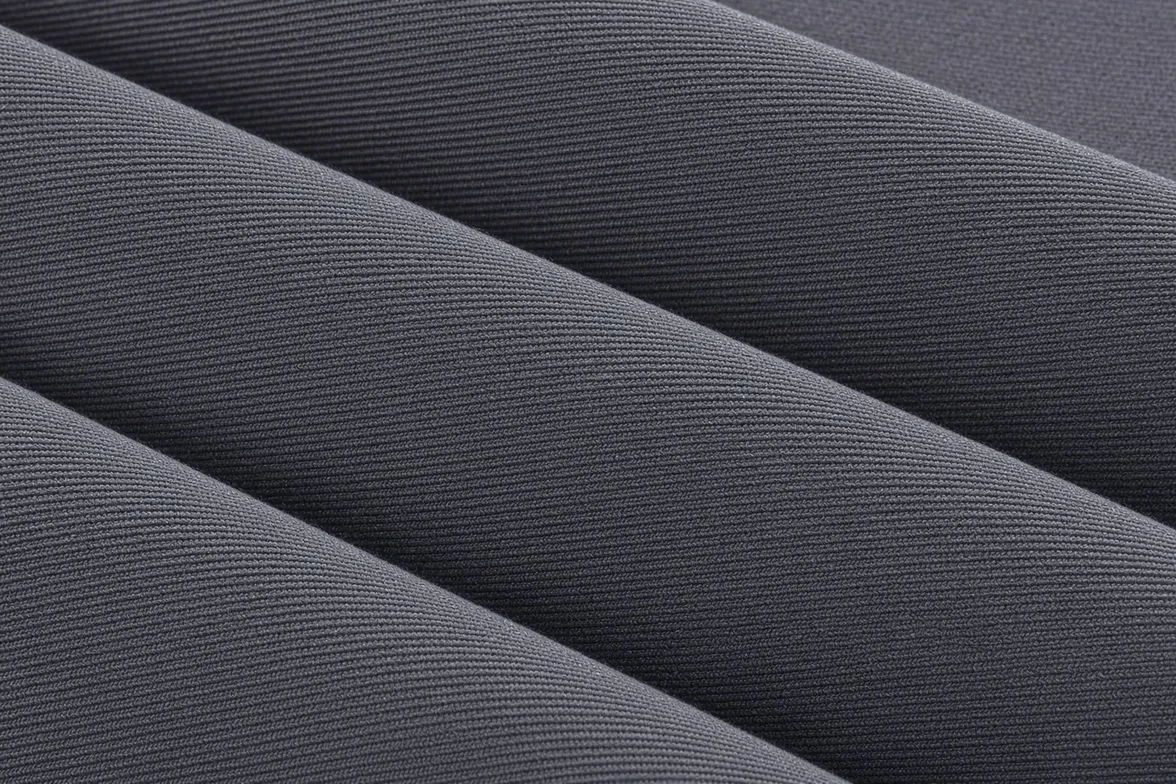
Two quotes for the same 500 shirts can differ by 40%. Same factory, same crest, different fabric. Buyers approve the cheaper one, then absorb a replacement wave in month six.
For daily shirts and polos, ask for a 65/35 poly-cotton blend. These are the GSM ranges that work for school wear:
| Garment | Target GSM | Fabric note |
|---|---|---|
| Shirts and polos | 150–180 | 65/35 poly-cotton |
| Trousers and skirts | 220–260 | Poly-cotton twill |
| Knitwear | 260–320 | Anti-pill finish required |
| Blazers | 280–320 | Woven, shape-retention finish |
Poly-cotton beats pure cotton in schools. Cotton pills under backpack straps, shrinks in hot washes and dries slowly. Poly-cotton holds colour, resists abrasion and comes out of a hot wash ready to wear.
Before you approve a mill, verify five points:
- Abrasion tolerance: 20,000 Martindale rubs minimum.
- Pilling grade: 4 or better.
- Opacity: no show-through on white shirts.
- Drying speed: under 3 hours.
- Composition and GSM tolerance: within ±5% across repeat bulk orders.
Ask for the mill's last three lot reports. If they cannot show them, walk.
🧠 Author's Take: We ran a 50-wash trial on our heavier poly-cotton against three retail blanks. Ours started at 220 GSM and held 218. A retail blank dropped from 180 to 164, pilled at grade 2 and faded visibly. Over two school years, our per-wear cost landed roughly 45% lower.
Why it matters: Settle the fabric spec before anyone quotes a unit price. It is the fastest lever you own on complaint rates and reorder cost.
2. Set a Colourfastness Grade That Survives Repeated School Washes
Last year a school principal called me. She said her new blazers turned purple by November when they were navy in August.
That is not cosmetic. Faded garments trigger parent complaints, break the school's visual identity and ruin replenishment. When a mid-year reorder lands in a different shade, old and new uniforms look like two different schools.
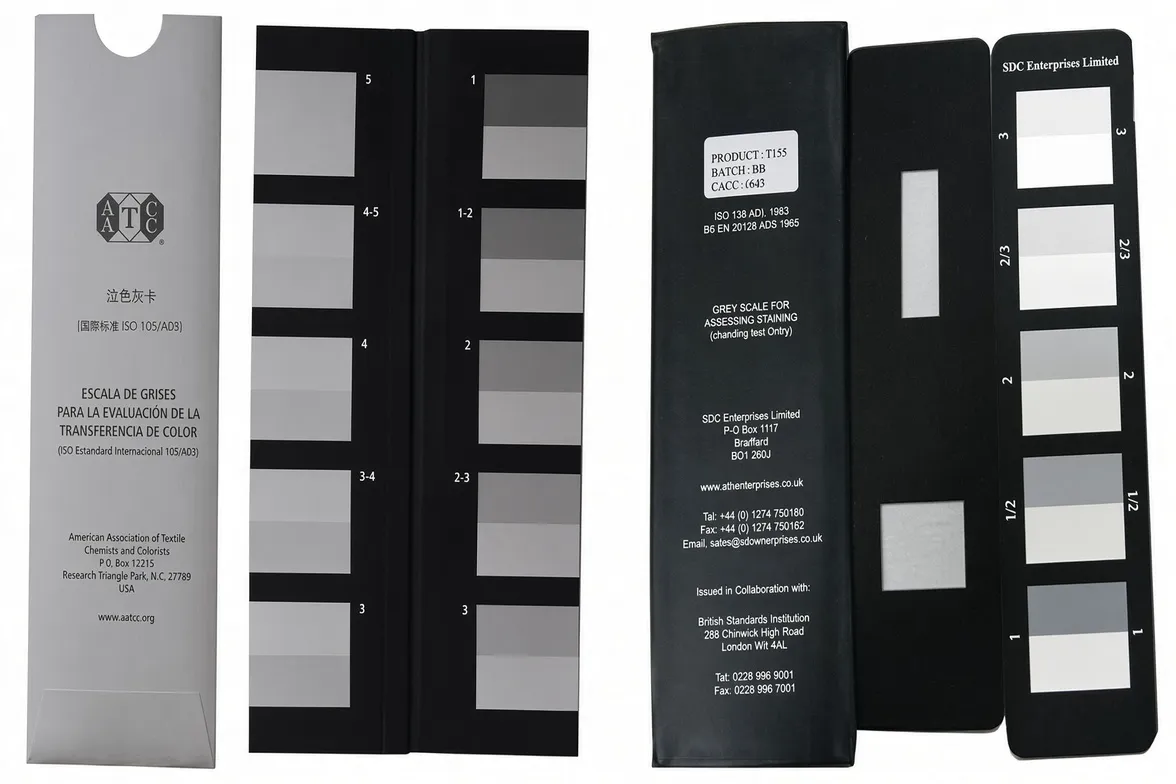
Fix it at the RFQ stage. Require the ISO wash test in two runs. The first runs at 40 °C. The second runs at 60 °C for garments headed to a hot school laundry. Then set the pass line at grade 4 on the grey scale for shade change and grade 4 for staining.
Put those numbers in the purchase order, not an email chain.
Dye-lot control matters across every component: shell fabric, sewing thread, collar rib, lining and embroidery yarn. Each one takes dye differently. Polyester crest thread holds colour harder than a poly-cotton blazer body, so a loose spec splits the match.
Check four documents before you release the lot:
- Lab dips you approved.
- A written shade band with tolerance limits.
- Wash-test reports from the lot you are buying, not a generic mill sheet.
- Side-by-side photos at 5, 10 and 20 cycles, shot under D65 lighting.
🧠 Author's Take: On a 2024 blazer program, the crest thread graded 3–4 while the body held 4–5. We caught it on the cycle-eight photos, switched thread suppliers and added four days to sampling. Without that evidence, 600 blazers would have shipped with mismatched crests.
Clause to add: Colourfastness is the cheapest clause to add and the most expensive one to skip.
3. Write a Shrinkage Limit Into the Purchase Order
A uniform that fits on delivery day but shrinks after the first wash is a return waiting to happen. Parents wash at 60 °C. School laundries run hotter. Your size chart does not.
Oak Creek School ordered 3,000 poly-cotton shirts. The first sample fit perfectly. The school washed the shirts five times. The shirts shrank almost a full size, and we replaced 400 that term.
Shrinkage is not a defect. It is a spec nobody set. Fix it before you sign the PO.
Here is the buyer-side logic I use:
- Woven shirts: 3% max in warp and weft after 5 home washes at 40 °C.
- Knit polos: 5% max. Knits relax more, so specify a denser knit.
- Blazer linings and interlinings: 2% max. If the shell shrinks faster than the lining, the seams ripple.
Compare quotes with usable-life math. A USD 6.00 shirt that shrinks 6% and is replaced by month eight costs more per wear than a USD 7.50 shirt that lasts two school years. Run the numbers before chasing the lower FOB.
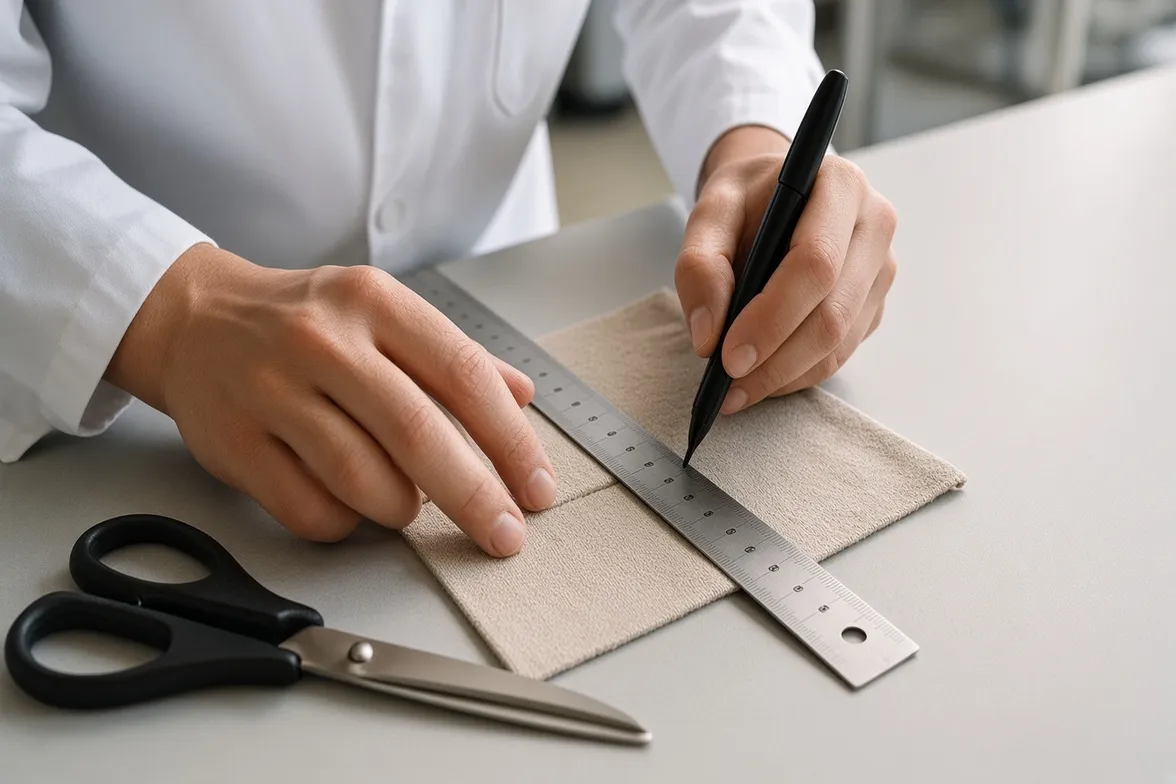
Sample-wash before sign-off. Wash three production samples five times under AATCC 135 or ISO 6330. Measure chest, body and sleeve length before and after. If the numbers exceed your tolerance, reject the lot.
🧠 Author's Take: One mill's report showed 2.8% shrinkage. Great number, but they tested a single 30 °C wash. We re-tested at 60 °C for five cycles. Actual shrinkage hit 5.4%. Match the test protocol to real laundry.
Lab note: The factory will pass the test you write. Write a weak test, get a weak garment.
4. Reinforce Seams and Stress Points Where School Uniforms Fail
You can spec 180 GSM fabric and perfect colourfastness. Then a backpack strap splits the shoulder seam in week three. Construction decides whether the garment survives recess.
Inspect these failure zones before you approve bulk:
- Shoulder seams under backpack load.
- Pocket openings.
- Trouser crotch and seat seams.
- Pleat attachment points.
- Blazer armholes.
- Side vents.
These areas take repeated pull, and weak stitches fail first.
Tell the factory exactly how to sew. Ask for 10 to 12 stitches per inch. Add bar-tacks at pocket corners, pleat ends and belt loops. Sew double-needle felled or lap seams on high-movement garments. This stops seams from ripping at the points that matter.
Do not accept "strong seams" as a line item. Set a minimum seam burst strength in newtons and test to ISO 13935-2.
We ran a QA comparison on 40 school shirts: 20 from our line, 20 ordinary blanks. After 50 washes at 60 °C, we tested seam burst and tensile strength to ISO 13934-1. The results decided the program.
| Test | Our sample | Standard blank |
|---|---|---|
| Tensile strength (ISO 13934-1) | 390 N | 310 N |
| Seam burst resistance (ISO 13935-2) | 212 N | 148 N |
| Colourfastness (ISO 105-C06) | Grade 4–5 | Grade 3–4 |
The construction upcharge was about 4%. Projected replacement fell from three shirts to two per student per year. Cost per wear still dropped.
🧠 Author's Take: Do not pay for thicker fabric if the seams are weak. I have seen 220 GSM shirts fail at the shoulder before 150 GSM shirts with bar-tacks. Reinforce the stress points, then compare total ownership cost.
RFQ line: Put seam burst resistance in your purchase order. If you do not measure it, you cannot specify it.
5. Choose Easy-Care Finishes That Cut Replacement Cost
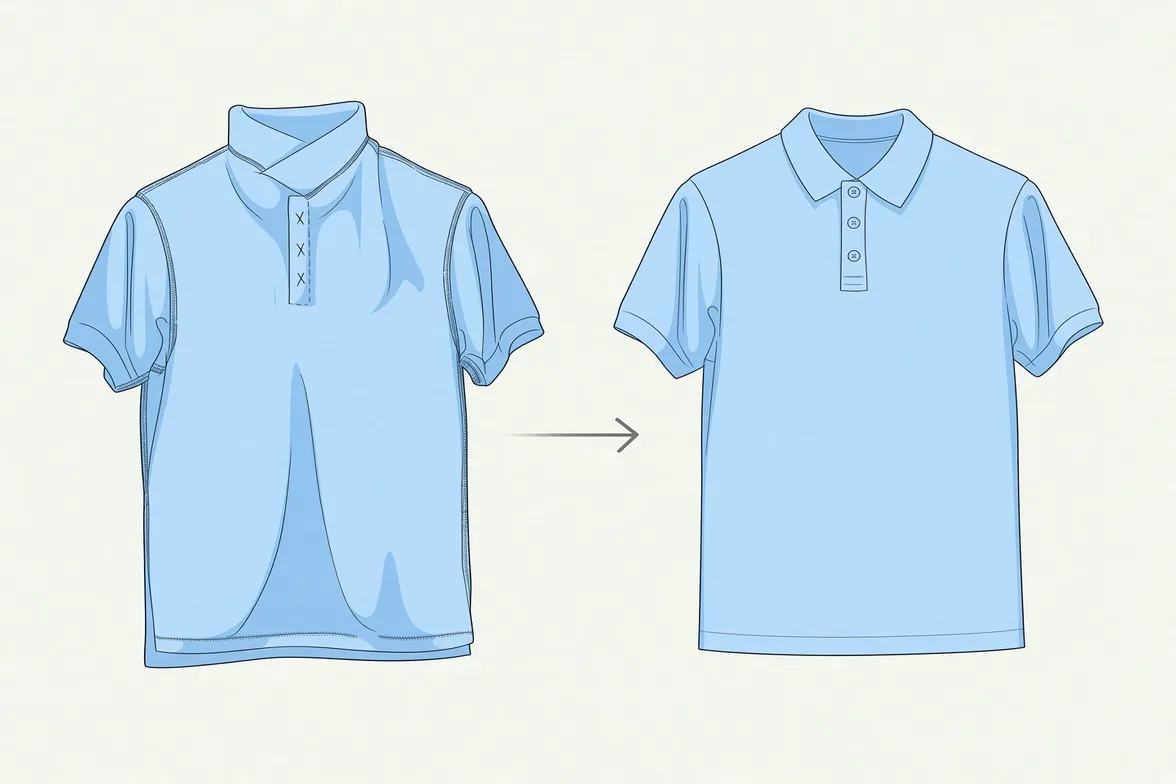
The fastest way to raise parent complaints is not a blown seam. It is a polo collar that looks crumpled after one wash.
Easy care means faster drying, easier ironing, lower wrinkling and a clean look after repeated home or batch laundry. For custom school uniforms, that finish protects the school's visual standard and your replacement budget.
A garment that recovers shape and appearance after washing lowers parent frustration and keeps students presentable. In our experience, parents stop replacing shirts because they look worn out, not because the fabric tore. That extends usable life and improves cost per wear.
When you write the spec sheet, demand finish details:
- Name the finish type: durable-press, soil-release or wrinkle recovery.
- Confirm test results after repeated washes, not one lab cycle.
- Match the test to real laundry: 20 home washes at 40 °C or 10 institutional washes at 60 °C.
- Check the trade-offs. Wrinkle resistance can stiffen hand feel and cut breathability.
For hot climates, test a lighter finish on polos. For formal blazers, accept a slightly firmer hand for shape retention.
🧠 Author's Take: We washed 24 school polos 20 times at 60 °C. The durable-press batch held a 3.5 appearance rating on the AATCC 124 scale. The untreated batch fell to 2.0 and looked flat at the collar. Parents replaced the untreated polos 18% sooner, even though both fabrics passed abrasion.
🚀 Actionable Insight: Easy care is a replacement-cost control, not a luxury. Before you approve a sample, wash one polo 10 times and check the collar. That beats any spec sheet.
6. Hold Sizing Consistent Across Bulk Orders and Reorders
Your biggest return driver is not fabric failure. It is a size 10 that fits like a size 8 on the second reorder.
In K-12, broad age grading, fast student growth, gendered fits and multi-campus distribution turn a 1 cm error into a parent complaint wave. One school network we audited returned 12% of reordered blazers because the new batch graded differently.
Lincoln High School ordered 2,000 trousers. The second batch came in wide at the waist, 2 cm over spec. We rejected 300 pairs on the factory floor. The digital pattern was correct, but the grader skipped the size-set confirmation before bulk, and the fix was a sealed sample in every size.
Lock sizing before bulk approval. Require an approved size chart with grade rules for every age band, aligned to ISO 8559-1. Seal pre-production samples in every size, not just medium.
Confirm the full size set against those seals. Set batch-to-batch tolerance at ±1 cm on chest, waist and sleeve length where feasible, and put that number in the PO.
As Ellen Cheng, who works in workwear and uniform sourcing, puts it: "Reorders fail because the second batch is graded from a spreadsheet, not from sealed samples. Seal every size and the drift disappears."
AQL 2.5 inline checks catch sizing drift before cartons ship. On that trouser program, return risk dropped below 2% once every size was sealed and graded against the seal.
🚀 Actionable Insight: Ask your supplier for their last three size-set confirmation reports. If they cannot produce them, your reorder will drift.
A 4-Step Procurement Plan for Cost-Per-Wear School Uniforms
Use these six checks on the factory floor. This is the sequence every school order follows here, from tech pack to packed carton, plus the numbers you need to score a supplier before you sign.
1. Audit the Factory Floor From Tech Pack to Packing
Request a live video walkthrough or an on-site visit. Ask the line supervisor to walk the order through these stages:
- Tech pack intake: fabric GSM, colourfastness grade, shrinkage limits and seam specs are logged.
- Digital pattern drafting: a digital pattern with grade rules for every age band.
- Age-grade size grading: a full graded size set, not one medium.
- Fabric and trim approval: dye lots matched across shell, thread, collar rib, lining and crest yarn.
- Finishing decision: anti-pilling for knits or easy-care for polos, named in the PO.
- Marker making: ask for fabric utilisation. Target 85% or better.
- Cutting: the approved marker is used and roll numbers are logged.
- Stitching: 10 to 12 stitches per inch plus bar-tacks at pockets and pleats.
- Embroidery: crest thread colourfastness checked against the body fabric.
- Pressing and inline QC: AQL 2.5 checks at both stations under ISO 2859-1.
- Metal detection: required for safety-first schools, with same-day calibration records.
- Final packing: size labels checked against the approved chart, cartons labelled by size.
Pitfall: most defects I catch start at marker making and pleating, not stitching. Stand at both stations.
2. Score Suppliers on Cost Per Wear, Not Unit Price
Compare quotes with this formula:
Cost per wear = (unit price + freight + duty + (replacement rate × unit price)) ÷ (school days per year × years worn)
A $6.00 shirt that shrinks 6% and fails in year one costs more per wear than a $7.50 shirt that lasts two years.
Before you sign, demand three numbers: wash results after 20 home washes, defect rate from the last three bulk orders, and expected replacement rate per semester.
3. Verify Quality With the Pattern Maker, Not Just the Lab Sheet
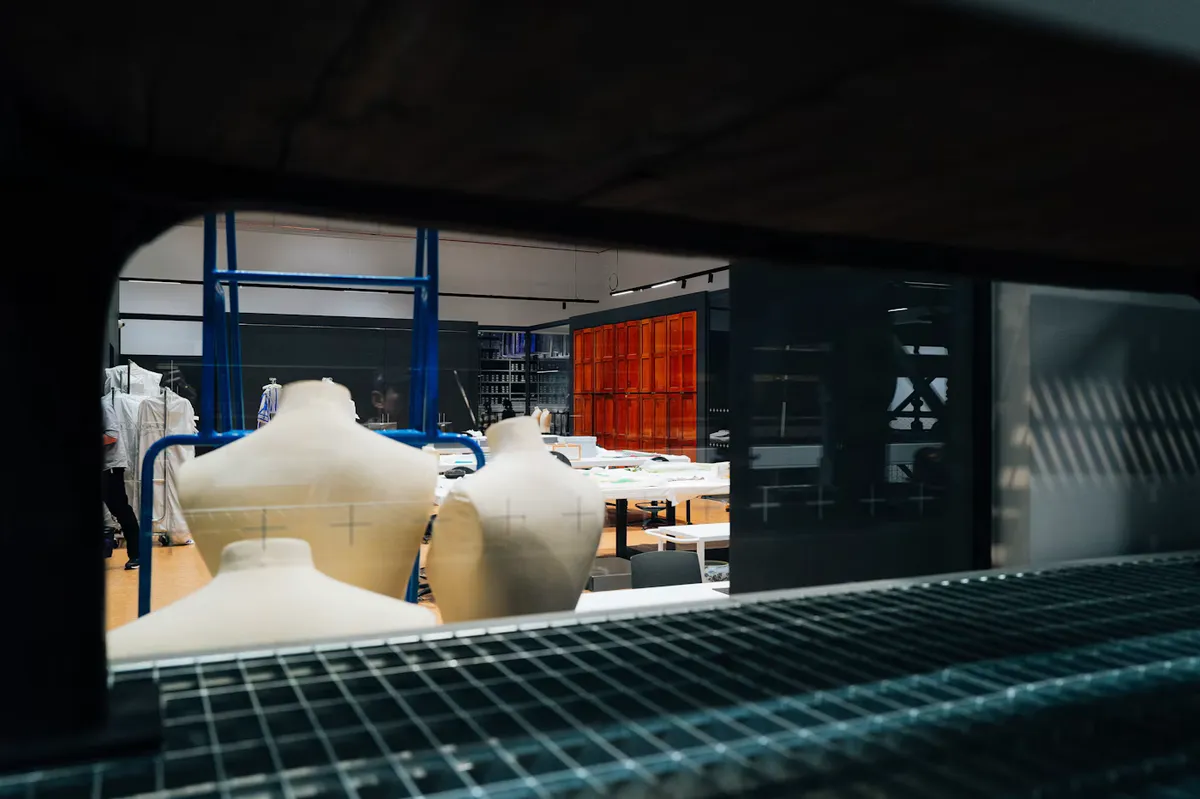
Lab numbers tell you how the fabric performs. The pattern room tells you whether the garment will fit the same way twice. We met the lead pattern maker last month, and her answers changed how we write size specs.
Q: How do you control a ±1 cm tolerance across a full size set?
A: We seal pre-production samples in every size, then run AQL 2.5 inline checks at grading and stitching. Any size that drifts past 1 cm gets rejected before packing.
Q: What is different about pleated skirts and academic blazers?
A: Pleated skirts need pleat-depth control at the waist. We measure every pleat after pressing. Blazers need shoulder and armhole checks across the full size range. We seal one sample per size and confirm the grade before bulk.
The wash-trial table in section 4 holds the raw numbers behind these checks. A chain program should demand 80% tensile retention or higher and a colourfastness grade of 4.0 or higher.
4. Use the Procurement Checklist Before You Sign
- Fabric GSM and composition locked in the tech pack.
- Colourfastness grade 4+ written into the PO.
- Shrinkage max set per garment type.
- Seam burst resistance specified in newtons.
- Sealed size-set confirmation.
- AQL 2.5 checks at grading and stitching.
- Metal detection if required.
Source through vetted partners: school uniform manufacturers in China, the United Kingdom or the United States. For private-label programs, see our DTC custom workwear solutions and case studies.
Ready to request specs, samples or a bulk quote? Contact LeelineWork with your fabric brief and quantity forecast.
Frequently Asked Questions About School Uniform Cost Per Wear
These are the questions district, school-network and wholesale buyers ask before they approve a program.
1. What Fabric Is Most Durable for School Uniforms?
There is no single winner. Match the fabric to the wear zone. Use 65/35 poly-cotton for shirts and polos at 150 to 180 GSM. Use poly-cotton twill at 220 to 260 GSM for trousers and skirts. For blazers, pick a structured woven twill or TR blend at 280 to 320 GSM.
In our lab, two lightweight shirts outlasted one heavy cotton shirt because the weave held up better. Always set 20,000 Martindale rubs as your floor.
2. How Do Bulk Orders Control Shrinkage and Colour Fading?
You control it with written specs, not promises. Put the numbers in the purchase order first. Then approve lab dips, wash a pre-production sample and measure it before and after. Confirm shade bands and dye-lot records before bulk release.
We run all shrinkage tests to ISO 6330 and check dye quality with an ISO 105-C06 wash test. Any lot that misses the grade gets rejected at the wash stage, not after delivery.
3. What Is the Typical MOQ for Custom School Uniforms?
Most programs land between 300 and 500 pieces per style. Simple polo runs can start near 50 to 100 units. Blazers and OEM builds cost more to start because the mill weaves fabric to order, the crest needs embroidery setup and each size adds a grading step.
The factory behind this guide runs 12 production lines and 240 machinists, with 500,000 units of annual capacity, so volume is not the constraint. Ask for pricing at 300, 600 and 1,200 units. Some factories will quote 250 pieces if you book in the January to March window, so ask before you assume.
4. How Do We Guarantee Whole-Order Colour and Size Consistency?
Seal the standards before anyone cuts fabric. Approve one lab dip and one sample in every size. Lock the shade band and the grade rules. Run AQL 2.5 inline checks at grading and stitching, and keep batch records tied to each dye lot.
When you reorder, send the original spec pack back with the PO. We keep your approved measurement sheet on file, so a reorder repeats the same grade instead of re-guessing it. Suppliers who skip that step ship a batch that looks close but fits differently.
Disclosure: I receive no manufacturer kickbacks for these findings.

Fitness & Outdoor Wear Manufacturer
- 2,000+
- Clients Served
- 99.2%
- On-Time Delivery
- 2011
- Manufacturing Since