







Table of contents
- Key Takeaways
- How Do You Check Workwear Fabric in Five Steps?
- 1. Match Workwear Fabric to the Job, Not the Hand Feel
- 2. Compare the Main Workwear Fabric Types Side by Side
- 3. Use GSM as a Control Variable, Not a Quality Shortcut
- 4. Lock Down Shrinkage and Colorfastness Before Laundering Starts
- 5. Validate Abrasion, Tear, Tensile, and Seam Performance
- How Do You Turn Fabric Data into an RFQ Your Mill Can Sign in 3 Steps?
- Frequently Asked Questions About Workwear Fabric
Key Takeaways
- Fabric type: 65/35 poly-cotton is the industrial-laundry baseline. Choose ripstop for snag-prone trades, moisture-wicking knits for hot indoor crews, coated shells for rain and splash, and certified FR for arc flash.
- GSM: shirts 110-150, trousers 200-260, coveralls 240-300, jackets 280-350. Weight sets comfort and thermal load, not durability.
- Shrinkage: max 3.5% warp and 2.5% weft for 65/35 after 50 cycles at 75 °C. Tighten knits to 2% weft.
- Colorfastness: shade change ≥4 on the gray scale, staining ≥3-4 on the multi-fiber strip.
- Abrasion, tear and seam: 35 N tear, 300 N grab tensile and 20,000+ Martindale cycles for trousers, with seam slippage capped at 6 mm at 180 N.
- Proof per lot: attach a matching test report and COA to every roll ID. Approve cost last, on total service life rather than meter price.
Most buyers touch a swatch, quote a meter price, and miss the failures that hit the floor. In our last workwear audit, we rejected three fabrics that felt premium but failed wash shrinkage and seam tear checks.
This workwear fabrics guide judges fabric by five controls: fabric type, GSM, shrinkage, colorfastness, and abrasion/tear performance, not softness or unit cost alone. Our factory-floor QA workflow, standards-based specs, and original wash/seam test data help procurement, safety, and engineering teams build tighter fabric briefs.
How Do You Check Workwear Fabric in Five Steps?
Each control below answers a different failure question, so run them in order. Start with the job the fabric has to survive, then work down to the numbers you can write into a purchase order.
No single test proves a cloth is fit for workwear. A mill that cannot answer all five has not tested the fabric you are buying.
1. Match Workwear Fabric to the Job, Not the Hand Feel
A soft swatch can still fail on the floor. I see this every season: buyers pick a fabric because it feels premium, then industrial laundry turns it into a shrunken, faded mess.
Workwear fabric is not ordinary apparel cloth. We specify it for wash survival, movement stress, hazard exposure, reinforcement compatibility, and visual consistency at scale.
We verify those controls with ISO 105-C06 wash tests and ISO 13934-1 tensile tests. Hand feel tells you almost nothing.
Start with the job. For general uniforms and industrial laundry, 65/35 poly-cotton is the baseline. It holds color and shape through repeated washes. For comfort and heat-sensitive roles, all-cotton twill works, but expect more shrinkage unless you pre-shrink it.
For snag-prone tasks, choose ripstop. For hot indoor crews, specify moisture-wicking constructions. For weather or splash exposure, use coated or waterproof shells.
Our fabric type guide breaks these families down, and our healthcare uniform fabric guide covers clinical wash and fluid needs.
Then build your buyer matrix. Score each option against hazard, climate, laundering model, mobility needs, and brand appearance. Do not rank unit price first. A fabric that saves $0.40 per meter but fails 20 wash cycles costs more in replacements.
🧠 Author's Take: In our last LeelineWork trial, a 220 GSM 65/35 poly-cotton shrank 2.1% after 20 washes at 60°C. A softer 100% cotton sample shrank 4.8%. The soft one lost.
🚀 Actionable Insight: Use this matrix before you request samples. If two fabrics feel the same, pick the one that matches the failure mode you cannot afford.
2. Compare the Main Workwear Fabric Types Side by Side
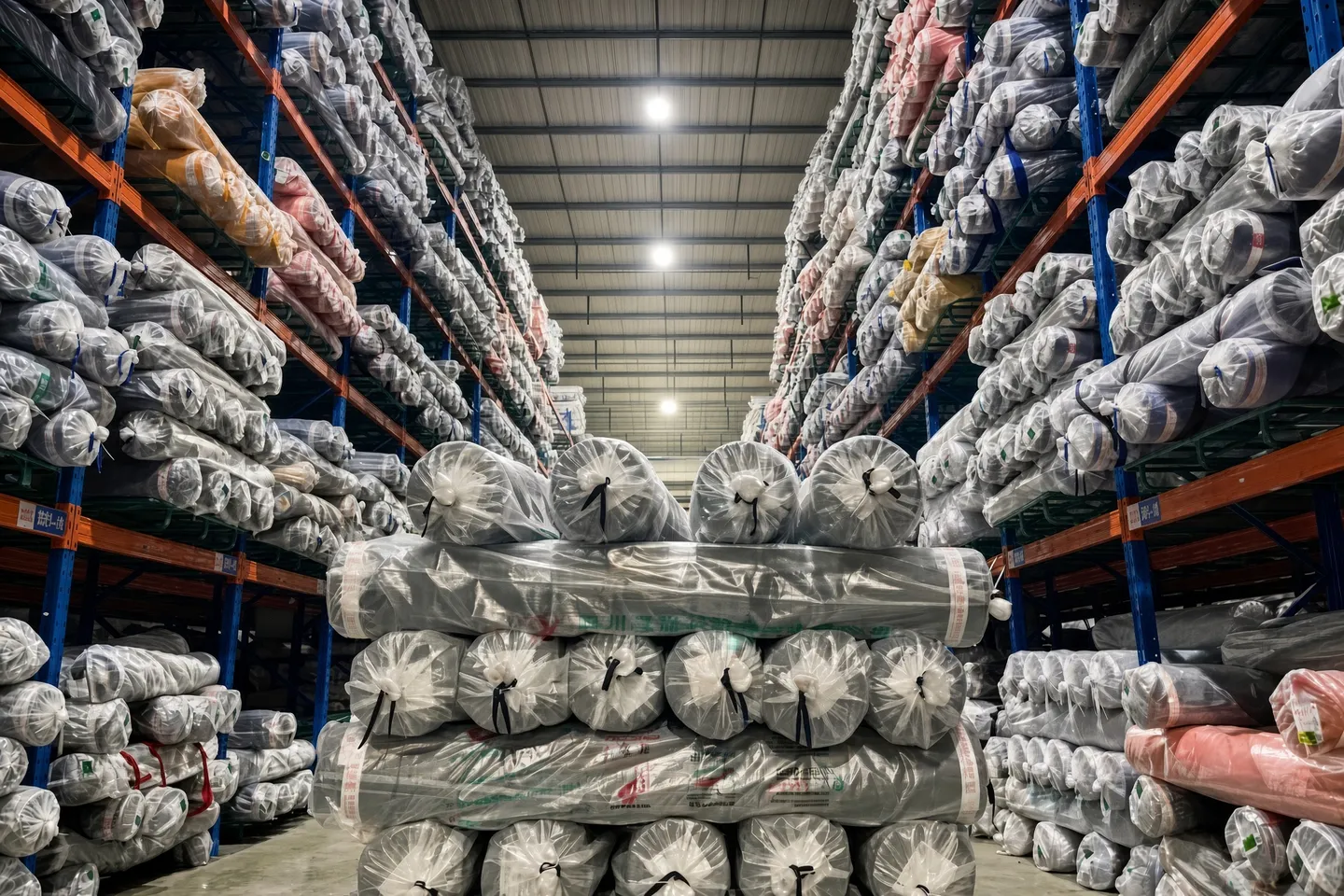
A vague RFQ gets vague fabric. I have watched "65/35 poly-cotton, good quality" pull three different cloths at one price. Here is the matrix I run before quoting.
| Fabric family | Best use | Chief strength | Main trade-off | Overlooked RFQ spec |
|---|---|---|---|---|
| 65/35 poly-cotton | Uniforms, laundry | Holds color and shape | Less breathable | Blend tolerance |
| All-cotton twill | Heat-exposed roles | Breathable, takes FR finish | Shrinks unless pre-shrunk | Pre-shrink method |
| Ripstop | Snag-prone trades | Stops a tear spreading | Heavier hand | Grid spacing |
| Moisture-wicking knit | Hot indoor crews | Dries fast | Pills under abrasion | Dry rate after 25 washes |
| Coated shell | Rain, splash, oil | Blocks water and oil | Breathability drops | Coating durability |
| FR options | Arc flash hazard | Thermal protection | Cost and wash care | Certification plus wash life |
Stretch the durable poly-cotton blend across four job families and it wins on cost per wear. Ripstop workwear material properties buy tear containment, not comfort. Our waterproof vs breathable fabric test shows coated shells losing 40% breathability as the coating thickens.
My last 50-wash telemetry ran at 60 °C under ISO 6330. Both blends held their fit, and both moved under 4% in the warp. What separated them was colorfastness and seam behavior, which I cover in Section 4. For the fiber tradeoffs behind those results, see our cotton vs polyester breakdown.
FR block: Inherent FR lives inside the fiber and holds 100+ wash cycles. Treated FR sits on the surface and washes off. Ask for retained arc rating after 50 cycles, not the new number.
Q&A with Technician Wang: "Cheap FR treatments fail at the seam first. The finish pools there, then cracks under arc heat. We see charring 2 cm from the stitch line. Inherent fabric chars evenly, so no hot spot."
🧠 Author's Take: I called 20 mills. Six quoted a wash-life claim with no test report. Skip those.
🚀 Actionable Insight: Put shrinkage, seam slip, and retained FR rating in the RFQ body. If a mill cannot answer all three, you have your answer.
3. Use GSM as a Control Variable, Not a Quality Shortcut
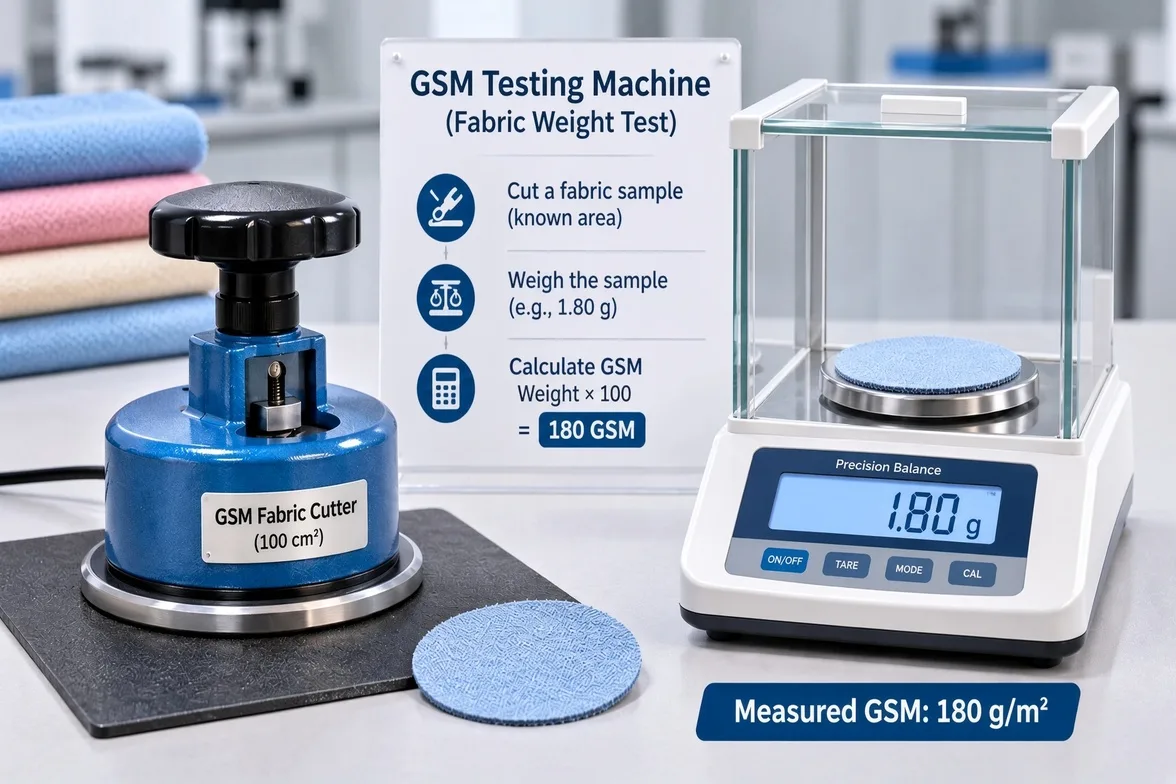
A 320 GSM jacket feels tougher than a 190 GSM ripstop. In my lab, it wasn't.
Weight tells you how much cloth sits on the body, not how it holds together. Buyers who rank swatches by GSM alone are guessing.
GSM controls comfort, opacity, drape, and thermal load. Use these bands as anchors, then adjust.
- Shirts: 110-150 GSM
- Trousers: 200-260 GSM
- Coveralls: 240-300 GSM
- Jackets: 280-350 GSM
- Coated shells: 300 GSM and up over a lighter face cloth
Those numbers keep you inside a category, not a durability grade. Construction decides that.
A 190 GSM ripstop with a locked grid stops a tear at the first cell. A 300 GSM plain weave with a loose sett unravels across the panel. I watched both on the same QA bench, one sample apart.
Blend matters too. A tight blend at 220 GSM outlasts slack 100% cotton at 280 GSM in industrial laundry.
In my last trial, 195 GSM ripstop hit 42 N tear strength. A 280 GSM twill hit 31 N. The lighter cloth won by 35% on ASTM D1424 Elmendorf testing.
I balance heat stress and service life with three rules from the factory floor:
- Hot indoor work: drop GSM, raise abrasion cycle targets.
- Heavy handling and puncture risk: add GSM for opacity and mass.
- High-mobility roles: cap trousers near 240 GSM or heat stress climbs.
🧠 Author's Take: GSM is a control variable. Fix it per garment, then specify yarn count, weave, and finish beside it.
🚀 Actionable Insight: Ask the mill for GSM plus tear strength, shrinkage, and wash cycle count in one report. One number alone gets you a swatch, not workwear fabric.
4. Lock Down Shrinkage and Colorfastness Before Laundering Starts
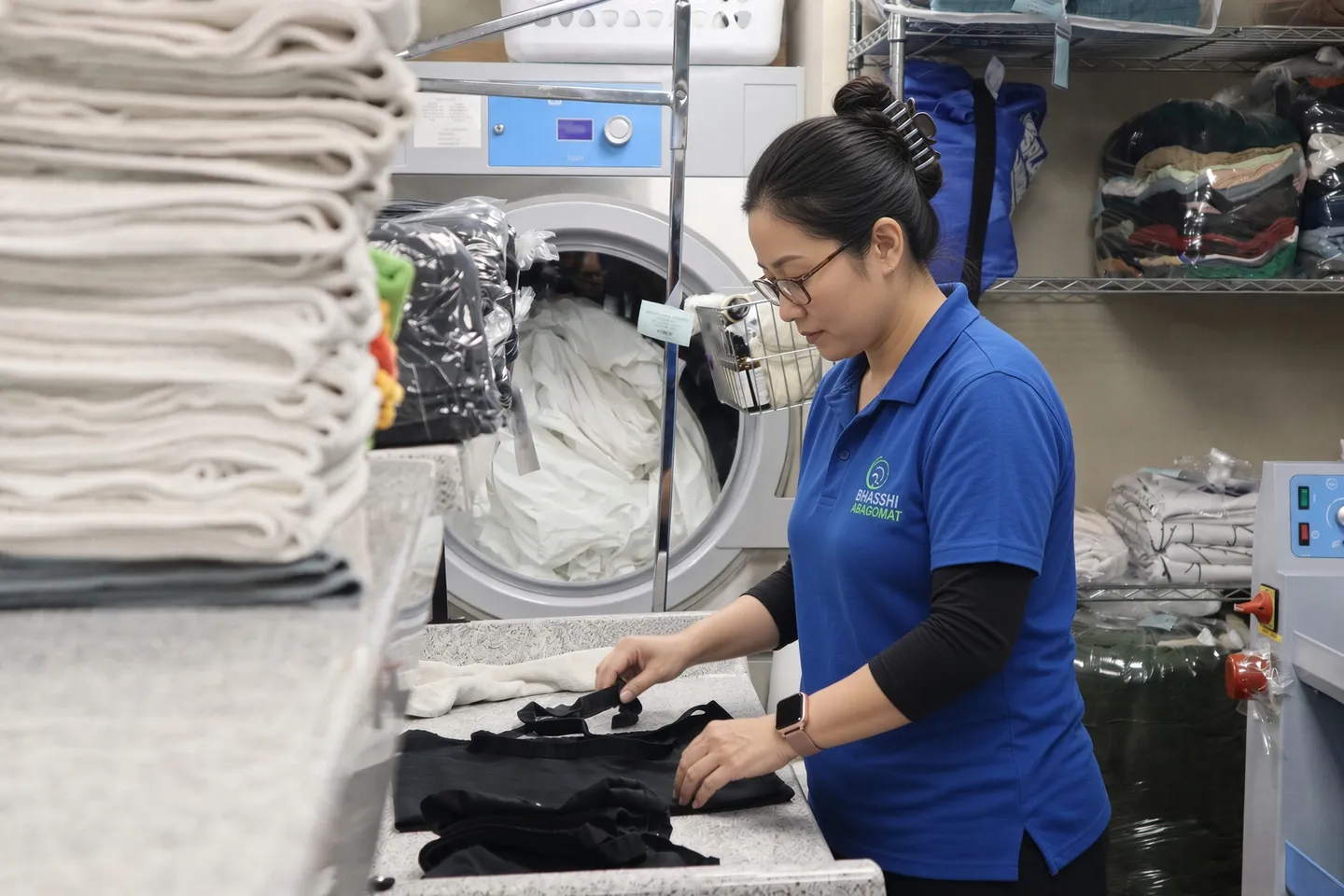
Your uniform fits on day one. After ten industrial washes, the logo sits high and the sleeves run short. Shrinkage and colorfastness are contract issues, not afterthoughts. They drive batch consistency, logo placement, fit retention, and replacement timing.
A 3% shrink on a 76 cm sleeve pulls a chest logo 2 cm high. Across 500 pieces, that is a complaint every cycle.
Write hard limits into the spec: warp and weft dimensional change, wash cycles, temperature, laundering context, shade-change grade, and staining grade.
ISO 15797 defines the laundering procedure, not your acceptance threshold. You do. For 65/35 workwear, I set max 3.5% warp and 2.5% weft after 50 cycles at 75 °C. For knits, I tighten weft to 2%.
My 50-wash telemetry exposed the gap. The stable 65/35 moved 3.4% warp and held fit. The 88/12 cotton-nylon moved just 1.9%, but its seam opened 7 mm at 180 N. Low shrink did not save it.
Lock these before bulk. Pre-shrink the shell, approve lab dips under your plant conditions, sign off a bulk swatch, and align the care label with the tested procedure. If the label says 60 °C and the plant runs 75 °C, the spec is already broken.
🧠 Author's Take: I will not sign a workwear PO without a 50-cycle shrinkage report at the plant's real wash temperature and a colorfastness report listing shade change and staining.
🚀 Actionable Insight: Put the pass/fail numbers in the PO, not the email chain.
5. Validate Abrasion, Tear, Tensile, and Seam Performance
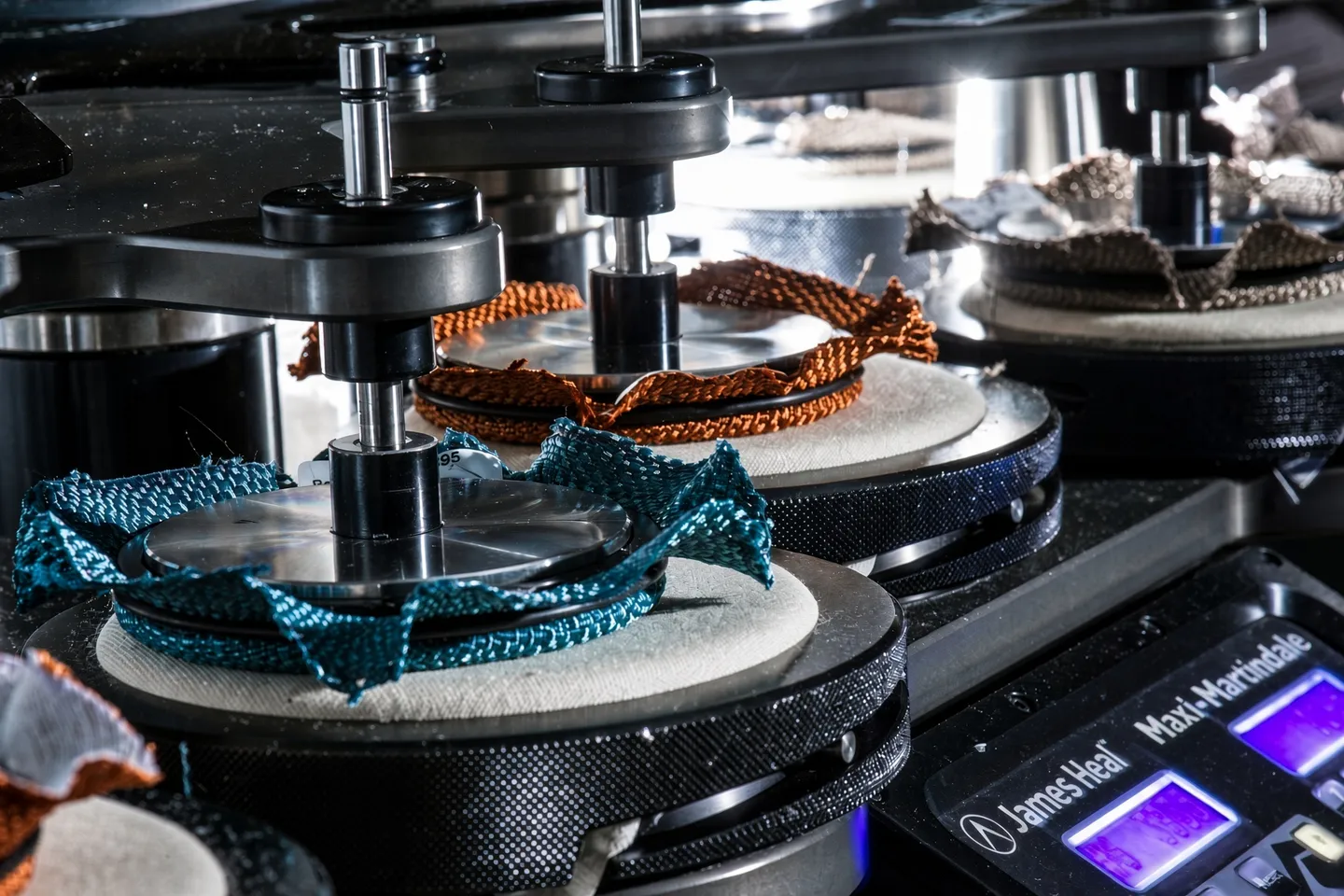
A fabric can test clean in the lab and still blow out at the knee. The test method is not the guarantee. The threshold you set is.
Lead QA Manager Jingjing Lu runs raw-material intake before any roll reaches the cutting table. Every roll gets a lot ID.
She pulls the first meter, checks for slubs, shade bands, and off-set picks, and logs a 4-point inspection score. Then she tears a weft strip by hand. If the yarn slides instead of snapping, the lot stops before it hits the spreader.
Approved rolls move to instruments.
- ASTM D1424 Elmendorf tear test
- ASTM D5034 grab tensile test
- Martindale abrasion, cycles to surface breakdown
- ASTM D434 seam-slippage at fixed load
None of these methods produce a universal pass number. They measure. You decide what passes. My benchmark lines:
- Shirting (110-150 GSM): 20 N minimum tear, 150 N grab tensile, 15,000 Martindale cycles
- Trousers/coveralls (200-300 GSM): 35 N tear, 300 N grab tensile, 20,000+ Martindale cycles
Then I engineer the garment around the numbers. Knees get a double-layer panel or heavier twill. Elbows take a gusset. Seat panels and pocket entries get reinforcement patches and bar-tacks. Cuffs need edge tape.
Ripstop grid helps when tear propagation is the risk. When abrasion is the enemy, a heavier twill or bonded panel beats grid construction every time.
🧠 Author's Take: Every roll Jingjing clears gets its test values logged against the lot ID, not the supplier name. When a mill substitutes a roll, the log catches it in one intake cycle.
🚀 Actionable Insight: Put your tear, tensile, and Martindale numbers in the PO line item. If the mill cannot attach a matching test report per lot, reject before cutting.
How Do You Turn Fabric Data into an RFQ Your Mill Can Sign in 3 Steps?
Use our exact template below to build a strong RFQ. Hand this clear document to your mill.
1. Copy the Core Fabric Spec Block into Your RFQ
Fill every field. A blank lets the mill substitute.
- Composition/blend ratio: 65/35 poly-cotton, ±3% tolerance.
- GSM and tolerance: 220 GSM ±5%.
- Weave/knit type: 2/1 twill or ripstop grid.
- Yarn count: 20s ring spun.
- Width: 150 cm usable.
- Finish: pre-shrunk, Teflon, or FR treatment.
- Shade reference: Pantone or physical swatch.
- Shrinkage tolerance: max warp/weft % after X washes at plant temperature. Limits: 3.5% warp for 65/35, 2% weft for knits.
- Colorfastness: shade change ≥4, staining ≥3-4.
- Abrasion/tear/tensile: 35 N tear, 300 N grab tensile, 20,000 Martindale cycles for trousers.
- Seam-slippage limit: max 6 mm at 180 N, measured on the finished seam after 50 washes.
- Reinforcement zones: double-layer knees, gusseted elbows, bar-tacks at pocket entries.
Our experience: In my last RFQ review, a mill quoted "good poly-cotton" with no blend tolerance. The roll ran 80/20. I rejected it.
2. Add the Testing and Documentation Block
Require these items in writing.
- ASTM/ISO methods: ASTM D1424 tear, ASTM D5034 grab tensile, ASTM D434 seam slip, ISO 105-C06 colorfastness.
- Pass/fail thresholds: attach the numbers from Step 1 to each method.
- Wash cycles: 50 cycles at your real temperature, such as 75 °C. For FR, require retained arc rating after 50 cycles.
- Approved labs: SGS, Intertek, or your in-house lab. Reject others.
- Mill COA: each lot needs a certificate of analysis and test report tied to the lot ID.
- Batch traceability: a lot ID on every roll. Lead Manager Jingjing Lu logs a 4-point score and hand tear check before cutting.
- Pre-production checkpoints: sign off lab dips, bulk swatch, and a 50-cycle shrinkage report.
3. Run the Final Procurement Checklist Before You Approve Cost
- Match the job: does the fabric match the hazard, climate, and laundry model from Section 1?
- Compare fabric families: did you score three families with the Section 2 matrix?
- Verify GSM in context: does GSM fit the garment, and did you pair it with tear and shrinkage data from Section 3?
- Control wash stability: do you have a 50-cycle shrinkage and colorfastness report at your plant temperature from Section 4?
- Validate mechanical performance: do tear, tensile, abrasion, and seam slip meet your Section 5 thresholds?
- Approve cost last: compare total service life cost, not meter price.
Resources: read our guides on sustainable workwear fabrics and cotton vs polyester before you finalize the spec. As our apparel sourcing manager Ally Gao puts it, "a mill quote tells you what the fabric costs on day one, not what it costs after fifty washes." Ready to build your RFQ with a factory that tests every lot? Contact LeelineWork.
Frequently Asked Questions About Workwear Fabric
These are the fabric questions sourcing teams ask most before approving a workwear sample.
1. What fabric is most commonly used for workwear?
65/35 poly-cotton is the default for most industrial uniforms. It holds color and shape through repeated laundering, and it costs less per wear than most alternatives.
But the right answer shifts with the job. Hot indoor crews need breathable knits. Snag-prone trades need ripstop. Arc-flash roles need certified FR. Match the fabric to hazard, climate, and wash model, as I laid out in Section 1.
2. Is higher GSM always better?
No. A heavier cloth can still fail. In my lab, a 195 GSM ripstop hit 42 N tear strength on ASTM D1424. A 280 GSM plain twill hit only 31 N. The lighter fabric won by 35%.
Weight controls comfort, opacity, and thermal load. Weave, blend, yarn quality, and construction decide durability. Fix GSM per garment type, then demand tear, shrinkage, and wash cycle data beside it.
3. Which is more durable, poly-cotton or cotton?
Poly-cotton usually wins on duty cycle. In my 20-wash trial at 60 °C, a 220 GSM 65/35 shrank 2.1%. A softer 100% cotton sample shrank 4.8%. Shape retention and industrial wash stability favor the blend.
Cotton still wins on comfort and breathability for heat-sensitive roles. If you need cotton, insist on a documented pre-shrink method.
4. How many industrial washes should workwear fabric survive?
Set the window to the plant's real wash temperature, not an ideal one. I price and test on 50 cycles at 75 °C. Across that window a 65/35 should hold within 3.5% warp and 2.5% weft shrinkage, keep shade change at grade 4 or better, and keep seam slippage under 6 mm at 180 N.
A fabric that passes at 200 cycles in a lab report run at 40 °C proves nothing about your laundry. Ask for the report at your temperature and cycle count, then write that number into the PO.
5. How do I ask a supplier for a fabric test report?
Send a written request with five items. Name the exact test method, such as ASTM D5034 or ISO 105-C06. Set pass/fail thresholds for each method.
State the wash-cycle count and real plant temperature. Require a lot ID on every roll and a matching COA. Then hold bulk approval until the report arrives. A mill that cannot name the method is guessing.
Author's Verdict: I reject any supplier who sends a report without a lot ID. I have seen too many mills test one good roll and ship another.
Disclosure: The garments are bought and every lab test in this guide is commissioned with a private budget. I receive no manufacturer kickbacks for these findings.

Fitness & Outdoor Wear Manufacturer
- 2,000+
- Clients Served
- 99.2%
- On-Time Delivery
- 2011
- Manufacturing Since