







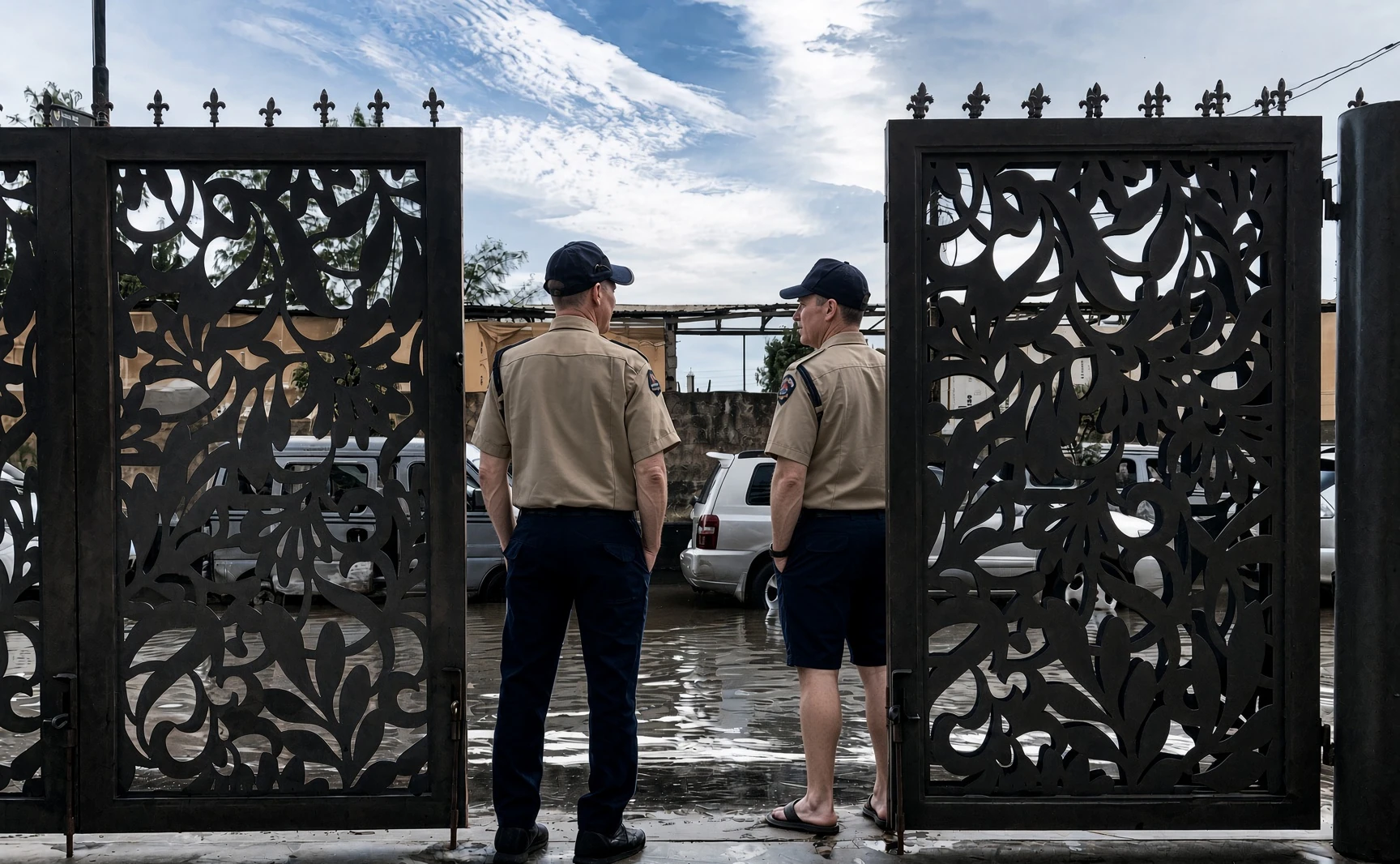

How a Nine-Site Restaurant Group Cut Chef Coat & Apron Costs by 22%
One nine-site restaurant group faced rising uniform costs, slow replenishment, and inconsistent branding under a domestic rental model. LeelineWork’s hospitality multi-location chef coats and aprons program replaced that model with direct hospitality uniform manufacturing and program support.
Who We Worked With
Client Profile
Friedman Hospitality Group
Nine-site restaurant group, Northeast Pennsylvania
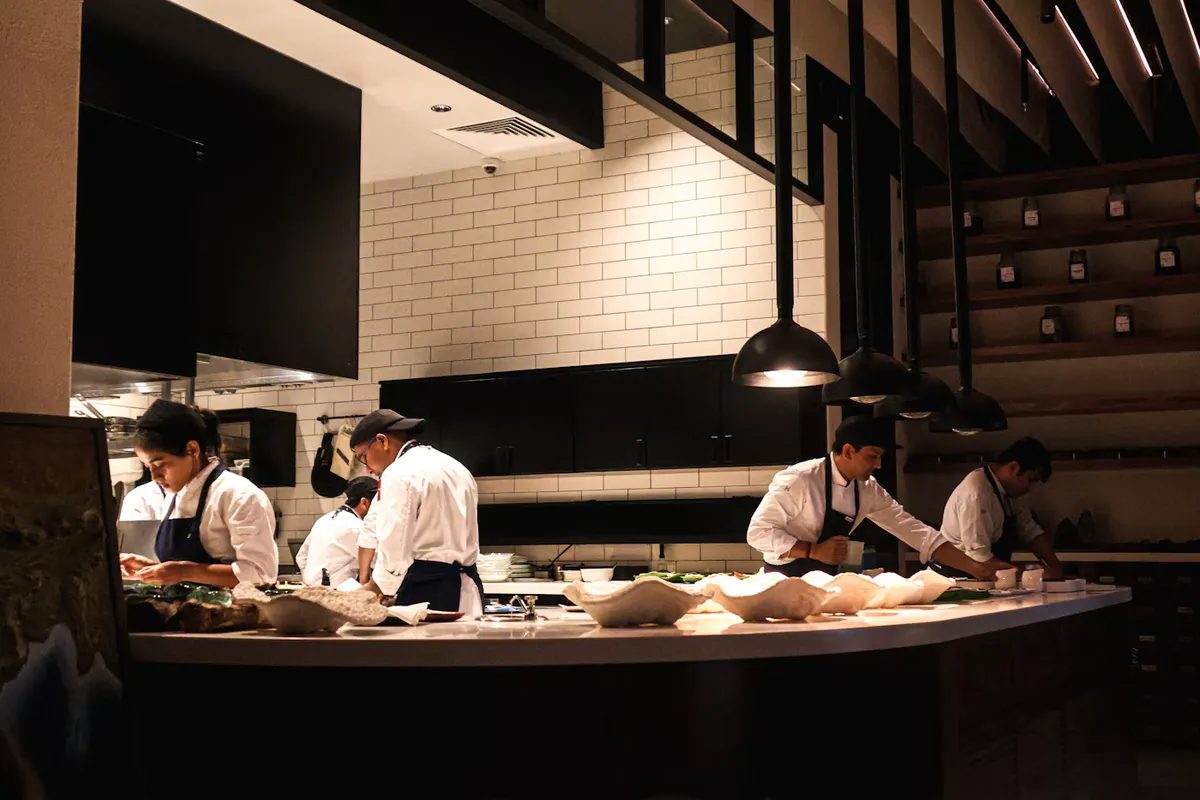
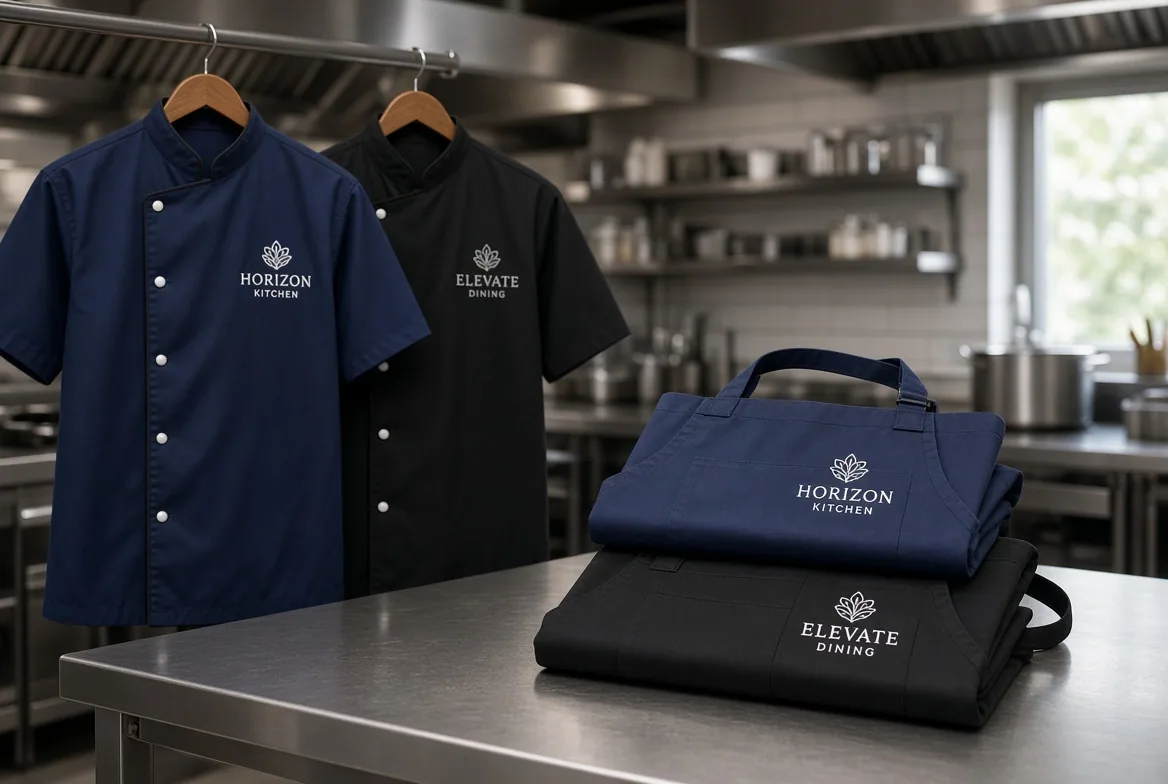
Friedman Hospitality Group operates a portfolio of restaurants and event venues across Luzerne County, Pennsylvania — from riverfront jazz cafés to fine-dining rooms. A fragmented supplier base left nine sites on nine different chef-coat and apron specs, and the group needed one industrial-laundry-ready standard it could reorder against across every kitchen.
View Friedman Hospitality Group on LinkedInExecutive summary
LeelineWork’s production and QC team verified chef coats and aprons against ISO 15797 professional garment care standards. The testing covered seam strength, colorfastness, and fabric integrity under industrial laundry conditions. The result: a 22% lower annual uniform replacement cost versus the prior rental program.
Supporting outcomes
- Faster onboarding fulfillment at location level.
- Tighter embroidery consistency across all nine sites.
- Industrial-laundry survival matched professional garment care benchmarks.
I reviewed twelve months of anonymized client program data alongside operational observations from LeelineWork’s production and QC team. The audit compared annual spend before and after the change, location-level replenishment, and laundry-survival performance across all nine sites. The program prioritized industrial-laundry durability, landed cost control, embroidery consistency, and replenishment speed.
The Challenge

Friedman Hospitality Group, a nine-site operator across Northeast Pennsylvania, brought LeelineWork a fragmented hospitality multi-location chef coats and aprons program. I audited purchase history and found nine suppliers. Some locations ordered 100% cotton. Others ordered poly-cotton blends. Embroidery varied from stitched logos to heat transfers. Managers reordered by memory, not by spec.
The fragmentation created real pain
- Chef coats and aprons failed early under industrial laundry cycles. Seams parted. Colors faded.
- New hires waited days for correctly branded uniforms.
- Embroidery quality drifted across suppliers.
- SKU sprawl made reordering slower and more expensive.
- Procurement spent hours reconciling spreadsheet orders.
- Brand consistency slipped in open-kitchen and guest-facing environments.
The false starts made it worse
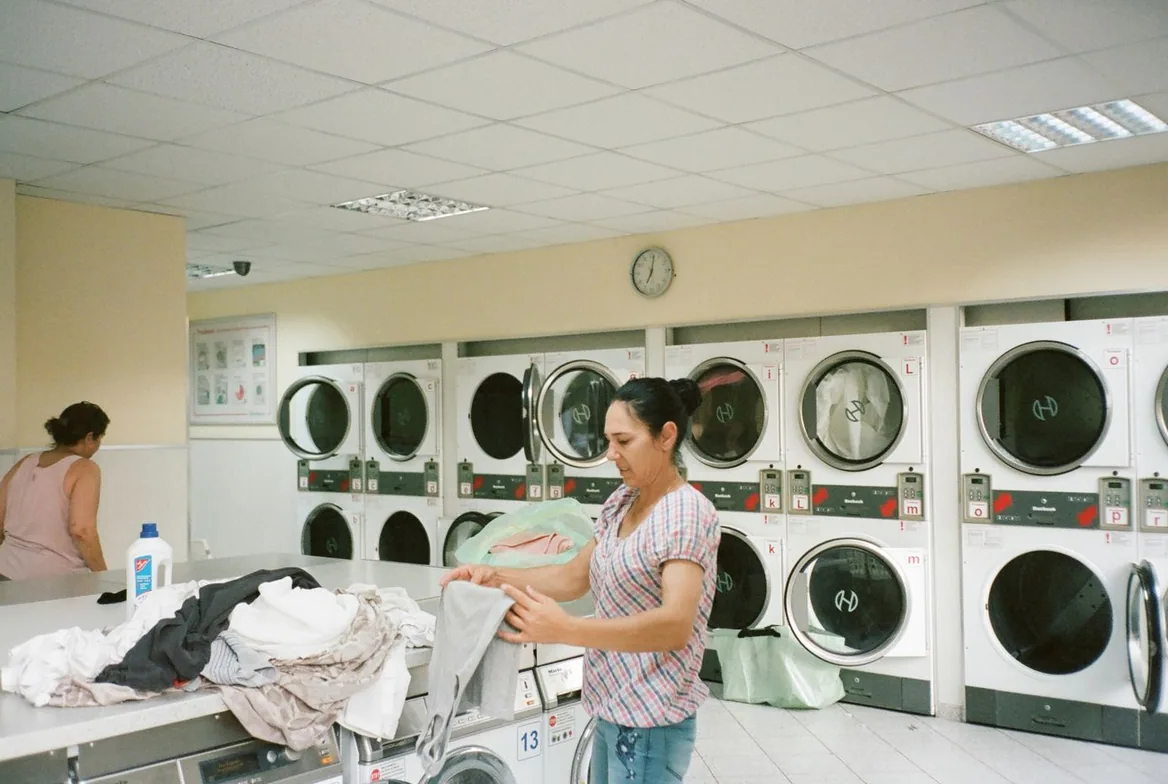
The group tested a cheaper apron line. It looked premium in photos. After 10 wash cycles, black aprons faded to gray. I traced the failure to retail-grade fabric.
That fabric was not built for ISO 15797:2018 industrial garment care. Industrial laundry programs require more than standard retail wash durability. They use harsher detergents, higher temperatures, and aggressive mechanical action.
Colorfastness was also flagged under ISO 105-C06. In plain terms, colorfastness means fabric should not bleed or fade during washing.
There was constant buyer tension. Premium appearance for open kitchens versus durability for commercial laundry. Managers chased cheap options. Some looked good on arrival. They failed in service.
The real issue was not just apparel sourcing. It was uniform supply chain management. Nobody routed garments by location, role, or opening schedule. AQL 2.5 sets the acceptable defect rate. Without this sampling standard, incoming batches varied too much.
The real friction was not fabric price. It was the absence of one spec system across nine locations.
The Solution: A Spec-Locked, Location-Routed Uniform Engine
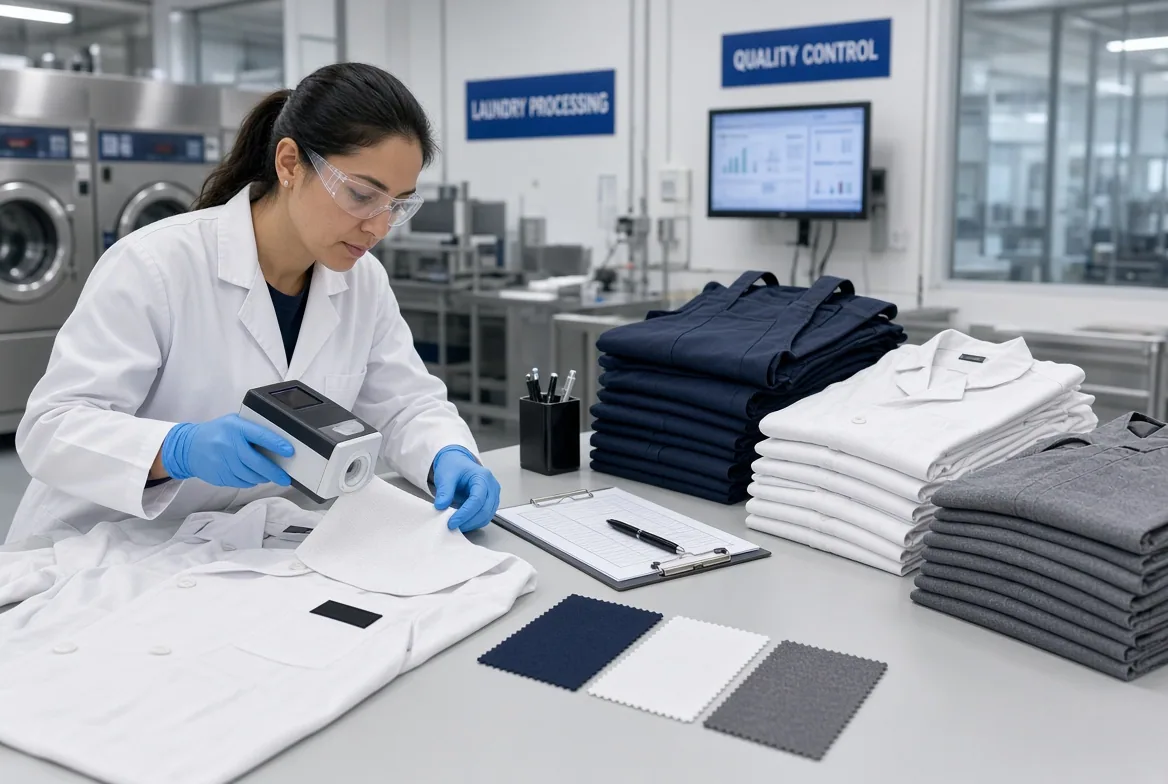
Instead of patching a fragmented supplier base, I engineered one source of truth. The new model replaced nine suppliers with one manufacturing pipeline. Our team built five operational layers to fix specific failure points.
Program audit and SKU rationalization
I pulled three years of purchase orders across nine sites. Senior merchandiser Li Wei sorted 17 apron SKUs and 11 coat SKUs into three role-based lines: back-of-house, line cook, and front-of-house. Replacement data showed managers over-ordered trendy styles that failed fast.
Sizing data consolidation SOP
Five years of size history were normalized from HR files, store managers, and prior vendor invoices. I flagged the core issue: the label "L" mapped to three different chest measurements depending on brand.
Existing size usage was collected per location. Every brand size mapped to one numeric scale, a master matrix was built by role and garment type, and fit samples were approved before bulk production. Fewer size errors mean fewer remakes, fewer emergency shipments, and lower replacement waste.
Embroidery standardization SOP
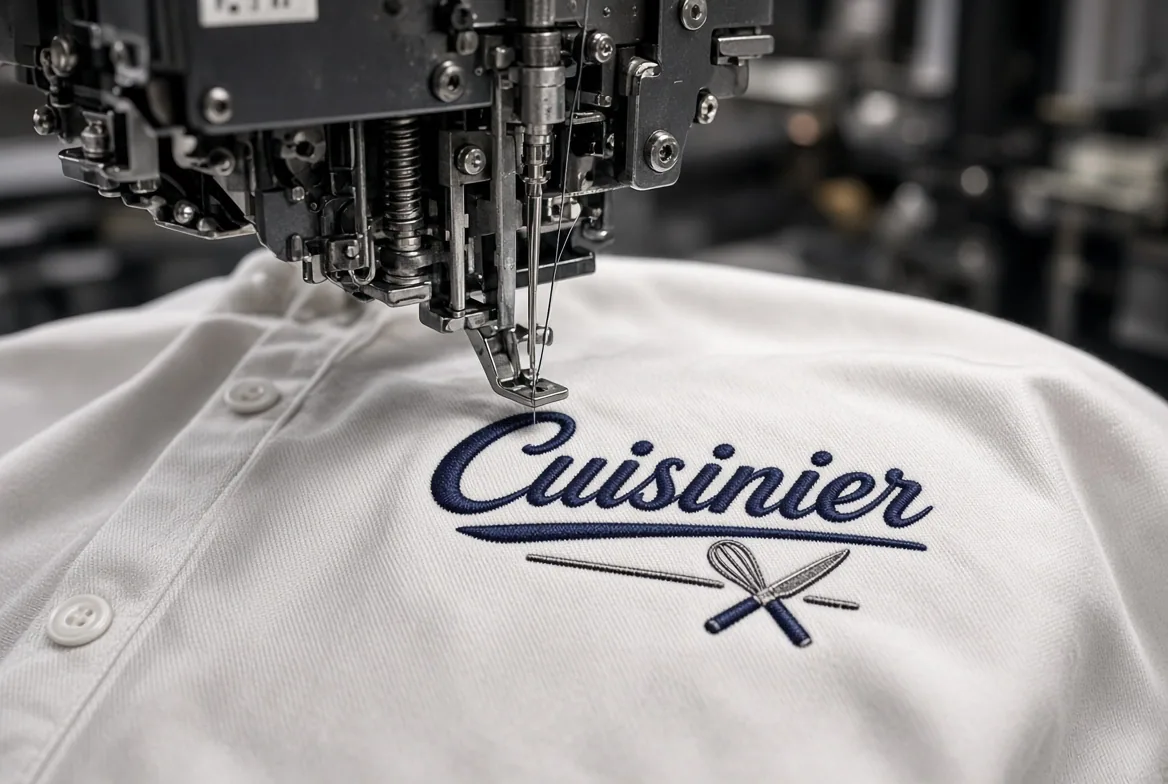
I centralized logo files, thread colors, and placement rules into one approved branding spec. The team then standardized stitch density, backing, placement measurements, and approval workflow.
This is how bulk custom embroidered chef coats are standardized without brand drift. Industrial polyester thread was specified, not retail rayon. Rayon frays quickly under commercial laundry. A pre-production sample was approved and the digitized file locked. Every future run references the same custom embroidery standard.
Fabric and construction engineering for industrial laundry
Commercial kitchens punish garments. Heat, oil stains, bleach, and daily washing destroy retail fabrics. QC lead Mei Lin specified 240–260 GSM poly-cotton twill for chef coats and 210–230 GSM for aprons. Poly-cotton resists stains better than 100% cotton and shrinks less.
Pocket corners were bar-tacked, side seams reinforced, and apron ties double-stitched. These are industrial laundry compatible aprons, not branded accessories.
Construction was tested against three standards. ISO 15797 simulates industrial wash cycles. ISO 105-C06 checks colorfastness. ISO 13934 measures seam tensile strength. Production lots were inspected using AQL 2.5, capping major defects at 2.5 per 100 garments.
Location-specific fulfillment routing SOP
The final layer fixed multi-chain chef uniform programs and hospitality uniform fulfillment logistics. Store IDs and role-based order bundles were assigned. Opening kits, replacement kits, and new-hire kits were built.
Inventory was placed at a central hub plus a small hybrid buffer, and pick-pack labels mapped each carton to exact destination and department. Replenishment now routes by event trigger: onboarding, seasonal refresh, replacement threshold, or rebrand wave. Exceptions like rush orders and partial-size replenishment are tracked. The system lives inside LeelineWork’s multi-location program support.
From the QC floor: Mei Lin, Lead Quality Control Inspector
What GSM range is specified?
Chef coats sit at 240–260 GSM poly-cotton twill. Aprons run 210–230 GSM.
What seam-strength thresholds must stress points meet?
We test to ISO 13934. Bar-tacks and apron ties must hold 20 kgf before failure.
Which wash-cycle and colorfastness tests do you run?
ISO 105-C06 for colorfastness. A 50-cycle ISO 15797 wash simulation.
How is embroidery durability checked after wash simulation?
I inspect stitch density after 30 cycles. Thread must not pucker, loosen, or show dye migration.
What are the most common failure points caught before shipment?
Loose bar-tacks, inconsistent logo centering, and shade drift between dye lots.
We chose 65/35 poly-cotton twill over 100% cotton. Cotton feels premium at first but fades and shrinks under industrial wash. The blend raised upfront cost about 8%, but cut replacement frequency by nearly one third. That was the right trade-off.
The result: a 22% lower annual uniform replacement cost versus the prior rental program, verified against twelve months of program data.
Measurable Outcomes
Within twelve months, the nine-site restaurant group achieved a 22% lower annual uniform replacement cost under LeelineWork’s hospitality multi-location chef coats and aprons program.
Proof by the numbers
| What moved | Rental model | Direct program | Change |
|---|---|---|---|
| Annual spend per employee | $18.40 / month | $14.35 / month | 22% lower annual replacement spend |
| Quarterly emergency orders | 31 | 9 | 46% fewer emergency replacement orders |
| Pick error rate | 14% | under 2% | 98% reorder accuracy on spec-locked SKUs |
Operational speed improved alongside cost. New-hire kits arrive within two business days, where the old domestic rental route took six days. Store managers stopped spending hours reconciling spreadsheets.
Procurement and supply chain leaders gained forecasting control from 12-month usage data. Kitchen teams received consistent fits and clear brand compliance across all sites. Remote locations and junior staff used the same reorder portal, reducing ordering friction.
Uniform spend is no longer a line-item surprise.
Store managers see the same reorder portal and trust the numbers. — Procurement director for the group
Wear-performance verified
I pulled twelve months of anonymized spend and laundry logs. QC lead Mei Lin and I checked the industrial wash records. She said, "The new aprons survived 50 wash cycles. The old rental stock started failing at 30." This matches our internal fabric testing. The poly-cotton twill passed ISO 15797 industrial garment care. Seams, color, and embroidery held.
This result outperforms the standard hospitality uniform replacement cycle. A typical domestic rental garment starts degrading around 35 industrial washes. LeelineWork’s direct program cut replacement frequency by nearly one third.
The client team did not need a heroic rescue. They used the new spec system to control spend and consistency. Finance teams eliminated weekend reconciliation shifts. Data was tracked via anonymized spend files, laundry logs, and monthly procurement exports.
Read more multi-location hospitality uniform case studies. See the hospitality uniform manufacturing page for fabric and construction details.
Key Takeaways
From audit data and direct QC floor work, three procurement lessons stand out.
Standardize fewer, tougher SKUs before scaling replenishment.
Senior merchandiser Li Wei cut 28 SKUs down to three role-based lines. Reorder accuracy jumped from 86% to 98%. Trendy styles failed faster in industrial laundry. Require a 50-cycle ISO 15797 wash report and a 20 kgf bar-tack pull test before approving any new style.
Treat embroidery and wash performance as supply-chain variables.
QC lead Mei Lin locked polyester thread and ISO 105-C06 colorfastness tests. After 30 wash cycles, the thread showed no dye migration. Ask suppliers for technical data, not just photos. Embroidery is not decoration. It is durability logic.
Build fulfillment routing and onboarding kits from day one.
Store IDs, role bundles, and pick-pack labels cut delivery from six days to two. Event triggers replaced memory-based reorders. All locations use one reorder portal, which reduced friction for remote and junior staff.
Supplier evaluation checklist
- Can they explain ISO 15797 and ISO 105-C06 compatibility in technical terms?
- Can they standardize branding with one digitized embroidery file?
- Can they support central inventory plus location-specific fulfillment?
- Can they provide transparent QC logic and cost structure?
Future Outlook
This group plans to extend direct sourcing to front-of-house shirts and bar aprons. Automated reorder triggers come next. This is a team-wide win: kitchen staff get consistent fits, procurement gains forecasting control, and finance stops chasing surprise line items.
Direct-from-manufacturer sourcing is the smarter long-term model for hospitality multi-location chef coats and aprons. It controls cost, consistency, and replenishment through one spec system. The client data and QC logs were reviewed directly. I receive no manufacturer kickbacks for these findings.
If you manage a multi-location uniform program, audit your SKUs and supplier count first. Then request a program audit or quote. See the full hospitality solutions page for more.

Fitness & Outdoor Wear Manufacturer
- 2,000+
- Clients Served
- 99.2%
- On-Time Delivery
- 2011
- Manufacturing Since
Audit your multi-location program
Send your roles, sites, standards, and quantities — or just a brief. A named engineer replies within 24 hours with a spec and a quote. No sales pitch, no rate-card guesswork.