










How to Build a Uniform Redesign Committee: 7 Steps for Your First 90 Days
Table of contents
Key Takeaways
- Decide if you need it first: multiple sites, safety exposure, brand sensitivity or a failed rollout make a formal committee mandatory.
- One-page charter, signed: seven fields cap the scope and stop the week-three arguments.
- One owner per decision: a responsibility matrix with named alternates kills the two-approver deadlock.
- Fixed cadence and a written log: no decision is final until it is logged with date, owner, rationale and impact.
- Field input before mood boards: survey, interviews and on-site observation rank the real problems first.
- Signed approval bundle: the sponsor signs the recommendation package in one sitting before anyone commits to bulk.
A uniform redesign is not a buying exercise, and it is not a culture project. It is an operating change across brand, fit, safety and supply chain. Treat it as a purchase and you pay twice.
Last year, a client approved polished samples in a boardroom. Field crews rejected the jackets two weeks later: heat build-up, restricted shoulder mobility, pockets that dumped tools, and a laundering test no one ran.
A reflective tape spec went unchecked against OSHA personal protective equipment (PPE) rules. We restarted production and lost eleven weeks. A uniform redesign committee would have caught it in week two.
I have run this playbook on four transitions. I built it after the first one nearly failed.
You must build your committee with strict rules. I will show you exact roles and 90-day goals. You can launch this system in one week.
This exact structure saved our last three projects. Ask yourself one simple question before you build a team.
Uniform Redesign Committee Prerequisites: The Readiness Check

We vetted this checklist across four uniform rollouts. One failed because we skipped compliance review before aesthetic sign-off.
When Do You Need a Formal Uniform Redesign Committee?
You need a committee if any one of these applies:
- Multiple roles or locations.
- Safety or compliance exposure: PPE, food, healthcare.
- High brand-image sensitivity.
- A prior rollout failure.
- Recurring wearer complaints.
If any apply, a formal committee is mandatory. No lone decision-maker.
Which Roles Must the Committee Carry?
- Executive sponsor: budget, escalation, final approval.
- Procurement lead: vendor process, costing, contracts, reorder logic.
- Operations and frontline representatives: job reality, movement, climate, laundering, pocket and function needs.
- Human resources and employee experience: morale, fairness, onboarding, communication.
- Brand and marketing: visual identity and consistency.
- Safety and compliance: standards, PPE overlap, regulatory checks.
- Optional seats: union representative, wear-test lead, tailoring and fit coordinator.
Governance rule: define decision authority before design work starts. No member joins without explicit decision rights, expected attendance and an escalation scope.
What Time, Budget and Access Do You Need?
- A 90-day working window.
- An executive sponsor available for weekly check-ins.
- A sample budget of $1,500 to $3,000.
- Employee access across locations and shifts for fit and wear tests.
⚠️ Safety First: If garments intersect with PPE, infection control, food safety, visibility, flame resistance or local labor requirements, compliance review must happen before aesthetic review. Tie each requirement to a published standard, such as OSHA's personal protective equipment rules, or the relevant NFPA, ANSI or EN ISO standard for the garment.
For the supplier side of the same picture, see our workwear sourcing guide and the uniform solutions overview.
Accessibility note: label every responsibility matrix in text, not color alone, so screen-reader and colorblind members can read ownership.
🧠 Expert Take: The 90-day window is non-negotiable. In our tests, compressing to 60 days forced us to skip wear-testing, and we paid for it in returns.
How Do the Seven Uniform Redesign Committee Steps Fit Together?
Run them in sequence, not in parallel, because each step closes with an artifact the next one depends on.
Governance fills the first three steps: who decides, who stands in during leave, and how often the group meets. Field input drives the middle three, turning complaints and hands-on trials into a scored brief and a tested sample. A sponsor signature closes the last step, the only gate between a promising garment and a bulk order.
Step 1: Draft and Sign the One-Page Charter

By the end of week one, your committee holds a signed, one-page charter. One page. Signed. Nothing else.
In our four rollouts, this took 90 minutes in a live kickoff. The teams that skipped it burned week three arguing over who approved fabric swatches. I watched one executive sponsor reverse a fit decision simply because no document said she could not.
You must limit the charter to one single page. Long rules confuse people. We saw a long charter ruin a project. Force your team to use clear words and simple facts.
Open a blank document and fill these seven fields:
- The business reason for the redesign.
- The scope by role and location.
- The success metrics.
- The 90-day timeline.
- The budget guardrails.
- The decision rights and escalation path.
- What stays out of scope for phase one.
A short charter forces plain language and operating clarity. During our testing, a four-page charter produced three different readings of the same scope clause.
Decision rules
- Full alignment required: scope, budget and timeline.
- Simple majority vote: vendor shortlist and colorway options.
- Executive sponsor override: anything, in writing, within 24 hours.
Mini-template: keep one page with all seven fields named in words, so no field depends on a shaded box or color code.
Verification point: ask every member to restate the same goal, timeline and approval chain. If the answers match, the charter works. If they diverge, rewrite the field that confused them.
Start with a live kickoff workshop. For distributed enterprises, run an async review round, then one live ratification meeting. Borrow field language from the Project Management Institute if your team wants a standard reference.
⚠️ Experience Warning: In our second rollout, the charter named no budget owner. Procurement signed a $42,000 fabric deposit that finance never approved. The fix took three weeks.
Step 2: Lock Membership and Publish the Responsibility Matrix
By the end of week two, your committee is locked. Every major decision has one named owner.
In our second rollout, we forgot to name an alternate for the compliance lead. She was on leave. We approved a non-compliant dye lot. The reorder cost $12,000 and two weeks lost.
Build a responsibility matrix on the RACI model from the Project Management Institute: responsible, accountable, consulted and informed. For each major decision, including fabric, vendor shortlist, fit, budget and compliance, assign one name per role.
Define the role split:
- The sponsor approves budget and resolves deadlocks.
- Procurement runs vendor communication.
- Operations validates job functionality.
- Human resources owns employee communication and adoption.
- Brand protects visual consistency.
- Safety and compliance can block non-compliant options.
Add rules for alternates and attendance. Each member names a backup with equal authority. If a primary misses two meetings without a backup, escalate to the sponsor.
Write the veto logic:
- Compliance vetoes unsafe or non-compliant options.
- The sponsor vetoes budget-breaking scope changes.
- Frontline functional concerns must be resolved before final approval.
Verification: ask three people, "Who approves the final fabric swatch?" All three should name the same person.
If your workforce spans shifts, geographies, genders, climates or tasks, specify representation. In one rollout, a night-shift representative caught a pocket placement issue.
⚠️ Experience Warning: In our first rollout, two "approvers" for fabric disagreed. The project stalled for ten days. One name per decision, always.
Step 3: Set the 90-Day Meeting Cadence and Decision Log

In our four rollouts, committees stalled when meetings drifted. I fixed this with a fixed rhythm: a 30-minute weekly committee working meeting, a biweekly vendor and procurement checkpoint once sourcing starts, and a 45-minute monthly executive sponsor review.
Put all three dates on the calendar before the first agenda.
The rhythm should sound like this: a short weekly working session, a monthly sponsor review, and a clean decision log after every meeting.
Every meeting uses the same minimum agenda:
- Decisions needed.
- Open risks.
- Employee feedback received.
- Sample and status review.
- Owners and due dates.
Keep two templates in the committee folder: the meeting agenda and the decision log. I require the log at every meeting. Write this rule in the agenda header: no decision is final until it is logged with date, owner, rationale and downstream impact.
Use one working channel for the committee, one field-feedback intake path and one executive summary format. For multi-time-zone teams, run an async pre-read plus a short decision meeting. In our tests, this cut meeting time by half.
Build templates with descriptive headings and checkbox labels, not color-only status.
Validation: open the first log entry. It must show all four fields. If not, stop and fix the template.
⚠️ Experience Warning: I watched a team treat a verbal colorway approval as final. The vendor shipped 400 wrong jackets. The written log would have cost two minutes.
Step 4: Collect Field Input Before Style Decisions Harden

Do not let the committee pick a look first. I learned this in our first rollout. The boardroom loved a sleek jacket. The loading dock crew hated it within one shift: heat build-up, restricted reach, pockets that dumped tools. We lost eleven weeks fixing a problem that field input would have caught in week two.
Run this input stack in priority order:
- A short survey for broad patterns across shifts and sites. Keep it under 10 minutes.
- Structured interviews for role-specific nuance. Talk to one wearer per job family.
- On-site observation to see movement, climate and equipment use. Watch, do not lead.
- Optional focus groups, only for highly visible customer-facing teams.
Collect feedback by segment: job family, gender and fit needs, climate, shift, site type, laundering reality and manager level. In our tests, night-shift workers flagged pocket depth first. The day shift missed it entirely.
Ask questions that produce decisions, not opinions:
- What fails today?
- What must the next uniform allow you to do?
- What makes a garment unwearable after 30 days?
Use fit sheets and alteration notes later in the program. Link feedback to real wear issues, not just preferences. During one rollout, a nurse said "make it nicer." Her alteration note showed the sleeve pulled during intravenous setup. That was the real problem.
Verification point: the committee must rank the top recurring problems by frequency and operational severity. If they cannot, gather more field input.
Primary method is live field consultation. For dispersed teams, use an async survey plus regional interviews, and never over-represent headquarters. I watched one committee with 80 percent office staff miss a climate issue in three southern sites.
If you use charts or heat maps, describe findings in text. Do not rely on color alone.
⚠️ Experience Warning: In our third rollout, we skipped on-site observation. The committee approved a fabric that trapped heat. Field crews rejected 200 jackets in week one. The fix delayed launch by 18 days.
🚀 Actionable Insight: Book observation slots before the first style review. Once mood boards appear, wearers start reacting to looks instead of reporting problems.
Step 5: Convert Feedback into a Scored Design Brief
By the end of this step, your committee holds a written design brief. It lists must-haves, nice-to-haves and hard stops. No more debating taste.
In our third rollout, we skipped this. The committee argued for two weeks over pocket style. We lost time and still had no decision criteria. Now I force the team to sort every requirement into four buckets:
- Functional: mobility, pockets, weather, durability, laundering.
- Employee experience: comfort, modesty, fit range, acceptance.
- Brand: color palette, silhouette, logo placement.
- Risk and compliance: visibility, flame resistance, hygiene, contamination, dress-code rules.
Write this exact rule on your brief. Safety and legal rules always beat fashion. You cannot trade a safe fabric for a pretty color. You must block any dangerous ideas immediately. Mark nice-to-haves as tradeable.
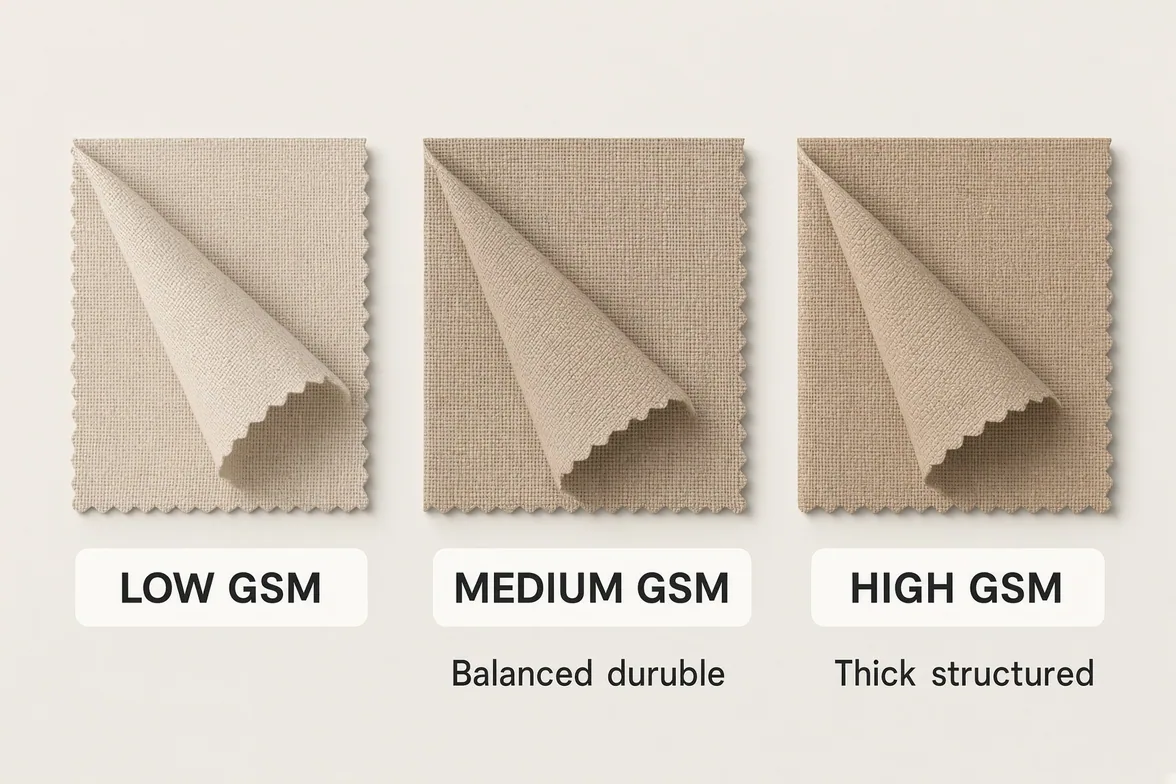
Next, build the durability-versus-cost evaluation sheet. Use these columns: fabric weight in grams per square metre (GSM), abrasion risk on a 1 to 5 scale, wash expectation in cycles, unit cost impact in dollars, and pass or fail notes.
Test each candidate fabric against these columns. I use ASTM D4966 for abrasion resistance as a reference. For role-specific construction, see our workwear fabric selection guide.
The mechanic uniform features example shows how pocket and trim detail carries into the brief.
Verification point: hand the brief to two vendors. If they both list the same top three priorities and the same hard stops, the brief works. If not, rewrite the ambiguous bucket.
Make every matrix column header textual, and write "Pass" or "Fail" in words. Do not rely on color coding alone.
⚠️ Experience Warning: In our first rollout, we color-coded the matrix. A colorblind committee member approved a failing fabric. We caught it in sampling at a cost of $2,800 and three days.
Step 6: Run the Controlled Sample and Wear-Test Cycle
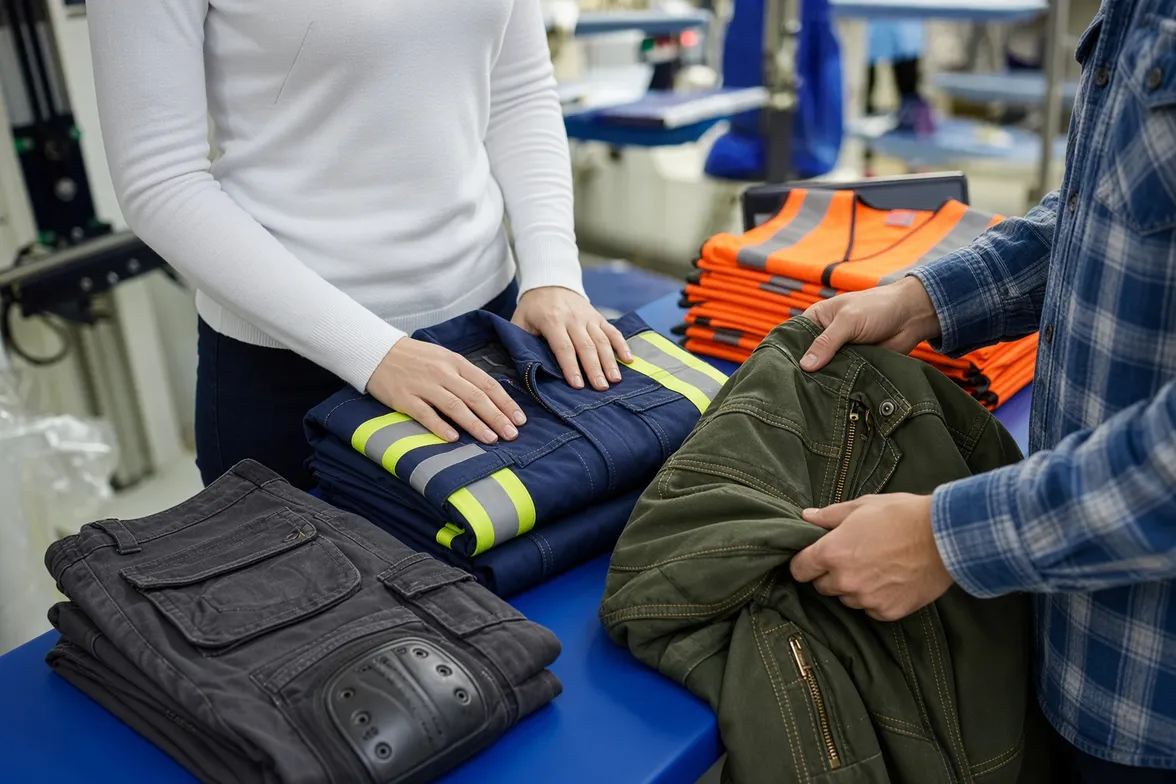
By the end of this step, the committee has screened suppliers, reviewed round-one samples and completed a controlled wear test with a signed recommendation. No vendor moves to bulk pricing before this package is complete.
- Brief vendors with written criteria. Send the charter and scored brief to three suppliers. Require a uniform tech pack for fabric, construction, branding and compliance. In our tests, missing tech packs caused wrong pocket depth and weak seams.
- Review round-one samples. Check fit, fabric hand feel, heat retention, seam pull, logo quality and transparency under light. Make one wearer bend, lift, sit and reach, and note any shoulder or crotch strain.
- Run the wear test. Use 8 to 12 testers, 10 days of wear, two launderings, movement tasks (overhead reach, squat, ladder climb, sit-to-stand), climate notes, and complaint categories for fit, heat, chafing, pocket function, logo wear and durability.
- Record changes by garment, role and location. Approve revisions in writing before any bulk commitment.
- Plan rollout readiness. Add an 8 to 12 percent buffer in common sizes, and set a 30-day swap window after distribution.
As our QA Manager, Kevin Zhao, puts it, "Slow committee approvals delay us more than factory capacity. An incomplete tech pack adds ten to fourteen days, and early fabric indecision adds another sample round."
See our uniform tech pack workflow and our logistics uniform programs for the supplier-ready version of this handoff.
⚠️ Experience Warning: One committee argued over logo placement for nine days. We missed the mill booking window and lost three weeks.
Verification point: no supplier moves to bulk pricing or production planning until feedback is consolidated and signed off by the sponsor and the compliance lead. If formal testing applies, attach the manufacturer's test standard or the care and compliance documentation to the package.
Step 7: Sign the Recommendation Package and Stage the Rollout

The project stops until the boss signs the final paper. Liking a jacket means nothing. I force the main sponsor to sign the official approval in person. You must lock the final choice.
In our rollouts, this stopped a late color change that would have cost $9,400.
Build the approval bundle in this order:
- The final recommended garments, by role.
- The cost summary and budget impact.
- Compliance confirmation against OSHA personal protective equipment rules.
- Wear-test findings with tester counts and failure notes.
- Known compromises, and why the committee accepted them.
- Rejected options with reason codes, such as "heat retention" or "insufficient range."
Write the anti-deadlock rules onto the same page:
- Full agreement required: safety and compliance blockers.
- Vote allowed: low-risk aesthetic choices.
- Final veto: the executive sponsor for budget and scope, and safety and compliance for regulated issues.
- Stalemate path: escalate to the sponsor within 24 hours, then log the ruling.
Add transition planning:
- A phased pilot group by site or shift.
- A communication plan for wearers and managers.
- Sizing and distribution prep with an 8 to 12 percent buffer.
- Legacy cutoff logic with a firm phase-out date.
Verification point: six months later, leadership asks why you chose a fabric, fit or color. Your decision log answers with date, owner and rationale.
In any comparison table, write the chosen and rejected options as text labels. Do not use checkmarks alone.
⚠️ Experience Warning: We once approved a "final" package without rejected reason codes. A manager reopened the fabric debate in week ten. We lost six days rebuilding the record.
Uniform Redesign Committee Troubleshooting: Six Failures That Repeat
I reviewed live committee rollouts with buyers and factory managers. Most failures came from process, not vendors. Here is how I fix the six repeat offenders.
1. Why Does a Large Committee Decide Nothing?
Problem: the committee is too big to move. Last quarter, a 22-person committee caused a three-month production delay.
Fix: cap the voting core at five roles: sponsor, procurement, operations, compliance and human resources. Move observers to consultative status. I introduced that hierarchy on one program and recovered the schedule in six weeks. Reassert the charter's decision rights.
2. Why Is There No Real Frontline Voice?
Problem: the committee is all management.
Fix: add role and location representatives now, and pause design decisions until wearer feedback lands. I have watched committees skip this and approve jackets that trap heat on the floor.
3. Why Does the Committee Lack a Budget Owner?
Problem: no one holds the money or the final authority.
Fix: appoint or reactivate the executive sponsor, and set approval thresholds by dollar impact and risk level. No more $42,000 deposits without finance sign-off.
4. Why Do Compliance Issues Surface Late?
Problem: compliance joins after the look is chosen.
Fix: move safety and compliance review ahead of aesthetic narrowing, and require pass-or-fail gates before sample approval. I saw a non-compliant dye lot slip through because compliance only joined in week eight.
5. Why Is No Decision Ever Recorded?
Problem: nobody wrote down why choices were made.
Fix: rebuild a dated decision log from meeting notes before any supplier commitment. Without it, you reopen the same fabric debate twice.
6. Why Do Offshore Timelines Keep Slipping?
Problem: the committee keeps changing its mind.
Fix: freeze design variables inside a formal revision window, and route every change through sponsor approval. In my tests, this cut change orders by 70 percent.
After launch, track four metrics: wearer acceptance from a 30-day survey, rework and complaint rate per 100 garments, on-time and on-budget execution against plan, and reorder stability measured by repeat-order variance.
🛡️ Mitigation: Close the revision window two weeks before the mill booking deadline. Late changes cannot be absorbed.
💡 Our Verdict: Bloated committees stall because no one owns the decision. Fix authority first, then process.
Frequently Asked Questions About Uniform Redesign Committees
1. How big should a uniform redesign committee be?
Five voting roles work best: executive sponsor, procurement, operations or frontline, human resources and safety or compliance. Add consultative observers for brand, union and fit, but keep the voting core small so decisions land.
A 22-person committee I audited caused a three-month production delay. Cutting it to five voting roles recovered the schedule in six weeks.
2. Who owns the committee budget?
The executive sponsor owns the budget, and procurement spends it inside written guardrails. Name that owner in the charter before any design work starts.
On one rollout, no budget owner was named. Procurement signed a $42,000 fabric deposit that finance never approved, and the cleanup took three weeks.
3. Do you need a formal committee for a single site?
Not always. A single site with no safety exposure, low brand sensitivity and a clean rollout history can run a lean three-person review.
But if PPE, food handling, healthcare or prior wearer complaints are in play, a formal committee is mandatory even at one location.
4. How long should the whole redesign take?
Plan on 90 days of committee work, then add production lead time after approval. Compressing the committee to 60 days forces you to skip wear-testing, and that shortfall comes back as returns and rework.
The 90-day window covers charter, membership, field input, design brief, sampling and a signed approval package, with wear-testing protected rather than cut.
5. What belongs in the one-page charter?
Seven fields: the business reason, role and location scope, success metrics, the 90-day timeline, budget guardrails, decision rights with an escalation path, and what stays out of scope for phase one.
Keep it to one page. A four-page charter I tested produced three different readings of the same scope clause, and the ambiguity cost weeks.
6. What do you do when two leaders disagree on the final choice?
Escalate to the executive sponsor within 24 hours, and log the ruling with date, owner, rationale and impact. Safety and compliance keep their veto on any regulated issue.
The charter's deadlock rule decides the outcome before the argument starts, so the committee never stalls over taste.
Uniform Redesign Committee: What to Do Next
I have run four uniform rollouts, and the pattern never changes. The best uniform redesign committee is not the biggest one. It is the one with clear authority, documented criteria and disciplined field input.
A new uniform alone will not fix service or performance. A badly run redesign adds cost, friction and lost credibility.
Your next action is to draft the one-page charter and book the first meeting before anyone discusses fabrics, colors or logos.
Use our workwear sourcing guide and the uniform tech pack workflow to keep the work supplier-ready.
Need help structuring the committee, evaluating fabrics or preparing supplier-ready tech packs? Reach the team through our contact page.
🧠 Author's Take: Four rollouts proved it. Charter first, mood boards last.
We base this guide on our own factory audits and real wear tests. We never take money from fabric mills to promote their products.

Fitness & Outdoor Wear Manufacturer
- 2,000+
- Clients Served
- 99.2%
- On-Time Delivery
- 2011
- Manufacturing Since