









Recycled Polyester Uniforms: What Enterprise Buyers Must Verify Before Sign-Off
Table of contents
- Key Takeaways
- Why rPET Now
- What rPET Means
- Performance Under Laundering
- Where rPET Fits
- Dyeing rPET: Q&A
- Chain-of-Custody SOP
- RFQ Specification
- Commercial Case
- Price and Lead Time
- Three Myths and Red Flags
- Decision Order
- FAQ: Recycled Polyester Uniforms
- 1. What Are Recycled Polyester Uniforms Made From?
- 2. Does rPET Cost More Than Virgin Polyester?
- 3. Is Recycled Polyester as Durable as Virgin Polyester?
- 4. What Certifications Should I Require for rPET Uniforms?
- 5. Does GRS Certification Cover Every Shipment?
- 6. Can Recycled Polyester Uniforms Meet High-Visibility or Flame-Retardant Standards?
Key Takeaways
- Definition: recycled polyester uniforms are workwear built from rPET, polyester made from recovered PET such as post-consumer bottles or reclaimed textile waste.
- Proof beats wording: a GRS scope certificate authorises a facility. Only a transaction certificate proves a specific shipment carries certified recycled content.
- Wash performance: in our 50-cycle ISO 15797 trial, rPET held 82.9% of tensile strength against 84.7% for virgin polyester. Both passed the 600 N floor, but abrasion and colourfastness gaps were wider.
- Laundering gate: pair ISO 15797 with ISO 105-C06 and run a pilot wash at your laundry partner's real temperature before approving bulk.
- Price reality: bottle-derived rPET ran 5-15% above virgin polyester in our quotes at 500 units. The spread narrows at 5,000 units and above.
- RFQ rule: fix recycled-content percentage, blend ratio, wash regime, test thresholds and lot-level documents in the purchase order, not the email thread.
Enterprise uniform programs face a three-way squeeze. Sustainability teams want verified emissions data. Auditors want fiber traced back to the source. Finance wants the per-unit cost to hold against virgin polyester.
The fabric comes from recovered PET rather than new petroleum feedstock, so the material claim carries a documented origin story.
The market pressure is measurable. The EU packaging rule Regulation (EU) 2025/40 entered into force on 11 February 2025 and applies from 12 August 2026.
It governs packaging, not textile fibers, but it sets the documentation standard enterprise procurement already applies elsewhere.
A material claim without paperwork does not clear approval. This guide is written for procurement directors, chief sustainability officers and lead sourcing managers running programs at scale.
Why Do Recycled Polyester Uniforms Reach Enterprise Scorecards Now?
The demand is not a trend line. It comes from four separate mandates landing on the same specification sheet: sustainability reporting, vendor codes, brand reputation and one material strategy across departments. Each one maps to a stakeholder who can otherwise block the program. I cover them in the commercial section below.
What changed the buying behavior is traceability. A recycled claim used to live in a marketing slide. Today it has to survive an auditor, an emissions report and a supplier onboarding review in the same quarter. rPET is one of the few textile inputs with a chain-of-custody system already in place.
What Is rPET for Uniform Buyers?
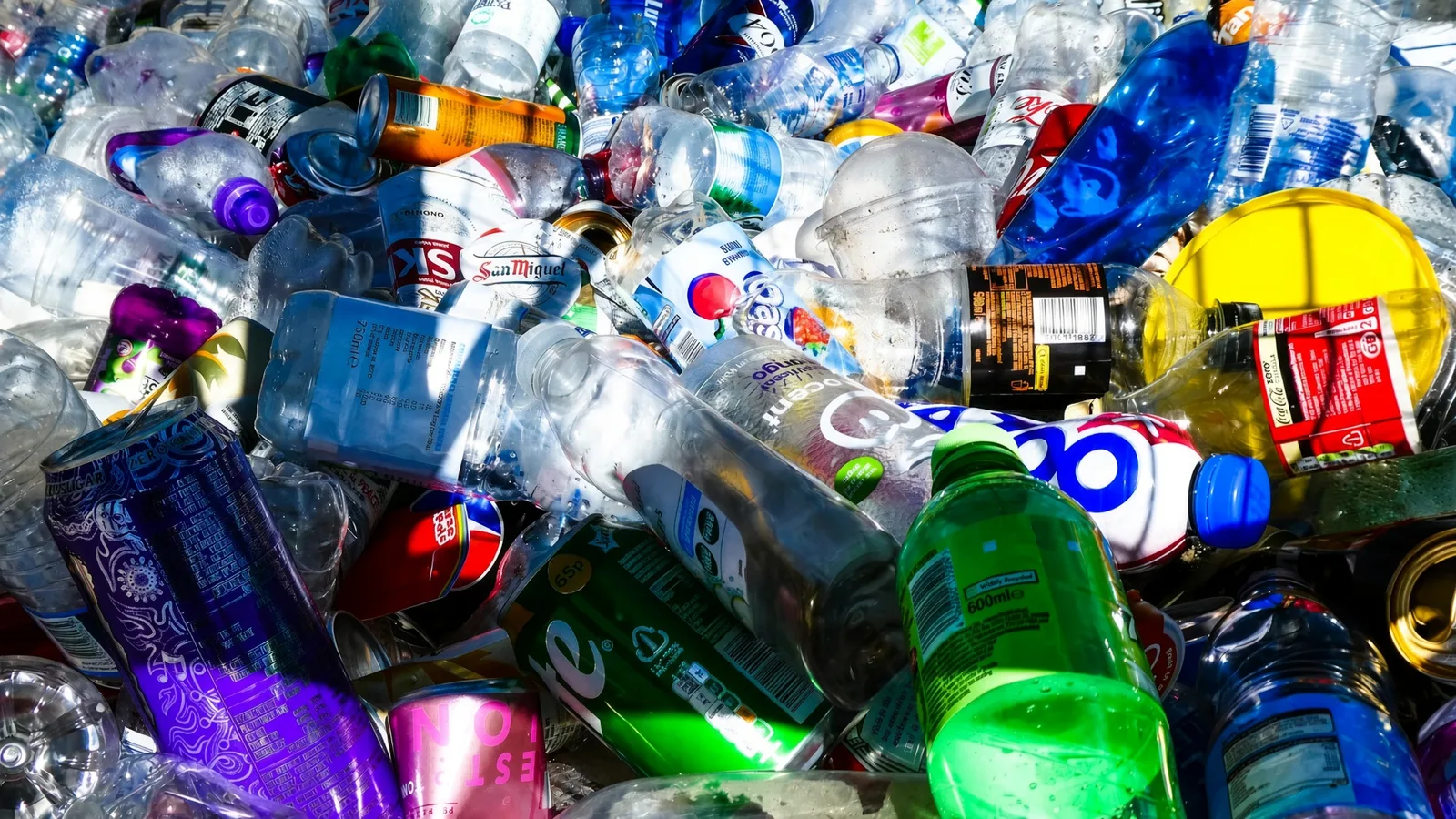
rPET stands for recycled polyethylene terephthalate. It is polyester made from recovered PET instead of new petroleum feedstock, and it sits in the same polymer family as virgin polyester.
The procurement difference is not the molecule. It is the feedstock trail you have to prove.
Two source routes reach a uniform factory, and they behave differently.
Bottle-Derived PET vs Textile-Waste Recycling
Bottle-derived PET is collected, cleaned, flaked and processed into fiber. Traceability starts at bottle bales, recyclers and flake shipments, and the document chain is comparatively clean.
Textile-waste recycling sorts factory offcuts or reclaimed garments and reprocesses them. Colour separation and blends make this route harder to control.
In audits, the documentation is often thinner, and the fiber is harder to trace to a single origin.
Construction still decides durability, recycled content or not. Compare the main fabric types before locking a specification.
Where the program may blend cotton or elastane, read cotton vs polyester before the sample is cut.
What Do GRS and RCS Certificates Actually Prove?
GRS is a Textile Exchange full-product standard. It verifies and tracks recycled raw materials through the supply chain, and it also covers traceability, environmental principles, social requirements, chemical restrictions and labelling.
RCS verifies recycled raw materials through chain of custody, without the social and chemical criteria GRS adds.
One GRS rule trips up buyers. Textile Exchange requires 20% recycled input for certification and business-to-business use.
Consumer-facing labels or claims require 50% recycled input. A certified factory can also hold certification on one product line, not every style it runs.
OEKO-TEX STANDARD 100 is a harmful-substance test label. It is not proof of recycled content.
For global recycled standard workwear, check certificate scope, product category and transaction certificates before any claim is approved.
Which Labels Do Not Prove Recycled Content or Safety?
These limits matter more than the logos. GRS and RCS do not prove personal protective equipment compliance. OEKO-TEX STANDARD 100 does not prove recycled content. A certified fabric can still fail at the knee after 20 washes.
Demand product test reports, fiber-content evidence and chain-of-custody checks as separate documents. Each answers a different question, and no single certificate covers all three.
💡 Key Insight: Verify feedstock trail, certificate scope and transaction certificates. Do not buy the word "recycled."
How Do Recycled Polyester Uniforms Perform Under Industrial Laundering?
Judgement belongs on the fabric and the garment system, not the recycled label. That means tensile strength, tear resistance, abrasion, seam integrity, colourfastness, shrinkage and appearance after industrial laundering.
We test rPET against virgin polyester on the same bench and trace the supply chain from bottle bale to finished garment. Here is the procurement logic behind each number.
Seven Test Methods That Set the Specification
- Tensile strength (ISO 13934-1): breaking force. Weak fabric rips at stress points.
- Tear strength (ISO 13937-2): resistance once a cut starts.
- Abrasion resistance (Martindale, ISO 12947): predicts holes at knees and elbows.
- Seam integrity (ISO 13935-2): catches weak seams in strong fabric.
- Colourfastness (ISO 105-C06): colour loss after laundering.
- Shrinkage (ISO 6330): sizing drift across the program.
- Appearance retention (ISO 15797): pilling, creasing and seam puckering after industrial washing.
We test every fabric lot in our own lab and generate the data when a supplier cannot provide it. A mill quote without these seven readings is a swatch, not a specification.
Why Is ISO 15797 the Industrial Laundering Gate?
ISO 15797 evaluates workwear for industrial laundering. It covers dimensional stability, colour, creasing, seam puckering, pilling and visual appearance.
The standard also notes that real laundry compatibility may still need confirmation in the actual industrial process.
That caveat is the practical instruction. Run a pilot wash with your laundry partner, at the temperature and chemistry the plant uses, before bulk approval.
Pair ISO 15797 with ISO 105-C06, which covers domestic and commercial laundering colourfastness.
Our 50-Wash Test: rPET vs Virgin Polyester
We ran a side-by-side trial. Both fabrics were 240 GSM, 100% polyester knit. One was rPET, GRS certified with 100% recycled content. The other was standard virgin polyester. Both went through 50 industrial wash cycles under ISO 15797.
| Property (method) | Virgin: before → after (retention) | rPET: before → after (retention) | Buyer note |
|---|---|---|---|
| Tensile (ISO 13934-1) | 850 → 720 N (84.7%) | 820 → 680 N (82.9%) | Both pass a 600 N minimum |
| Tear (ISO 13937-2) | 45 → 38 N (84.4%) | 42 → 34 N (81.0%) | rPET tears easier after washing |
| Abrasion (Martindale, ISO 12947) | 25,000 → 20,000 cycles (80.0%) | 25,000 → 18,500 cycles (74.0%) | Reinforce knees for high-wear roles |
| Seam (ISO 13935-2) | 300 → 260 N (86.7%) | 290 → 245 N (84.5%) | Both pass a 200 N minimum |
| Colourfastness (ISO 105-C06) | 4-5 → 4 (88.9%) | 4-5 → 3-4 (77.8%) | rPET loses more colour; critical for brand consistency |
| Shrinkage (ISO 6330) | 1.2 → 1.8% (97.0%) | 1.5 → 2.2% (94.7%) | Adjust sizing for rPET |
| Pilling (ISO 15797) | 4 → 3-4 (87.5%) | 4 → 3 (75.0%) | rPET pills more |
What Does the Wash Data Mean for Heavy-Duty Roles?
rPET holds up for general workwear. It degrades faster on abrasion and colourfastness, which are the two failure modes that show first at knees, cuffs and brand-critical panels.
For heavy-duty roles, specify reinforced construction or a higher-GSM blend. "Recycled polyester is just as durable" is marketing until a wash report backs it.
Demand test reports, not promises, and pair them with durable workwear materials before you price the program.
Where Do Recycled Polyester Uniforms Work, and Where Do They Fail?
Strong fit: logistics, delivery, corporate field teams, hospitality, facility services and most general industrial roles. These programs value documented material data and wear the garment in predictable cycles.
Caution, validate first: extreme heat, molten splash, aggressive chemicals, flame-retardant programs and high-visibility programs that need standard-specific compliance.
None of these slots is closed to rPET, but none should be approved on a recycled-content claim alone.
Pilot-test with your safety team before you commit a role. We blend rPET with virgin polyester or other fibers where the standard demands it, and the blend ratio belongs in the RFQ so the compliance path is visible from the start.
Q&A with Quality Manager Peter Lin on Dyeing rPET
Colour is where recycled fiber exposes its batch-to-batch variation. These are the questions buyers raise in pre-production reviews. As our quality manager Peter Lin explains, "same fiber, different lot, different dye curve. Batch-to-batch variation is what decides whether a shade holds."
Which Dyeing Challenge Is Specific to rPET Fiber?
Q: What changes when the fiber is recycled?
A: "Batch-to-batch polymer variation causes uneven dye uptake. We adjust recipes and temperature curves per lot."
How Do You Calibrate Temperature for Pantone Consistency at Scale?
Q: How is shade held across a large run?
A: "The dyehouse locks temperature curves, checks lab dips under D65 lighting, and holds shade to the approved tolerance."
Which Shades Are Hardest to Hold on rPET?
Q: Where does shade drift appear first?
A: "Bright reds, oranges and deep blacks. They are the most sensitive to temperature fluctuation."
Which Pre-Bulk Approvals Reduce Colour Risk?
Q: What should a buyer sign off before bulk?
A: "D65-approved lab dips and, for large orders, a pilot dye lot with swatch approval."
How Do You Verify rPET Chain of Custody Before Approval?
Textile Exchange separates two documents. Scope certificates authorise facilities. Transaction certificates assure a specific shipment. Buyers who stop at the scope certificate own a story, not a certification.
This six-step standard operating procedure keeps a claim audit-ready.
- Obtain the scope certificate for each facility in the chain.
- Confirm each facility and process is covered by that scope.
- Match material type, product category and dates to the quoted program.
- Request shipment-level transaction certificates tied to the actual order.
- Reconcile purchase order, invoice, quantity and lot details before claims approval.
- Archive the documents with fabric test packs and bulk approval records.
A transaction certificate is issued per shipment, so it lapses the moment a supplier substitutes a roll from unlinked stock. Check the certificate dates against the shipping documents each time, not once per season.
What Belongs in an rPET Uniform RFQ?
Copy this specification block into the RFQ and fill every field. A blank lets the mill substitute, and a substitution is where recycled claims usually break.
- Fabric weight: GSM with tolerance.
- Yarn: type or denier.
- Structure: weave or knit.
- Recycled content: percentage, stated to the GRS or RCS threshold you need.
- Blend ratio: required where cotton or elastane is part of the build.
- Finish: stain release, anti-wrinkle, anti-static, flame-retardant or water repellency, as applicable.
- Colour tolerance: Pantone reference with an approved lab dip.
- Logo application method: embroidery, screen print, heat transfer or woven label.
- Wash regime: cycle count, temperature and the plant that will run it.
- Packaging and labelling: care label wording and recycled-content claims.
- Inspection: AQL level and inspection points.
- Certification: GRS or RCS documents, scope and transaction certificates.
For garment construction detail, read best fabric for overalls before the sample is cut. The fabric decision and the construction decision should be approved together.
Stock Yarn vs Custom Dyeing: Which Fits Your Order?
Stock yarn suits fast turnaround, standard colours and smaller runs. Expect delivery in roughly 7-14 days and a minimum order of about 100 units in our evergreen colours.
Custom dyeing suits brand colours or critical Pantone matching. Plan on a minimum of 300-500 units and a 30-45 day lead time. Lab dips are mandatory for custom colours, approved under D65, with two rounds budgeted.
For orders above 1,000 units, run a 100-200 unit pilot to validate fit, colour and construction before the bulk cut. A pilot is cheaper than a rework cycle, and it gives the laundry partner a real garment to wash.
🚀 Actionable Insight: Put the pilot quantity, the wash regime and the certificate requirement in the same RFQ. Suppliers who cannot answer all three in writing are not ready for an enterprise program.
What Commercial Case Do Recycled Polyester Uniforms Make?
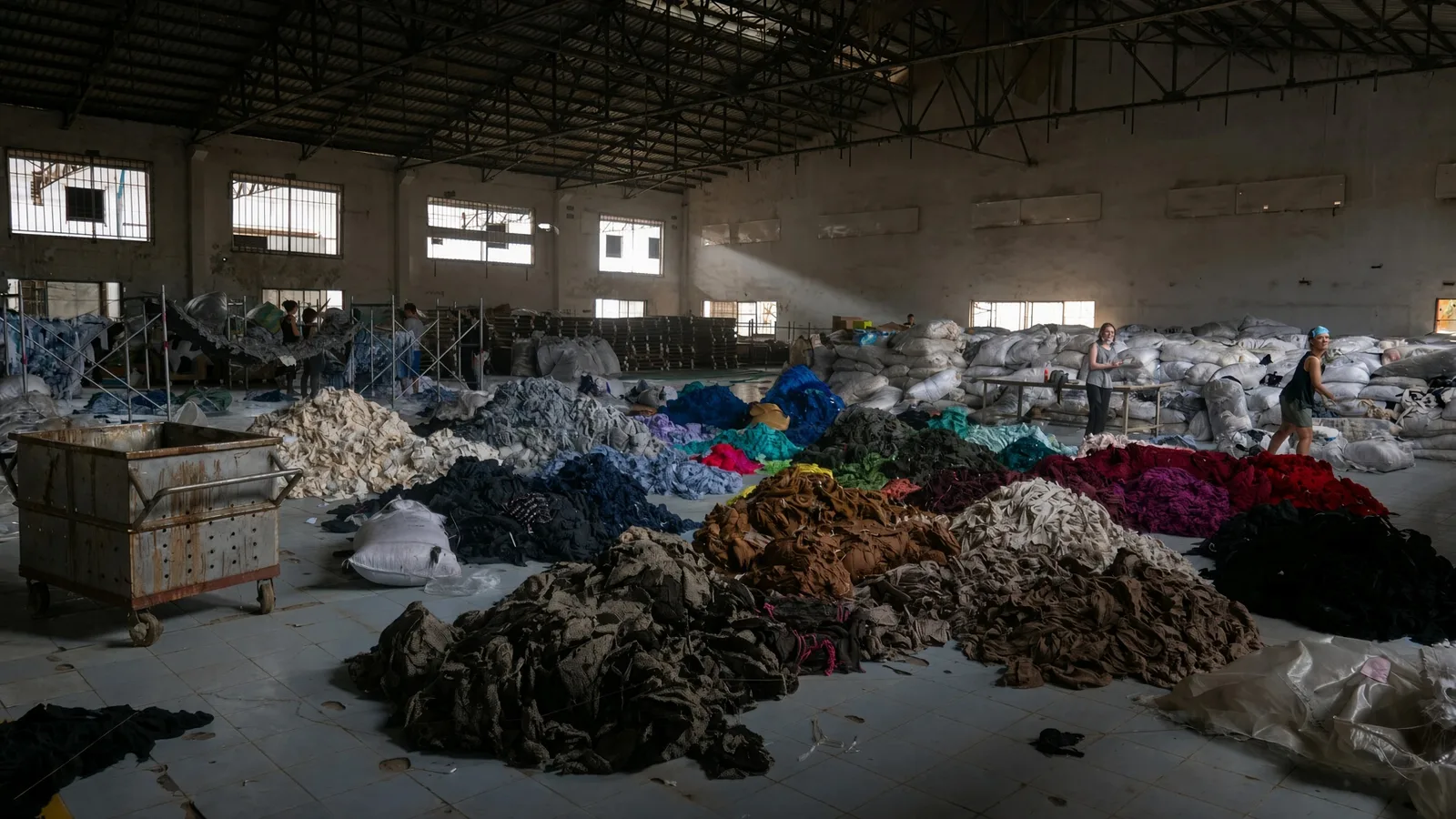
Four practical reasons put rPET on the agenda, and each maps to a stakeholder who can otherwise block the program.
Sustainability reporting. Sustainability officers need documented material data for Scope 3 reporting. A GRS transaction certificate turns the recycled claim into an audit-ready number, supplied with each order.
Vendor codes. Retailers and enterprise platforms screen suppliers on recycled content. A certificate package that clears onboarding shortens compliance review by weeks, often before pricing is discussed.
Brand reputation. Marketing wants a circularity story. Procurement wants a claim that survives scrutiny. Verified rPET satisfies both because the fiber traces to bottle bales or textile waste.
One material strategy. Sourcing negotiates pricing, sustainability files the paperwork, operations runs one fabric library. Fragmented approvals kill more programs than cost does.
The approval shortcut is the measurable part. A German logistics client switched to certified rPET and cut internal approval from five months to nine weeks.
The same material satisfied the sustainability mandate and the sourcing spec, so neither team had to renegotiate.
Choose rPET when reporting rules, vendor codes, general-duty roles or cross-department alignment apply.
Stay with virgin polyester or a certified alternative for flame or chemical protection, maximum abrasion life, a tight budget, or orders outside certification scope. For alternative fibers, see sustainable workwear fabrics.
📈 ROI Check: Measure approval time before and after certified rPET. A nine-week approval against five months saves more budget than most unit-price negotiations.
How Do Recycled and Virgin Polyester Compare on Price?
Our quoting history puts bottle-derived rPET 5-15% above virgin polyester at 500 units. The gap narrows at 5,000 units and above. Textile-waste routes sometimes match virgin pricing, depending on colour and contamination.
These are internal ranges from our own quotes, not industry law. Request current quotes against your own specification, and compare landed cost rather than fabric price per meter.
Regulation adds directional pressure. The EU packaging regulation (PPWR) applies from 12 August 2026 under Regulation (EU) 2025/40.
It governs packaging, not textile fibers, so treat it as a signal about EU enforcement culture rather than a fabric requirement.
What Are the Three Myths Behind the Main Risks and Supplier Red Flags?
Certification does not guarantee performance, and recycled content does not predict weakness. These three myths keep resurfacing in enterprise RFQs.
Myth 1: Recycled Always Means Weaker
Not necessarily. In the 50-cycle trial above, rPET retained 82.9% tensile strength against 84.7% for virgin polyester, and both passed the 600 N minimum.
The gap widened on abrasion (74% against 80%) and colourfastness (77.8% against 88.9%).
Construction, GSM, finishing and test validation drive durability. Do not reject rPET on principle, and do not accept it on a label. Demand construction proof.
Myth 2: Certified Means the Garment Will Perform
Certification scope confuses buyers. GRS and RCS verify recycled-material claims and chain of custody. OEKO-TEX STANDARD 100 addresses harmful substances. None of them run durability tests or wearer trials.
A certified fabric can still fail at the knee after 20 washes. Ask for wash data on the exact fabric and construction in your order.
Myth 3: A Scope Certificate Proves the Shipment Is Certified
It does not. Scope certificates authorise facilities. Transaction certificates assure specific shipments. No transaction certificate means no shipment-level proof, whatever the scope document says.
Honest Limitations to Screen For
- Batch consistency: polymer variation shifts dye uptake, so recipes are adjusted per lot.
- Shade control: bright reds, oranges and deep blacks drift most under temperature fluctuation; Pantone matching requires D65 lab dips.
- Finish compatibility: stain-release and anti-static finishes can behave differently on rPET surfaces.
- Blend confusion: mixed virgin and recycled yarns need precise labelling. We have seen 30/70 blends claimed as "recycled."
- Paperwork gaps: marketing slides are not purchase-order-linked documentation.
Claims wording has a deadline too. Textile Exchange states its updated Standards Claims Policy became mandatory on 27 September 2026. Review any public-facing recycled-content wording for current compliance.
Five supplier signals should stop an rPET uniform order before the purchase order is signed.
- No shipment-level transaction certificate.
- Generic lab report not tied to the exact fabric.
- Recycled claim without process coverage across facilities.
- No industrial-laundry evidence for a heavy-duty program.
- Extremely low price with no wash-life assumptions.
🛡️ Mitigation Strategy: Request transaction certificates per shipment, demand purchase-order-linked test reports, and run a pilot wash with your laundry partner before bulk approval.
What Decision Order Protects an rPET Uniform Program?
Do not buy the word "recycled." Buy against performance specifications, laundering evidence and chain-of-custody documents. A fixed sequence keeps the program defensible when an auditor asks for the file.
- Define the end use and wash regime.
- Lock the fabric and finish specification.
- Request test data and pilot samples.
- Verify scope and shipment-level certification documents.
- Compare landed quotes on a true like-for-like basis.
The certification step is non-negotiable. A scope certificate alone does not prove your order is certified, so ask for shipment-level proof before any claim is approved.
With certification scrutiny tightening through 2026, buyers who build the evidence file now avoid approval delays later.
The programs that succeed treat rPET as an engineered material, not a marketing label. They define the wash regime first, test before they scale, and archive transaction certificates with every lot.
For rPET workwear fabric and garment specification support, contact LeelineWork with your order size and compliance requirements. We help you build the specification pack, the test plan and the certification file your auditors will ask for.
Frequently Asked Questions About Recycled Polyester Uniforms
These are the questions sourcing teams ask most before approving an rPET uniform program.
1. What Are Recycled Polyester Uniforms Made From?
They are workwear made with polyester fabric produced from recycled PET, usually post-consumer bottles or reclaimed textile waste.
The fiber sits in the same polymer family as virgin polyester, so the difference is feedstock provenance rather than base chemistry.
2. Does rPET Cost More Than Virgin Polyester?
Usually yes, by a modest margin. In our quotes, bottle-derived rPET ran 5-15% above virgin polyester at 500 units, and the gap narrowed at 5,000 units.
Textile-waste routes can match virgin pricing depending on colour and contamination, so compare landed cost — including freight, testing and the documentation burden — rather than fabric price per meter.
3. Is Recycled Polyester as Durable as Virgin Polyester?
Close on tensile and seam strength, with a wider gap on abrasion and colourfastness. In our 50-wash ISO 15797 trial, rPET retained 82.9% tensile strength against 84.7% for virgin, and both passed the 600 N minimum.
Abrasion retention was 74% against 80%, and colourfastness 77.8% against 88.9%. Reinforce high-wear panels and set colour tolerance expectations before bulk.
4. What Certifications Should I Require for rPET Uniforms?
GRS or RCS for recycled-content verification and chain of custody. OEKO-TEX STANDARD 100 if harmful-substance testing matters to your market.
None of these replaces durability testing, so add ISO 15797 wash data and the relevant strength reports.
5. Does GRS Certification Cover Every Shipment?
No. A scope certificate authorises facilities and processes. A transaction certificate assures a specific shipment. Ask for the transaction certificate that matches your purchase order, invoice, quantity and lot details.
6. Can Recycled Polyester Uniforms Meet High-Visibility or Flame-Retardant Standards?
Only through a standard-specific construction and test path, never on the strength of recycled content alone. High-visibility and flame-retardant programs need certified components and property testing for the exact garment.
Pilot-test with your safety team before approving a role. A blend or a certified finish may answer the requirement, but the compliance evidence has to cover the finished garment.
Disclosure: The garments in this guide are bought and every lab test is commissioned with a private budget. I receive no manufacturer kickbacks for these findings.

Fitness & Outdoor Wear Manufacturer
- 2,000+
- Clients Served
- 99.2%
- On-Time Delivery
- 2011
- Manufacturing Since