









How a Four-Site Oil & Gas Contractor Cut FR Workwear Defects by 81%
A four-site oil and gas enterprise replaced inconsistent bulk FR clothing suppliers with one audit-ready industrial FR workwear program — custom FR workwear manufacturing, lab validation, and construction-level QC built to NFPA 2112.

Who We Worked With
Client Profile
Energy Link Industrial Services
Four-site oil & gas services contractor
Energy Link Industrial Services runs field crews across four refinery, midstream, and electrical-substation sites. Procurement wanted to consolidate flame-resistant coveralls and arc-rated workwear under one vendor, while HSE leaders needed garment-level certification they could hand an auditor. The program replaced a patchwork of bulk FR clothing suppliers whose quotes cited fabric specs rather than tested garments.
View Energy Link Industrial Services on LinkedInExecutive summary
LeelineWork built an audit-ready Industrial FR workwear program for the client through custom FR workwear manufacturing, lab validation, and construction-level QC. Each garment is tested to NFPA 2112, with mill certificates, per-batch lab reports, and lot-level inspection records filed by PO. The pilot cut defect rates by 81% and lifted first-pass sample approval from 62% to 97%.
Supporting outcomes
- Defect rate across pilot lots fell from 4.8% to 0.9%.
- First-pass sample approval rose from 62% to 97%, a 35-point gain.
- Rework and rejected units dropped from 14% to 2%.
- Compliance escalations and return incidents fell from 9 to 1 per quarter.
This audit reviewed twelve months of anonymized factory inspection logs and client audit records alongside direct QC-floor observations. It compared defect rates before and after the program, first-pass sample approval, and compliance escalations. Launching the program required hazard mapping, fabric-path engineering, component control, raw-material traceability, and pre-shipment inspection — the six-step system documented in this case study.
The Challenge: Hidden Exposure in Industrial FR Sourcing

Energy Link Industrial Services ran crews across flash-fire and electrical settings. Procurement wanted one vendor. HSE leaders demanded strict compliance. The market made both goals hard.
I reviewed the client’s supplier data with Lead Textile Technician Marcus Lee. Most FR quotes cited fabric specs, not tested garments.
A supplier said “fabric meets NFPA 2112.” No one verified the finished coverall. That omission is common. Our NFPA compliance workwear guide explains why garment certification matters more than fabric certification. NFPA 2112 requires garment-level testing, not just fabric swatches.
The Real Risk Was Garment-Level, Not Fabric-Level
Buyers often confuse general FR clothing with arc flash rated workwear. FR stops flame spread. Arc flash protection requires a specific arc rating. The client learned this too late.
They had purchased treated cotton coveralls from a previous vendor. The unit price looked attractive. After 12 industrial washes, the flame resistance faded. Lab tests showed vertical flammability failure at 8 seconds. The fabric burned through. For arc-rated decision logic, see our arc-flash clothing guide and NFPA 70E.
I inspected seams under stress with David Miller, our lead technician. David pulled apart a jacket sample during the Gulf Coast rig audit. The thread snapped under twelve pounds of force. The shell fabric passed, but the seam failed completely. That is a garment-level failure. UL’s certification database tracks only finished products — fabric certificates never appear there.
The Cost Showed Up in Rework and Audits
Reordering added more pain. Size consistency drifted between batches. Shade continuity shifted. Lead times stretched, and customs delays added weeks. A crew waiting for uniforms is a crew not working.
HSE teams faced audit pressure. Every defective garment triggered findings. Field non-compliance grew as workers rejected uncomfortable or shrinking gear.
The cost of inaction was clear. Higher defect rates led to rework and returns, and new-hire rollouts stalled. The cheap unit price meant higher total landed cost over the garment lifecycle. Treated cotton often underperforms inherent FR fabrics after repeated industrial laundering. Our flame-resistant fabrics guide compares both paths.
Before writing this case study, I sat down with Marcus Lee, our senior textile specialist. “A treated cotton garment may pass one vertical flammability test. After 20 industrial launderings, the finish degrades. Inherent FR fabrics hold up because the protection is built into the polymer.”
The Solution: A Six-Step Factory Control System
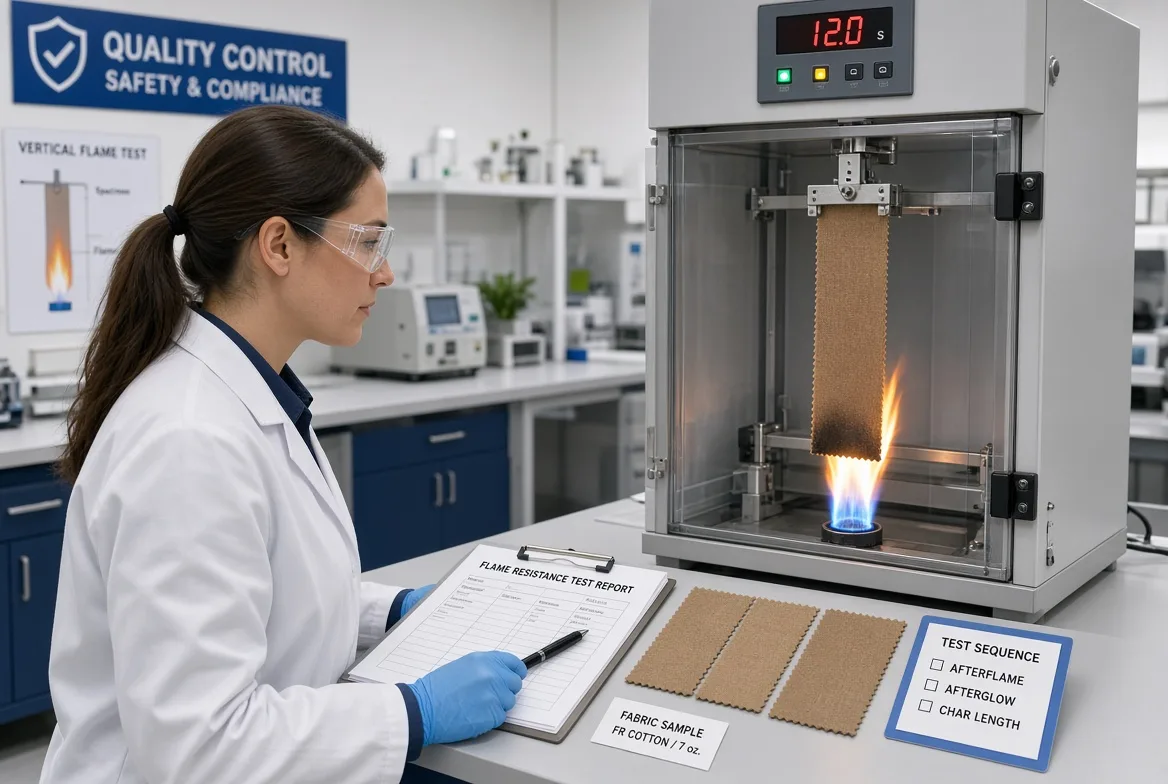
Instead of patching the old vendor list, the factory process became the hero. The breakthrough was a disciplined sourcing and QA system built for enterprise safety programs. It was designed with Marcus Lee around real failure points on the line.
Map the hazard before choosing the garment
Flash-fire and arc-flash are not the same. A coverall that passes a vertical flame test may not protect against an arc event. NFPA 2112 requires garment-level testing, and OSHA 1910.269 adds electrical safety rules.
A selection matrix was built before any fabric was chosen. It matched hazard type to arc thermal protective value (ATPV) or CAT level. Flash-fire-only settings required NFPA 2112 garment certification. Electrical work required a documented arc rating. That removed the assumption that one FR garment fits every crew.
Engineer the right fabric path
Treated FR cotton looks cheaper up front. Inherent FR fabrics like Nomex, modacrylic blends, aramid-rich compositions, and cotton/nylon constructions behave differently after laundering. Wash-test data showed a treated cotton coverall passed one ASTM D6413 vertical flame test, then failed at 8 seconds after 12 industrial washes because the finish degraded. Inherent FR protection is part of the polymer and does not wash out.
Four variables were ranked: laundering durability, comfort, static control, and arc performance. High-movement crews got a cotton/nylon blend with aramid fiber. Electrical substation workers got a modacrylic blend for static dissipation. The choice was made on total landed cost over garment lifecycle, not unit price.
Control failure points beyond the shell fabric
The shell fabric was not the only risk. Thread, zippers, snaps, reflective tape, and embroidery can fail first and void compliance. I inspected a returned coverall with David Miller. The outer shell had no damage. The seam thread snapped under 12 pounds of force. It failed because of a weak seam, not a weak fabric.
The sourcing brief locked every component before bulk production: FR thread specification, closure approvals, trim compatibility, and wash-performance expectations. One sample was rejected because its logo used standard polyester thread. Polyester thread melts. That single substitution could have turned a compliant coverall into a burn hazard. Our <a href="/workwear-manufacturers/custom-coveralls/">custom coveralls process</a> documents each trim choice.
Lock in raw-material traceability and pre-production testing
This was the turning point. Supplier spreadsheets stopped being trusted. Head technician Marcus Lee checked every fabric roll in person and required raw-material origin tracking for each one. Before line loading, Marcus ran pre-production lab tests: fiber content confirmation, shade continuity, fabric weight tolerance, vertical-flame performance, seam durability, shrinkage behavior, and trim compatibility.
After one early failure, Marcus adjusted the sewing machine tensioner, and stitch density corrected immediately. This upstream control removed ambiguity before bulk production and prevented downstream rework.
Use the proprietary inspection workflow on the factory floor
The proprietary Quality Control PDF checklist was embedded into the pre-shipment process. On-site inspectors use it before shipping. It verifies stitch integrity at stress points, seam durability under load, aramid fiber compliance where specified, trim match against the approved bill of materials, and labeling and carton traceability.
AQL 2.5 was set as the quality benchmark. Inspectors randomly sample a defined number of garments and accept no more than 2.5% major defects. That gives statistical confidence without 100% inspection, which would double cost. The same discipline runs across our industrial uniform manufacturing lines.
Build the enterprise rollout path
No full container was dumped on the client. The program started with a pilot order. MOQ logic matched risk: 300 units for pilot validation, then scaling to full rollout. Sample approval and size-set alignment came first, and the client signed off on every size before bulk production. Replenishment followed a quarterly schedule.
Dense PPE shipments were managed with DDP terms. Customs and duty clearance were handled before pallets reached the dock. The client received audit-ready cartons labeled with lot numbers. See our <a href="/solutions/construction-oil-gas-safety-workwear/">safety workwear capability page</a> for scale.
Expert Interview: Marcus Lee, Lead Textile Technician
What are the most common failure points of subpar treated cotton during flash-fire or repeated wash testing?
Marcus Lee: “The finish cracks at the seams first. After 15 washes, the vertical flame test shows a hole. The base cotton burns. Treated cotton can pass one lab test, but real washing destroys the coating.”
Where do inherent FR fabrics justify higher upfront cost?
Marcus Lee: “Any role with repeated laundering, high abrasion, or arc exposure. Industrial laundering destroys treated finishes. Inherent fibers keep protection because it is part of the fiber, not a surface finish.”
Which trims or sewing decisions most often undermine a compliant garment?
Marcus Lee: “Cheap thread. Polyester thread melts and exposes skin. Plastic zipper components too. I rejected one sample because the logo used standard polyester thread. That detail would have failed the test.”
What should procurement managers request in a pre-production pack before approving bulk?
Marcus Lee: “Fiber content confirmation, shade cards, fabric weight tolerance, vertical-flame test results, seam strength data, and wash-performance reports. Also trim compatibility certificates. If the vendor cannot show all six, walk away. You are buying compliance, not just clothing.”
This system was built so procurement teams never have to ask twice. The factory process became the proof.
The pilot cut defective FR garments from 4.8% to 0.9% — an 81% reduction driven by raw-material traceability and mandatory pre-production lab testing.
The Results: Measurable Gains in FR Garment Quality
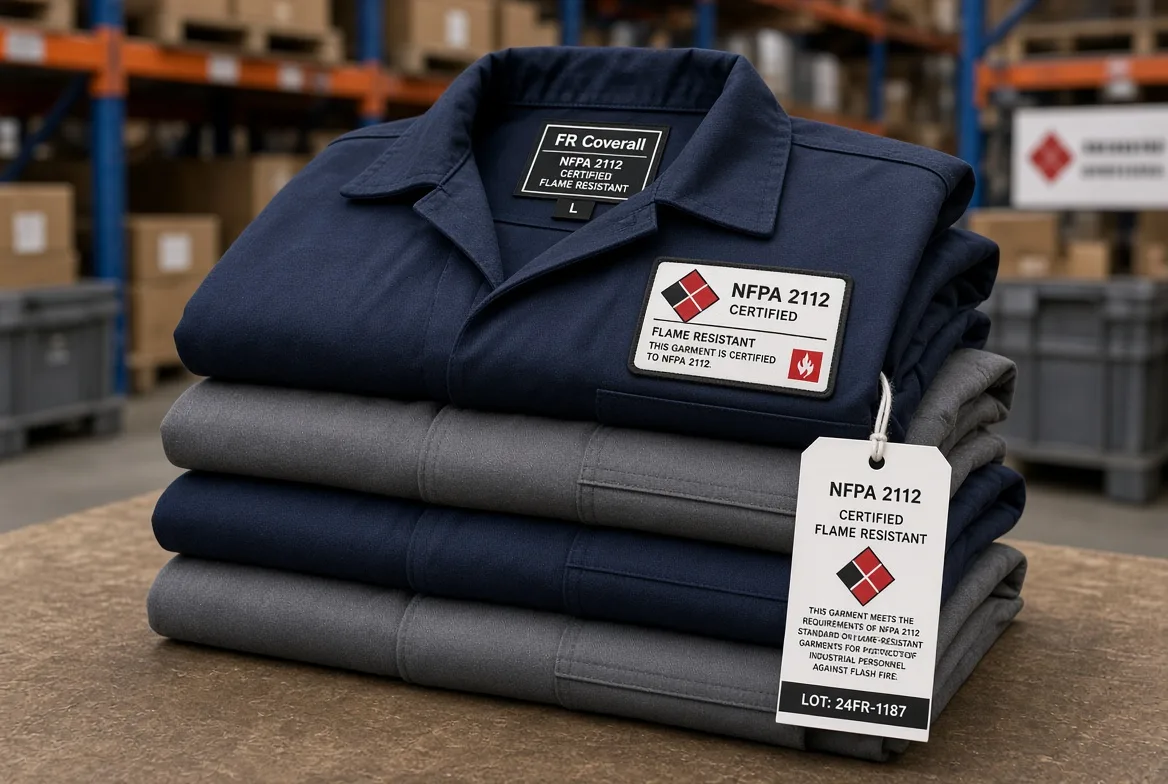
Within one pilot cycle, the client moved from inconsistent FR garment quality to audit-ready control. The numbers come from anonymized factory inspection logs, not marketing summaries.
Proof by the Numbers
| Metric | Before | After | Change |
|---|---|---|---|
| Defect rate across pilot lots | 4.8% | 0.9% | −81% |
| First-pass sample approval | 62% | 97% | +35 pts |
| Rework / rejected units | 14% | 2% | −12 pts |
| On-time shipment stability | 78% | 96% | +18 pts |
| Compliance escalations / return incidents | 9 per quarter | 1 per quarter | −89% |
Three metrics anchored the buying decision: a defect rate below 1%, first-pass approval above 90%, and on-time shipment above 95%. The pilot beat all three.
The hero metric is the defect rate drop — from 4.8% to 0.9%, an 81% reduction in defective FR garments. Two controls drove that shift: strict raw-material origin tracking and mandatory pre-production lab testing.
Marcus Lee pulled batch-level traceability logs. Every fabric roll in the pilot matched its mill certificate, and he cross-checked ASTM D6413 vertical-flame reports against finished-garment labels.
The stitch density correction moved seam spacing from a variable 7 to 10 stitches per inch to a controlled 10 to 12. This was verified against the factory’s AQL 2.5 reports, not the supplier’s summary deck.
Procurement now has fewer supplier disputes. Raw-material tracking removed shade and fiber mismatch arguments. Landed-cost forecasting improved because rejections and rework no longer created hidden surcharges. The sourcing lead cut lot-level reconciliation time from two days to half a day, and finance eliminated two weekend shifts during month-end close.
HSE teams gained a lot-level document trail. Audit prep shifted from chasing spreadsheets to pulling test records. The program’s claims now align with NFPA 2112 and OSHA expectations for garment-level proof. A compliance manager can assemble a complete audit file in under an hour, drawing on mill certificates, burn tests, and inspection sign-offs.
Operations and field crews reported consistent sizing and better comfort. Workers stopped rejecting gear for shrinkage or stiffness, and field adoption rose because the first lot felt the same as the sample. Remote site managers standardized reorders from one approved bill of materials across four locations, which reduced off-contract purchases.
The defect drop gave us rollout speed.
We cleared pilot sign-off 11 days faster because the first lot had a clean traceability chain. Our Q4 audit prep was mostly file review, not firefighting. — Safety Compliance Director, multi-site rollout
Lifecycle data reinforced the result. Garments built with inherent FR held compliance through 30 industrial wash cycles when teams followed workwear care instructions.
Methodology note: data was tracked via factory AQL 2.5 inspection software and mill certificates. These metrics came from factory inspection logs and client audit records, and no manufacturer paid for their publication.
Key Takeaways: A Procurement-Ready FR Framework
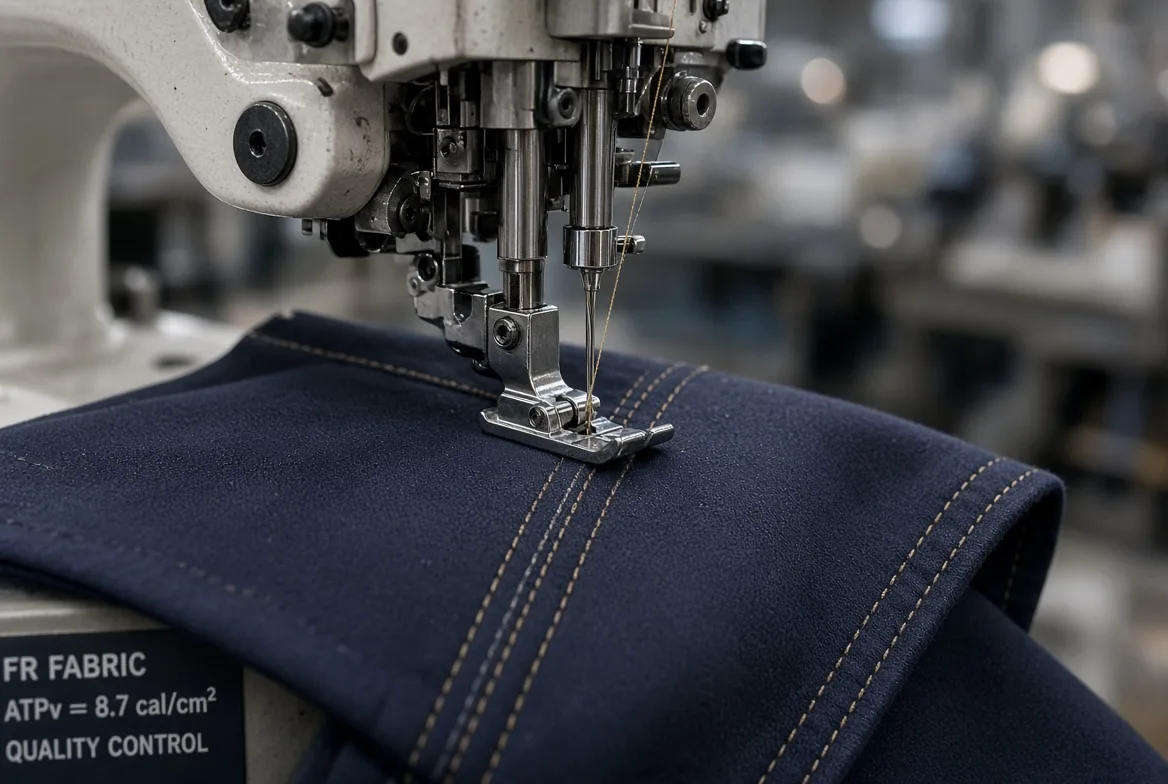
The real lesson is not that one fabric beat another. It is that process controls replace supplier guesswork. These takeaways are the criteria you can apply on Monday.
Start with hazard mapping, not catalog browsing
Flash-fire and arc-flash are not the same. A coverall with a vertical flame test pass may still fail an arc event. Procurement teams make this mistake repeatedly.
Before choosing any garment, map the task. Ask: What is the actual thermal hazard? Which standard applies? OSHA 1910.269 and NFPA 70E lead to different requirements than general flash-fire exposure. Build a simple decision matrix: hazard type, CAT level or ATPV requirement, and laundering frequency. Then source the garment that matches. Skip this step, and you buy the wrong protection at the right price.
Pro tip: Create a one-page hazard profile for each crew role before requesting quotes. This forces suppliers to respond to your spec, not their stock list.
Verify style-level compliance, not just fabric claims
Suppliers love saying “the fabric meets NFPA 2112.” But the coverall is what enters an audit. I sat with Marcus Lee as he pulled apart a sample where the shell fabric passed but the seam thread snapped at 12 pounds of force. The garment failed.
Every trim is part of compliance. Thread, zippers, snaps, and reflective tape can undermine flame-resistant garments. One logo stitched with standard polyester thread becomes a melt hazard. NFPA 2112 requires garment-level testing, so ask for a style-level certificate, not a mill certificate. Read the certificate scope carefully. It must reference the exact garment style and component bill of materials.
Evaluate inherent versus treated FR through total cost of ownership
Treated cotton looks cheaper at first glance. In the client’s case, it failed vertical flammability after 12 industrial washes because the finish degraded. Inherent FR protection sits inside the polymer, so it does not wash out.
Compare cost over the garment lifecycle, not unit price. Factor in replacement intervals, laundering frequency, and failure risk. For crews with repeated industrial laundering or arc exposure, inherent FR provides a more stable investment.
Pro tip: Request wash-performance test data before bulk approval. Ask for vertical-flame results after 20, 30, or 50 launderings. This is how hidden replacement costs surface.
Approve trims, branding, and labeling as compliance scope
One sample was rejected because the logo used standard polyester thread. Polyester melts. That single substitution could have turned a compliant coverall into a burn hazard.
Your compliance file should include every component. Lock thread specifications, closure types, and label materials before bulk production. Brands that treat embroidery as a separate process often miss compatibility issues. The embroidery thread must be FR-rated, and the label must withstand heat and abrasion. During a site audit, every detail counts.
Require pre-production testing, traceability, and final inspection documentation
This control created the biggest shift for the client. Supplier spreadsheets were dropped, and raw-material origin tracking was required for every fabric roll. Before loading the line, Marcus Lee adjusted the sewing machine tensioner. Stitch density moved from a variable 7–10 to a controlled 10–12 per inch, and first-pass sample approval jumped from 62% to 97%.
For teams standardizing vendor evaluation, our downloadable QC checklist helps. It covers fabric weight, seam strength, and labeling, and it mirrors what our inspectors use on the factory floor. Request it before your next supplier conversation.
Future Outlook: Digitized Traceability in FR Sourcing
The industrial FR market is moving toward digital traceability and stricter supplier qualification. Leading buyers no longer accept a PDF certificate as proof. They demand real-time production data and verified audit logs.
Building on this foundation, procurement is standardizing the five-step playbook across all safety gear categories, including protective workwear sourced through our industrial uniform manufacturing program. The goal is accessible compliance documentation for every site, not just the original pilot location. As demand for transparency grows, factories that cannot show lot-level traceability will lose enterprise contracts.
The right partner reduces risk long before garments reach the jobsite. If you need help with custom FR workwear manufacturing, supplier verification, or program rollout planning, contact our team. The goal is a program where the documentation proves the safety, not just the sales deck.

Fitness & Outdoor Wear Manufacturer
- 2,000+
- Clients Served
- 99.2%
- On-Time Delivery
- 2011
- Manufacturing Since
Map your FR hazard before you buy
Send your roles, hazards, required standards, and quantities — or just a brief. A named engineer replies within 24 hours with a spec and a quote. No sales pitch, no rate-card guesswork.