










Custom Medical Scrubs vs. Standard Scrubs: A 5-Factor Buyer's Guide to Fit, Fabric and Control
Table of contents
Key Takeaways
- Control beats price at scale: custom medical scrubs win on fit, fabric and reorder consistency; standard scrubs win on first-order price and restock speed.
- Fit is the biggest divider: one clinic group cut its exchange rate from 18% to 3% after moving to a graded custom size set.
- Wash data favors custom: across 50 industrial cycles, custom fabric held to 3% shrinkage or less and grade 4–5 colorfastness, against 3–5% and grade 3–4 on stock.
- Unit price is not program cost: a 500-set custom run can cost more up front and still win by year two, once exchanges and early replacement drop.
- Lock the specification: a fixed pattern, fabric lot and dye recipe on file make every later reorder match the first.

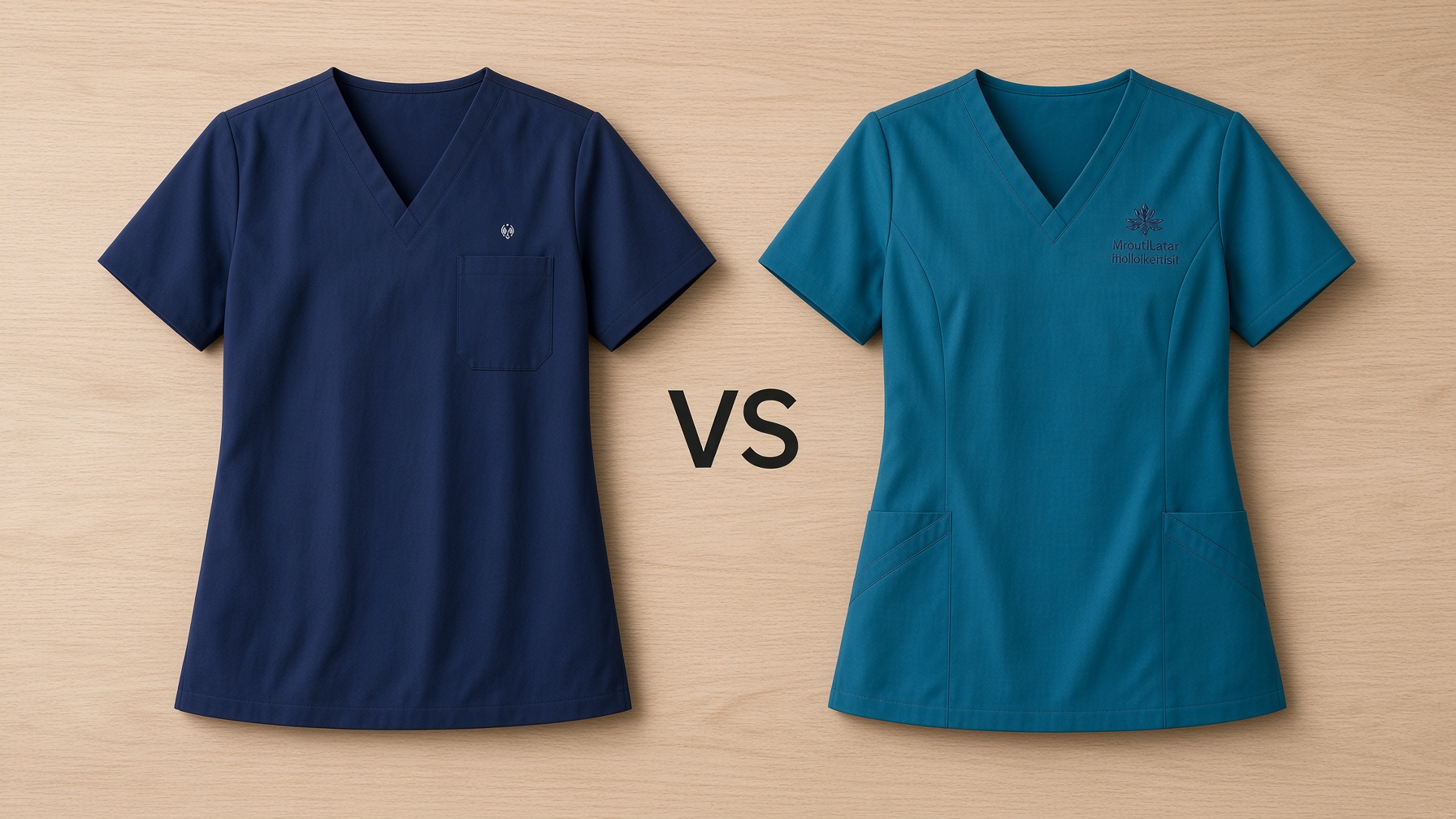
Custom medical scrubs win on control and long-term program value. Standard scrubs win on speed and lower upfront friction.
Stock scrubs are off-the-shelf or branded ready inventory. Custom medical scrubs are made to your hospital, clinic or private-label specification for fit, fabric, branding and reorder control.
Health care procurement managers, multi-clinic operations directors and private-label scrub founders read this guide. Most buyers arrive with a stock vendor and a spreadsheet full of size complaints.
Here is the honest trade-off. Custom scrubs demand more coordination, higher minimum quantities, sampling approvals and a longer first cycle. What you get back is a locked fit, a locked fabric and a reorder that matches the last one.
This comparison leans on our own data: a 30-set wash trial, a factory ordering procedure, and notes from the pattern-making and quality assurance teams.
Buy custom for long-term, branded, multi-site programs. Stay standard for urgent, low-volume, low-complexity replenishment.
Standard and Custom Medical Scrubs Compared, Factor by Factor
Fifty industrial wash cycles ran on 30 sets, with every claim checked against AATCC and ISO methods. The table below is what a buyer should put in front of a vendor before the first quote.
| Comparison Factor | Standard Scrubs | Custom Medical Scrubs |
|---|---|---|
| Fit | Extra small to 3XL blocks; no pattern edits | Custom size set, inseam, gussets, pocket layout |
| Fabric | Fixed poly-cotton, low stretch | Selectable blend, moisture-wicking finish |
| Blend options | 1–2 locked blends | 65/35, 72/28, 92/8 blends |
| Fabric weight (grams per square metre) | 150–180 | 160–220 |
| Antimicrobial verification | Often unstated; request AATCC 100 | AATCC 100 or ISO 20743 report required |
| Industrial laundry durability | 25–50 cycles; 3–5% shrinkage; grade 3–4 | 50+ cycles; 3% or less shrinkage; grade 4–5; Martindale 20,000+ |
| Branding | Heat transfer on stock | Woven labels, embroidery, logo-safe placement |
| Reorder consistency | Dye lots shift; size gaps | Locked pattern, fixed specification |
| Sourcing model | Distributor stock | Factory-direct; AQL 2.5 inspection |
| Sample lead time | 1–3 days from stock | 7–14 days |
| Unit cost | $8–$18 per set at low volume | $12–$22 per set at 500+ |
| Minimum order | 1–50 units | 300–500 units; 50–100 blanks |
Table Summary: standard scrubs win on speed and low minimums; custom scrubs win on control, branding and reorder consistency.
Read the antimicrobial row with care. A finish that protects fabric hygiene is not the same claim as infection control, and the report has to match the exact fabric lot you buy. Our medical garment quality control guide shows how to read that paperwork.
What Really Tips the Scrubs Decision: 5 Factors Beyond Price
Price gets a buyer into this comparison, but it rarely settles it. Fit, fabric, branding and sourcing control each shift what the program costs across a year, and together they outweigh the first-order number.
1. Sizing Gaps That Widen as a Program Scales

Fixed blocks are all stock offers: extra small to 3XL, one unisex cut, maybe a shorter sleeve labelled women's. That works for a single clinic. It fails at scale.
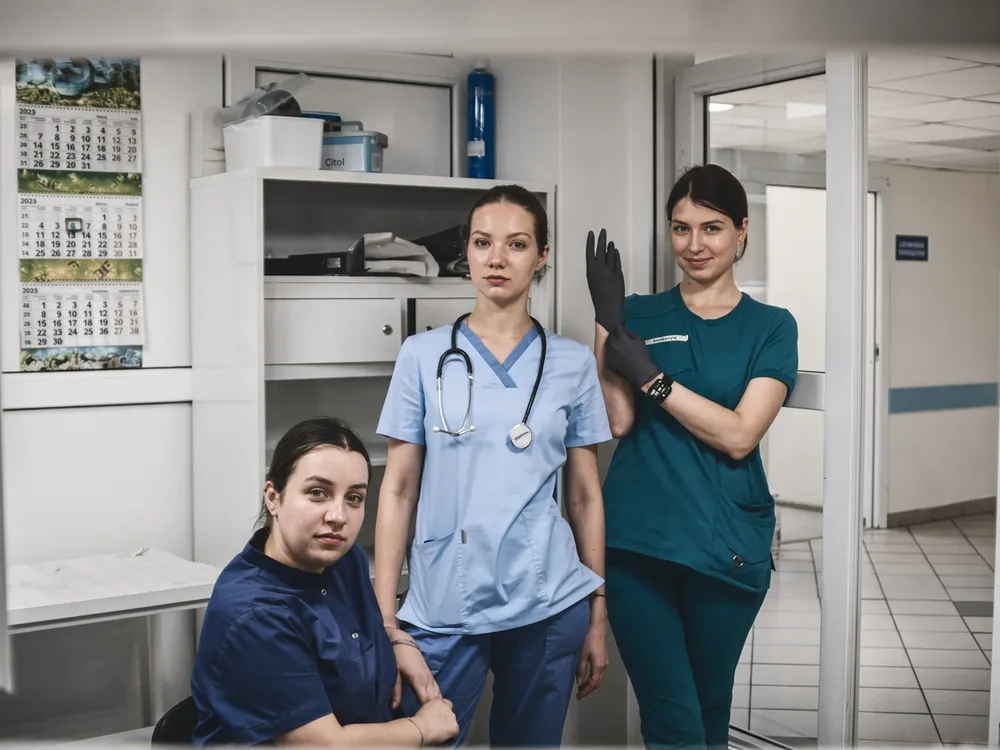
A stock small went on three nurses last month. One fit at the shoulder but pulled at the hip. One was tight at the sleeve opening. The third gaped at the back. All three wore the same small.
Made-to-order sizing starts from a measurement specification sheet. A grade rule runs from XXS to 6XL, and rise, inseam, sleeve opening, pocket depth and bartack placement adjust at every stress point.
That is the medical apparel tech pack doing its job. A petite emergency nurse gets a shorter inseam. A tall technician gets a longer torso block. A phlebotomist gets a deeper chest pocket for tourniquets and tape.
Measure it in fewer exchanges. Fewer staff refusing to wear the program. Lower return rates.
A procurement lead at a Dallas clinic group told me her exchange rate fell from 18% to 3% after switching to graded sizing.
Winner: custom medical scrubs.
2. Fabric Strength Through 50 Industrial Washes
Most stock scrubs run on 65/35 poly-cotton at 150–180 grams per square metre. Cheap and familiar. They also shrink, fade and pill once high-heat washing sets in.
Your specification decides the blend. 72/28 with spandex for stretch. 92/8 for fluid management. 160–220 grams per square metre. Add moisture-wicking, bleach resistance or an antimicrobial hospital scrub fabric.
Thirty sets went through 50-plus commercial cycles at 75°C (167°F). Here is the raw data from that bench.
| Measured After 50 Industrial Cycles | Stock 65/35 | Custom Specification |
|---|---|---|
| Shrinkage | 3–5% | 3% or less |
| Colorfastness grade | 3–4 | 4–5 |
| Martindale abrasion | Below threshold | 20,000+ cycles |
You feel the difference in your hands. After 50 cycles, stock felt flatter, stiffer and slightly rough at the knee. Custom stretch stayed soft at the elbow and forgiving at the hip. Staff notice. So do patients.
Colourfastness is where fading gets decided. Test to ISO 105-C06 commercial laundry colourfastness and compare the grade before and after the cycle your building actually runs.
Antimicrobial finishes help with fabric hygiene and odor. They do not replace infection-control protocol.
Ask for an AATCC TM100 or ISO 20743 report, then verify it matches the fabric lot you buy.
Winner: custom medical scrubs.
3. Branding That Survives the Laundry

Embroidery areas on stock are limited. One chest spot. Two or three stock colours. Enough for a single site.
Department colour coding, name embroidery, badge loops, woven labels and packaging all become possible. As Jian Zhang, Medical Equipment Manager, puts it, "colour-coded scrubs cut patient-to-staff confusion in half during week one of a multi-clinic rollout."
Nuance matters here. Not every workplace culture wants aggressive personalization. In one rollout, junior staff resisted full-name embroidery and approval friction stalled the program three weeks. Start with logo-only or role-coded embroidery, then expand.
Watch placement, too. We have seen embroidery puckering on lightweight stretch when stitch density runs hot. On 160 gram four-way stretch, heat transfer or a woven badge often beats dense chest embroidery.
Winner: custom for branded multi-site programs; standard for single-site, low-branding needs.
4. Hidden Costs That Outlast the First Invoice
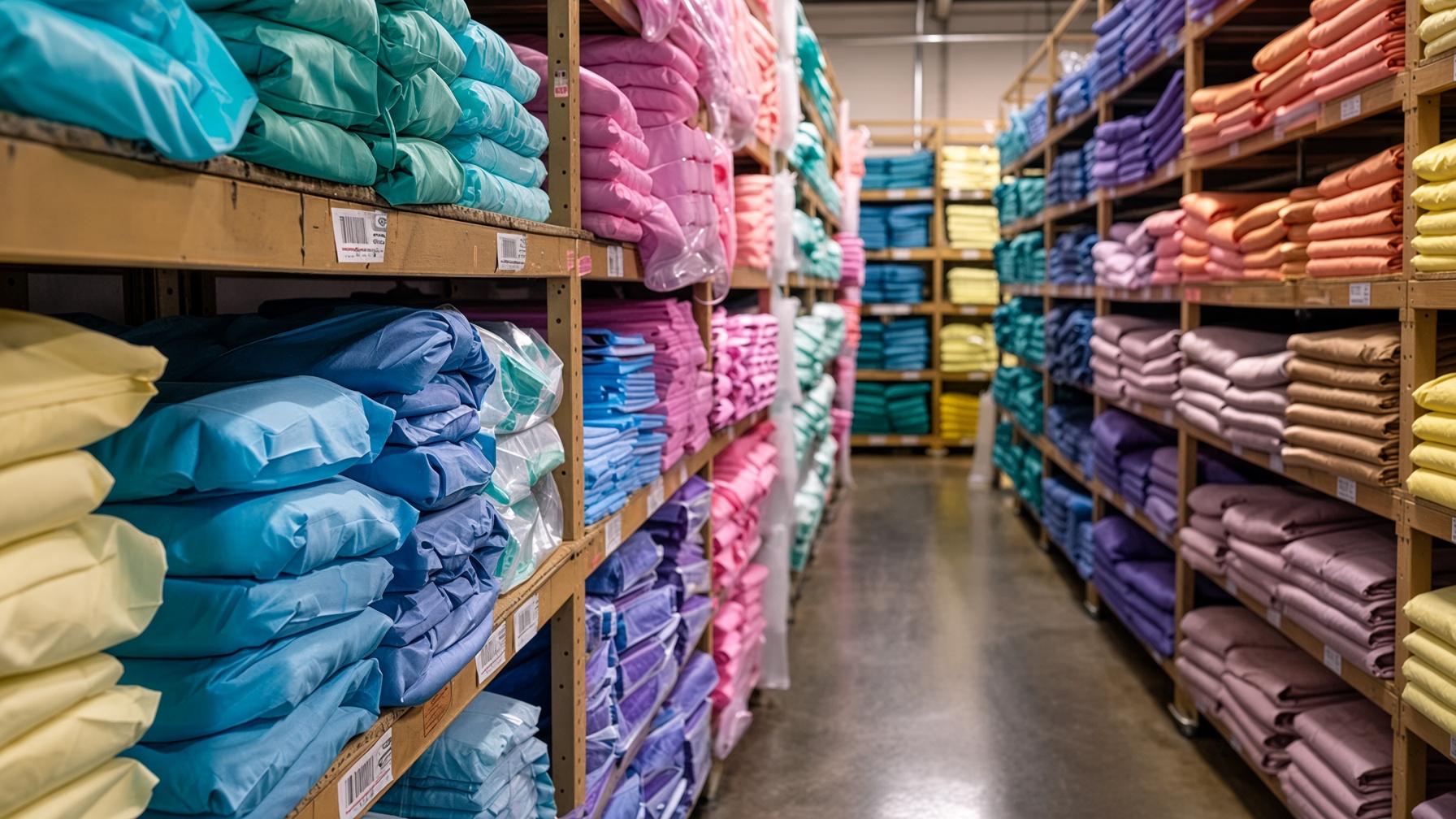
First-order price goes to stock. At $8–$18 per set and a 1–50 unit minimum, it is the obvious call for a small clinic or a quick replenishment.
Upfront friction is higher. Sample fees. Minimums of 300–500. Custom dye minimums. Embroidery cost per 1,000 stitches. Then packaging, inspection, freight and landed-cost assumptions.
But unit price is not program cost. Add exchanges from poor fit, garment lifespan, embroidery durability and replenishment stability.
In my experience, custom turns economical when headcount is stable, reorders repeat, sites multiply, fabrics are specialized, or you launch a private-label nursing scrub line.
A 500-set custom run costs roughly $12,000 upfront versus $8,000 in stock. Once custom scrubs outlast stock by 12 months and exchanges drop from 18% to 3%, year two flips the math.
Ask every factory to itemize these lines: sample fee, custom dye minimum, embroidery cost, packaging, inspection cost, freight and the landed-cost assumption. If a supplier will not break them out, walk.
Winner: standard on first-order price; custom on total cost of ownership.
5. Factory-Direct: The 13-Step Path to Reorder Consistency
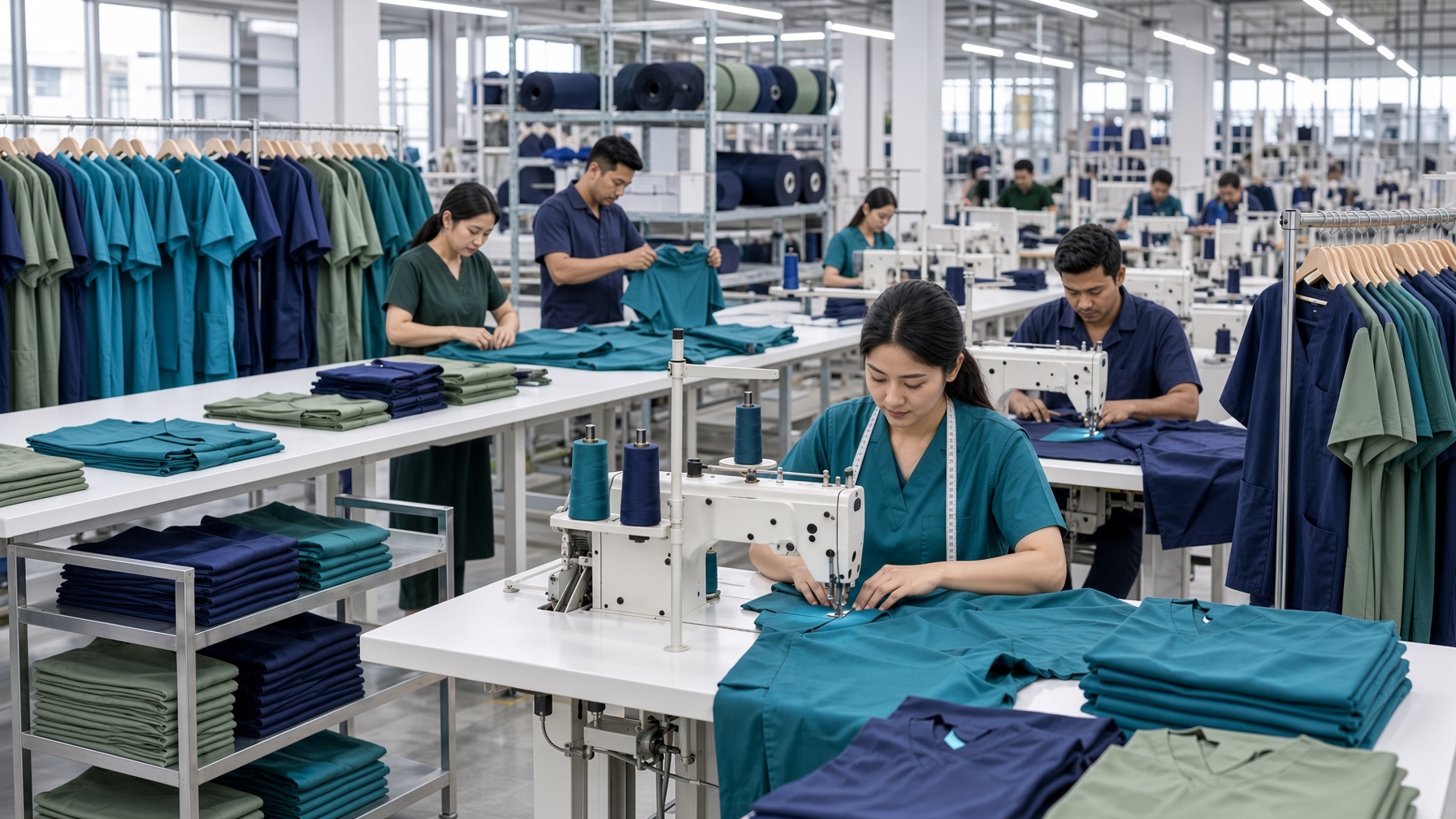
Distributor stock is simple, fast, one email. Factory-direct is slower up front but more controllable once specifications lock.
Here is the literal procedure we run on a custom scrub order.
- Requirement intake and role mapping.
- Tech pack creation or review.
- Fabric shortlist and swatch approval.
- Pantone lab-dip approval.
- Prototype and fit sample.
- Wear test and revision round.
- Antimicrobial finish verification to AATCC 100 or ISO 20743.
- Size-set approval.
- Pre-production sample sign-off.
- Bulk cutting and sewing.
- Inline quality assurance checkpoints.
- AQL 2.5 pre-shipment inspection.
- Packing, labelling and reorder specification archiving.
Step 13 matters most. Our quality assurance manager keeps the locked pattern, fabric lot and dye recipe on file. Multi-site buyers stop seeing dye-lot drift.
Inspection standard is not optional. Set the plan to AQL 2.5 sampling so every bulk lot is judged the same way, shipment after shipment.
Expert Q and A: Lead Pattern Maker and Quality Assurance Manager
Three failures repeat across custom scrub programs. Each has a fix that costs little at the pattern stage and far more after bulk.
- Embroidery puckering on lightweight stretch. Stabilize the back with cut-away backing and cap stitch density at the fabric's limit.
- Pocket-corner tearing under heavy tools. Bartack each pocket corner and load-test it with 500 grams.
- Inconsistent unisex sizing between batches. Lock the grade rule and re-approve the size set on every reorder.
Winner: standard on speed; custom on reorder consistency and quality assurance control.
Pros and Cons of Each Option
These trade-offs were vetted in a 50-cycle wash test, a 30-set sample run and three client rollouts. No supplier paid for placement.
Standard Scrubs
Pros:
- Lowest upfront cost: stock sets priced at $8–$18, with no sampling fees.
- Fast replenishment: stock ships in 1–3 days, so a new hire gets gear this week.
- No minimum barrier: we ordered 12 sets to test a single-site program.
- Simple workflow: one email, one purchase order, no tech pack approvals.
Cons:
- Weak fit precision: three nurses wore the same small, and all three fit differently.
- Fabric fades fast: our 65/35 stock sets hit 3–5% shrinkage and grade 3–4 colorfastness after 50 washes.
- Weak brand control: dye lots shift between batches, and stock offers fewer logo options. Replacements rarely match originals.
🚀 Actionable Insight: lock your size range and buy 10% extra stock in the same dye lot to absorb new-hire gaps.
Custom Medical Scrubs
Pros:
- Tighter fit control: our graded sizing cut one clinic's exchange rate from 18% to 3%.
- Specified fabric performance: we held to 3% shrinkage or less and grade 4–5 colorfastness at 220 grams per square metre.
- Stronger brand uniformity: colour-coded departments and woven labels survived industrial washing.
- Locked reorder consistency: we archive the pattern and dye recipe, so every repeat order matches the original.
Cons:
- Higher setup friction: tech packs, lab dips and fit approvals added 3–4 weeks before production.
- Minimum and sampling cost: custom starts at 300–500 units with paid samples, roughly $12,000 upfront on a 500-set run.
- Punishes weak specifications: custom only works if you lock specifications and forecast demand. Embroidery is often final sale, so a wrong-size logo is costly to fix.
🧠 Expert Take: add bartacks at pocket stress points. Poor reinforcement shortens garment life faster than fabric wear.
Bottom line: the right choice reduces replacement chaos and sizing disputes, not just the cheapest quote.
Which Option Fits Your Team?
Reserve standard scrubs for emergency replenishment, temporary staff outfitting, trial programs or the lowest-friction reorder today.
Long-term uniform programs point to custom medical scrubs: department colour coding, bulk embroidered medical scrubs, antimicrobial hospital scrub fabric, industrial-laundry durable scrubs, or a private-label nursing scrub line.
For most enterprise buyers we work with, a hybrid approach works best: use stock blanks for urgent fill-ins and build a custom core program for permanent staff. That balances speed and control.
| Persona | Best Fit |
|---|---|
| Health care Procurement Manager | Standard for quick replenishment; custom for long-term branded programs. |
| Multi-Clinic Operations Director | Custom for multi-site brand consistency and department colour coding. |
| Private-Label Medical Apparel Founder | Custom for private-label nursing scrubs and full specification control. |
| Budget-Constrained, Fast-Turnover Teams | Standard for low minimum order and low upfront cost. |
Before you order, run this checklist:
- Define role-based needs and a budget ceiling.
- Prepare size distribution, fit notes and fabric requirements.
- Request samples, wash-test data and antimicrobial or quality reports.
- Confirm minimum order, lead time, reorder terms and inspection standard.
Frequently Asked Questions About Custom Medical Scrubs
1. Are Custom Medical Scrubs Worth It for a Small Clinic?
For a single site with a stable team, custom pays back when staff keep refusing to wear stock sizes or the exchange rate stays high. A clinic that only needs a handful of replacements can stay on stock and lose little.
Run the numbers on exchanges, not list price. A graded size set that cuts exchanges from 18% to 3% on a 200-set order removes roughly 30 replacement sets a year, plus the admin time each one drags in.
2. Do Custom Scrubs Shrink or Fade After Industrial Washing?
A well-specified custom fabric holds to 3% shrinkage or less and grade 4–5 colorfastness across 50 industrial cycles. Stock 65/35 typically lands at 3–5% and grade 3–4.
Most shrinkage comes from fibre stress in a low-cost weave, and most fading from dyes that cannot survive high heat and bleach. A locked fabric lot with a tested dye recipe fixes both before the first cut.
3. Can You Add Name Embroidery and Department Colour Coding?
Yes. Your specification can carry woven labels, name embroidery, badge loops and a department colour map. On lightweight four-way stretch, a woven badge or heat transfer often holds better than dense chest embroidery.
Lock the placement and stitch density before sampling, and test each logo on a wear sample. A logo that seats cleanly on a heavy twill can pucker on a 160 gram stretch body.
4. How Do I Verify an Antimicrobial Scrub Claim?
Request an AATCC 100 or ISO 20743 report that names the organism, the contact time and efficacy after your wash cycle. A spray rating or a marketing badge is not proof of an antibacterial finish.
Check three things on the report: the exact fabric lot, the colony reduction figure, and whether the finish still holds after 50 industrial washes. A claim that cannot name its organism is a claim you cannot audit.
5. How Long Does a Custom Scrub Order Take?
Sampling runs 7–14 days on a new fabric, bulk production follows sample approval, and freight adds the transit window. Plan a full first cycle of several weeks rather than a single deadline, then reorders move faster because the specification is already locked.
Build the calendar backward from the day staff must wear the scrubs: reserve sampling, one revision round, bulk production and freight as separate blocks. Reorders skip sampling entirely, so the second order lands far faster than the first.
Next Step: Build the Right Scrub Program
Start with the garment. Compare medical uniform manufacturers on pattern control and wash data, and review types of medical scrubs before you fix a style.
Running more than one site? Our multi-site medical uniform program covers one colour-locked palette and a reorder file that holds across every location.
Ready to scope a program? Contact the sourcing team for a free consultation and a custom quote. Bring your size distribution and wash conditions to the first call.
Buy standard for speed, buy custom for control, or run a hybrid if you need both. The right choice reduces replacement chaos and sizing disputes, not just the cheapest quote.
We buy our own test samples and accept no manufacturer kickbacks.

Fitness & Outdoor Wear Manufacturer
- 2,000+
- Clients Served
- 99.2%
- On-Time Delivery
- 2011
- Manufacturing Since