








Trading Company vs. Factory-Direct Sourcing: Cut Landed Cost and Lock Reorders
Table of contents
Key Takeaways
- Match the model to the order: a trading company suits small, mixed, fast orders; factory-direct pays off on recurring programs above 300 units per style.
- Price only compares on a landed-cost sheet. A low free-on-board or ex-works quote hides freight, testing and rework.
- The label is not proof. Some "factories" are brokers, so ask for the licence, the export entity and a live look at the line.
- Seam strength, seam slippage and fabric strength are three tests. A seam that bursts is a seam problem, not a fabric problem.
- Reorders are the real test. A locked bill of materials and a signed pre-production sample keep reorder three on spec.
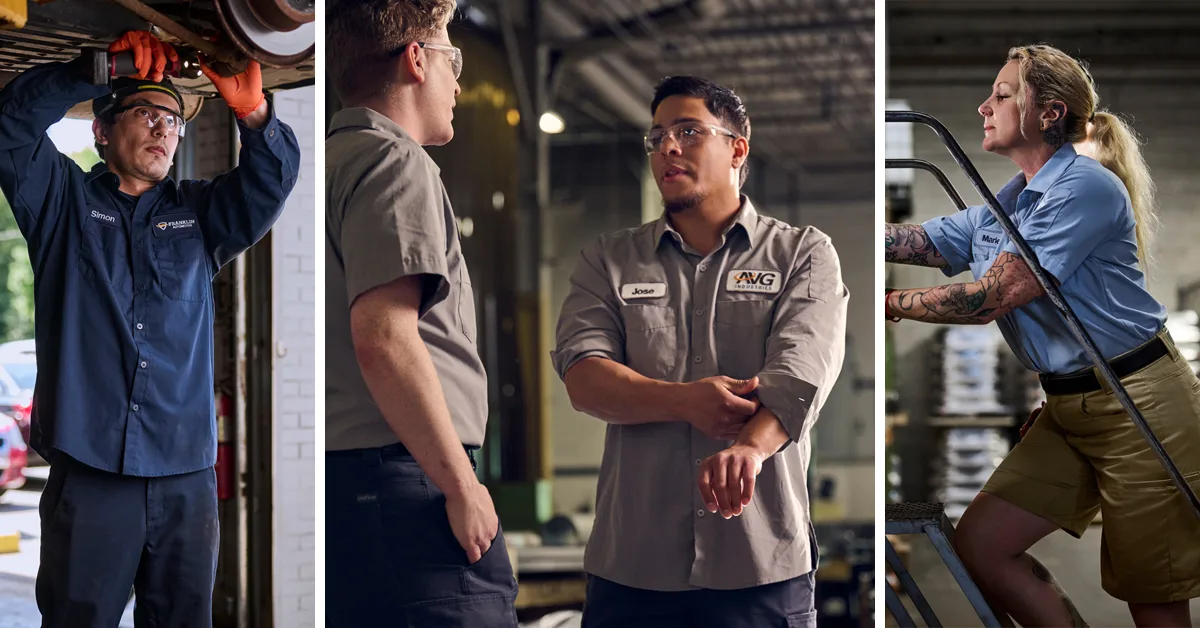
Factory-direct sourcing wins when uniforms are a recurring, specification-heavy program. A trading company wins when the order is small, mixed and fast. This is a choice about the sourcing model, not about which supplier is more popular.
A trading company is a middleman. It bundles quotes, chases vendors and manages mixed orders, but it rarely owns fabric mills, sewing lines or the final quality check. Some do run their own quality teams, so ask who signs the final inspection report.
Direct sourcing is not automatically better. Some "factories" are brokers with a spare sample room, and an ex-works quote hides freight, testing and rework. I have watched a trading company approve cheaper reflective tape than the spec named on a high-visibility reorder. The gap only surfaced when we matched the tape-roll label against the approved tech pack.
🔍 How we wrote this: this guide draws on the sample reviews, factory audits and reorder files our team handles for uniform buyers. It compares the two models on the checks a buyer can run before signing a contract: a landed-cost sheet, a live factory look, a signed pre-production sample and a quality-control record.
Trading Company vs. Factory-Direct: A Side-by-Side Comparison
Buyers often confuse a sourcing intermediary with an actual maker. The table below compares the two on the criteria that change a contract, not on a single quote. The right number moves with fabric, order size and destination port, so treat each row as a check to confirm with your own quotes.
| Criterion | Trading Company | Factory-Direct |
|---|---|---|
| Price | Adds a margin layer above factory price | Quotes at factory price plus any testing |
| Cost transparency | Landed cost only if you insist | Landed-cost sheet from the maker |
| Sample speed | Often quicker on stock goods | Builds to your spec, so it can run longer |
| Bulk lead time | Depends on the factory it hires | Owns its line allocation |
| Quality control | Sends a report | Shows the line and the records |
| Traceability | Limited line access | Bill of materials, trims, batch and roll tags |
| Minimum order | Lower, because it consolidates | Higher, set by fabric and trims |
| Customization | Logo and light spec work | Full tech pack, weight spec and testing |
| Communication | One contact across many categories | Direct to merchandiser and quality team |
| Accountability | Passes issues to the subcontracted factory | Fixes on its own line |
| Best fit | Small, mixed, fast orders | Recurring programs above 300 units |
What Really Separates a Factory From a Trader: Five Differences That Decide Your Contract
Two things separate the models: what you control and what you can prove. Each of the five sections below tests that against a quote, a sample and a reorder.
1. Price and Landed Cost: Read the Full Cost Stack
Price is where the models look most different and where the most mistakes happen. A trading company buys from a factory and resells, so its quote carries a margin above the factory price. That margin is fairly earned when it bundles several categories, absorbs the language risk and chases late vendors.
The only fair comparison is landed cost. Ask both sides to price the same tech pack, the same fabric and the same delivery terms to one port, then compare line by line. The example below is illustrative, not a live quote, but it shows how the lines should read for a 1,000-piece work shirt in 7.5 oz twill.
| Cost line | Factory-Direct | Trading Company |
|---|---|---|
| Fabric | $4.20 | $5.10 |
| Cut, make and trim | $2.75 | $3.45 |
| Embroidery | $0.60 | $0.90 |
| Packaging | $0.25 | $0.40 |
| Factory price (free on board) | $7.80 | $9.85 |
| Trading margin | — | $2.05 |
| Ocean freight | $0.80 | $0.80 |
| Import duty | $1.00 | $1.00 |
| Landed cost | $9.60 | $13.70 |
The trading quote lands at $13.70 against $9.60 direct, a gap of $4.10 per unit, or about $4,100 on the order. Most of that gap sits in fabric, cut-and-sew labour and the margin line. Freight and duty match, so they cannot explain the difference.
Watch the incoterm. An ex-works price stops at the factory gate, so you still pay local trucking, export papers, port fees, ocean freight, insurance, duty and broker fees on top. A $7.20 ex-works quote is not cheaper than a $9.60 landed price once those lines are added; it just hides them. Always compare free-on-board or landed cost, and ask for the duty code.
✅ Buyer check: ask every supplier for a landed-cost sheet that shows the free-on-board price, duty code and freight per unit. A supplier who will not share this sheet is hiding a cost you will pay later.
2. Lead Time and Capacity: Check the Booking Calendar
A trading company juggles subcontractors, so its calendar depends on whichever factory has a free slot. A direct factory manages its own line allocation. Track the same checkpoints on both: request for quote, tech-pack review, sample, pre-production approval, bulk cutting, in-line inspection, final inspection and shipment.
LeelineWork quotes its sampling at five business days, bulk production at 15 to 20 days after sample approval, and freight at 14 to 20 days to your port. Together those windows land a first order at your door in about five to seven weeks. Reorders skip sampling and ship in 10 to 14 days, because the spec is already on file.
Traders earn their place on mixed-category consolidation, when one contact must handle caps, bags and shirts together. For a focused uniform program on one spec, direct wins the calendar.
🧠 Expert Take: "Greige minimums, dye-lot shading on reorders and peak-season capacity break a uniform calendar. Large buyers book line time months ahead, so a factory that shows its booking calendar says more than a fast quote." — Marketing Partner April Yu Zhang
3. Quality Control and Compliance: Ask for the Records
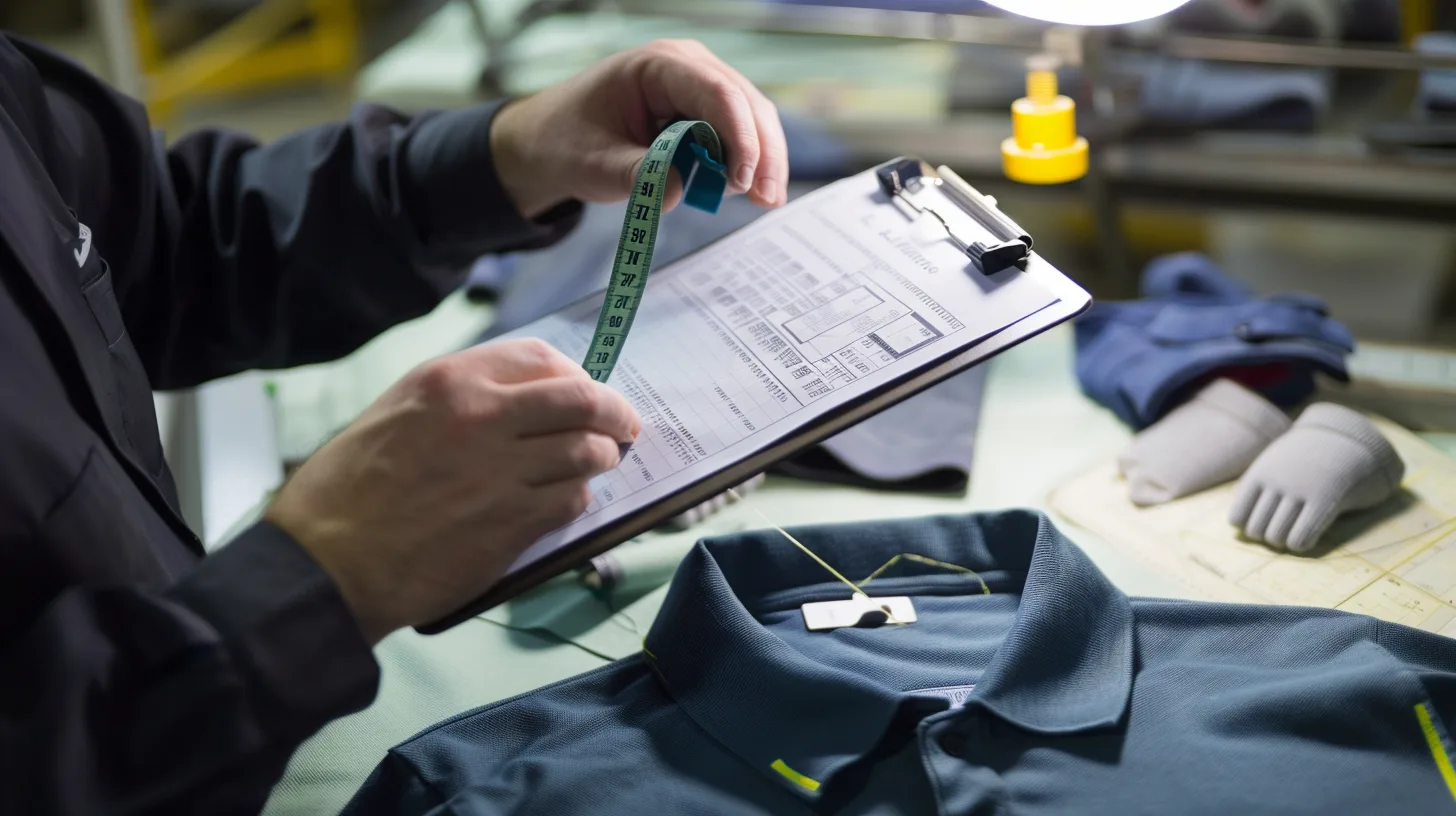
A supplier can promise tight quality control in an email, so ask to see the records instead. We check the last three inspection reports, the seam and wash test results, and the roll tags for the fabric in the order.
Bulk lots are judged on a sampling plan. We inspect to ANSI/ASQ Z1.4 at general inspection level II, which matches ISO 2859-1 for daily use. The default is AQL 2.5 for major defects and 4.0 for minor ones, with zero critical defects. On flame-resistant and high-visibility garments, a missing label or the wrong reflective tape counts as a critical defect.
Seam strength and fabric strength are two tests, and buyers confuse them. ISO 13935-2 measures the seam with the grab method and reports force in newtons. ISO 13934-1 measures the base cloth only. A seam that bursts is a seam problem, so ask for the seam method, not just the fabric method.
Shrinkage is measured after a defined wash. ISO 5077 covers dimensional change, run against ISO 15797 for industrial laundering or ISO 6330 for home machines. A shrink figure with no wash method behind it means little. Colourfastness to washing follows ISO 105-C06.
Direct sourcing gives you a locked bill of materials, approved trims and a per-batch file. Safety buyers should confirm the correct ANSI/ISEA 107-2020 garment type and class, check NFPA 2112 certificates for flame-resistant work, and request OEKO-TEX Standard 100 reports for skin-contact fabric.
4. Minimum Order and Customization: Plan Around the Fabric
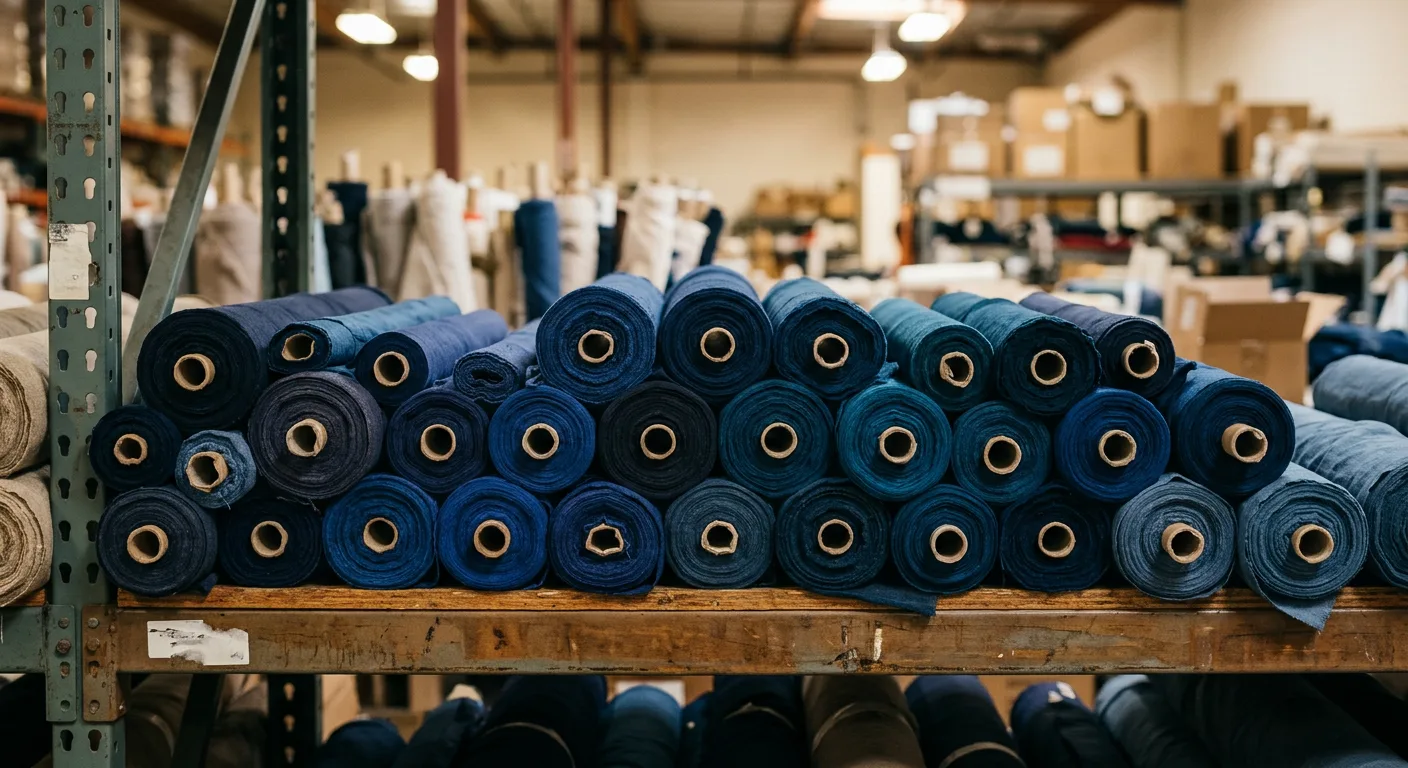
Blank stock orders often run from 50 to 100 units. True cut-and-sew production starts near 300 to 500 units, and a custom colour can need 600 or more yards per shade. The minimum is driven by fabric and trim buying, not by sewing willingness. A mill will not stop a large dye run for 200 shirts.
Our production minimum is 50 units per style on stock fabric. Custom-dyed fabric pushes the minimum up, because the mill dyes in large batches. Plan the first order around the fabric, then the minimum follows.
Direct sourcing wins on the details a logo alone cannot cover. It handles pattern changes, pocket layout, reinforcement zones, branded packaging and private-label needs. A double bar-tack at a pocket mouth or a gusseted crotch costs cents and saves returns.
🧪 Wash-test check: A logo survives a wash test only when the test uses the right method. Industrial laundering is ISO 15797; ISO 6330 covers home machines. Do not accept a home-wash result as proof for an industrially laundered program. For the full document set, see the uniform tech-pack workflow and the OEM vs private label guide.
5. Accountability and Reorders: Count the Handoffs
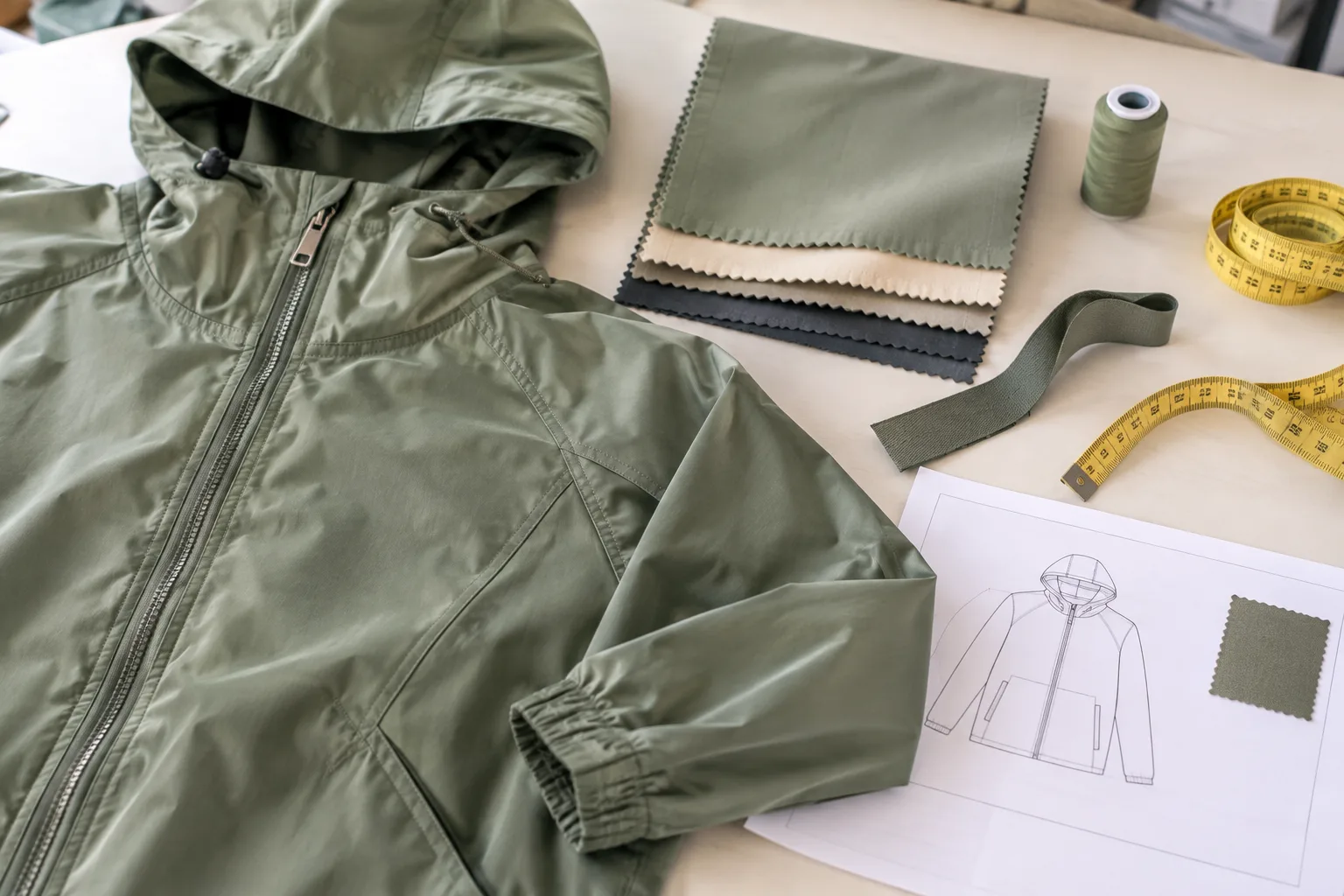
Communication chains differ. You deal with a trader, a subcontractor and their quality team, or you deal directly with a merchandiser, production and quality control. Shorter chains correct faster and handle claims with fewer excuses.
When a buyer flags a chest logo a few millimetres off spec, the direct factory can move a corrected placement template to the sewing floor the same week. In a trading chain, that fix passes through the trader and back to the subcontracted factory first. Each handoff adds delay, and delay is the hidden cost of indirect sourcing.
Run a factory check before you commit. The five steps below are the ones our team uses.
- Verify the business licence category and the export entity.
- Confirm in-house cutting, sewing, sample and packing areas on a live video or an audit.
- Lock fabric weight, composition and colourfastness before the pre-production sample.
- Approve the pre-production sample against the size chart, trims, logo placement and wash result.
- Release bulk cutting only after written sign-off and agreed quality checkpoints.
Uniform programs are rarely one-off. Consistency across reorders matters more than a sharp first quote. A locked bill of materials, approved trims and a signed pre-production sample keep reorder three on spec. A perfect first sample means nothing if the next shipment arrives a shade darker.
Pros and Cons of Each Model
Each model has real strengths, and the choice depends on the order rather than on quality alone. The table below keeps both columns to the same criteria so you can weigh them side by side.
| Trading Company | Factory-Direct |
|---|---|
| Lower minimum, faster on stock goods | Higher control, built to your spec |
| One contact for many categories | Direct line to merchandiser and quality team |
| Adds a margin above factory price | Factory pricing plus any testing |
| Relies on the factories it hires | Owns its line and its records |
| A fix can pass through a subcontractor | A fix moves on the line itself |
| Suits pilots and mixed launches | Suits recurring, specification-heavy programs |
Factory-Direct vs. Trading Company: How to Choose
Summary: pick a trading company for pilots under 300 units, or when your team has no apparel engineer on staff. Pick factory-direct when you can audit suppliers, approve a pre-production sample and track quality control across several reorders. The model rewards whichever side you can verify.
For a focused uniform program on one spec, price direct and a good trader quote will land close once you remove the margin on a like-for-like basis. For a mixed, low-volume launch, the trader's coordination is worth the markup.
Frequently Asked Questions About Trading Company vs. Factory-Direct Sourcing
1. Should I use a trading company or source factory-direct?
Use a trading company for smaller orders, mixed categories or a team with no sourcing staff. Source factory-direct for repeat programs above 300 units, stable colour and fit control, and compliance-ready documents. Capability matters more than the label on the invoice.
2. Which model fits safety and medical buyers?
Factory-direct fits best. Safety compliance officers need traceability and repeat consistency on flame-resistant and high-visibility work. Medical procurement leads need scalable scrubs with controlled fabric and wash performance. Both depend on batch records that a direct line can produce.
3. Which model fits hospitality and private-label buyers?
Hospitality managers can use a trading company for small multi-style launches, then switch to factory-direct for chain-wide standardisation. Workwear brand challengers need factory-direct for pattern control, trims, packaging and margin protection. See the OEM vs private label guide for the brand route.
4. Which model fits resellers testing demand?
Start with a trading company or a low-minimum hybrid, and validate demand first. Move factory-direct once reorder volume is proven. The B2B uniform procurement program maps the full path from pilot to program.
5. How do I verify I am talking to a real factory?
Ask for live video or audit access to cutting, sewing, sample and packing areas. Ask what is in-house and what is outsourced.
Request the business licence, capacity claims, a recent pre-production sample and test-report examples. Confirm who owns patterning, grading, embroidery and final quality control.
Compare custom work pants built on a real line at custom work pants, and read the workwear sourcing guide before your next call-off.
Trading Company vs. Factory-Direct: What Should You Do Next?
Print two blank landed-cost sheets and send both to a trader and to a factory. Ask each to price the same tech pack and the same delivery terms. The quote that shows every line is the one you can trust.
Then request a live look at the line and one recent pre-production sample. If the answers match across the sales and production contacts, you have a supplier. If they do not, you have a broker.
Contact LeelineWork for a request for quote and audit support.

Fitness & Outdoor Wear Manufacturer
- 2,000+
- Clients Served
- 99.2%
- On-Time Delivery
- 2011
- Manufacturing Since